


Screen printed labels give bold, opaque colour that stays put on textile tapes, while digital and offset presses produce labels with full color printing, gradients and photo detail. This guide compares label screen printing with thermal transfer, flexo, offset and digital methods, explains the inks behind each, and shows when to choose which for printed labels, care labels and tagless neck prints.
Why the print method matters
Two printed labels can look identical on the day they arrive and behave very differently after a season of washing. The method decides how thick the ink layer is, how it bonds to the tape, how many colours are possible, how fine the text can be and how the label feels. As the manufacturer, we choose the method for each job based on material, artwork, quantity and how the garment will be cared for, but knowing the options helps you write a better brief.
How label screen printing works
In screen printing, ink is pressed through a fine mesh stencil onto the tape, one screen per colour. The result is a thick, highly opaque ink film that sits confidently on the surface. That opacity is the main reason to choose it:
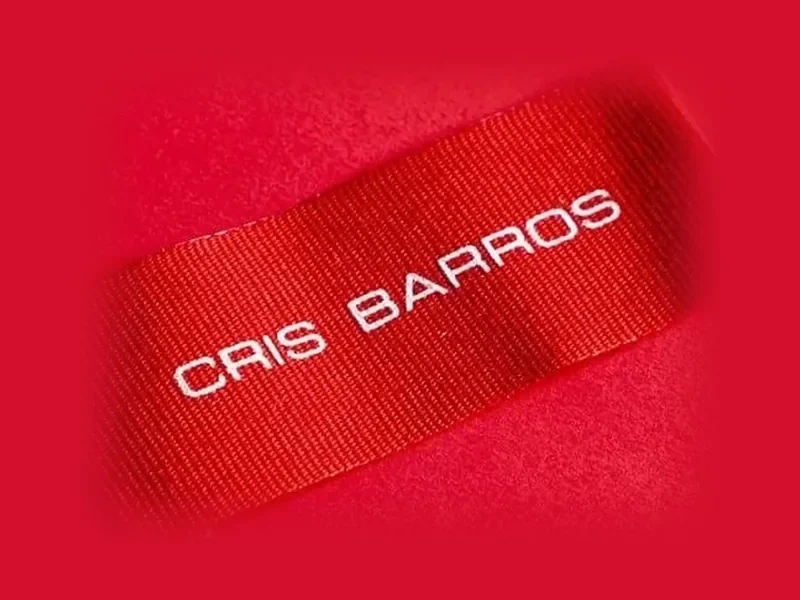
- Light on dark – white, cream or pastel logos on black, navy or dyed tapes stay bright without the base showing through.
- Strong coverage on cotton – the heavier ink layer fills the texture of cotton and canvas tapes.
- Spot colours – each colour is mixed to a Pantone reference, so brand colours stay consistent across runs.
- Durability – correctly cured textile inks flex with the tape and withstand repeated domestic washing.
The limits are equally clear. Each colour needs its own screen, so designs are usually kept to a few spot colours. Hairline text and very small symbols are harder to hold than with thermal transfer, and true photographic gradients are not the method’s strength.
The other printed label methods
Thermal transfer
A print head melts resin ink from a ribbon onto nylon taffeta, satin or synthetic paper. It produces very sharp small type and symbols, is highly wash-resistant and can change data from label to label, which makes it the standard for care labels, sizes, batch numbers and barcodes. It is usually one colour per pass.
Flexographic (rotary) printing
Flexible plates on rotating cylinders print a repeating design along the tape in one pass, with several colours. It is efficient for large runs of the same artwork, such as brand labels across a basic range.
Offset and digital printing
These are the routes to labels with full color printing. Process colours build gradients, illustrations and photographic detail that spot-colour methods cannot reproduce economically. Digital printing needs no plates or screens, so it suits shorter runs and artwork that changes per style; offset suits longer runs of a fixed full-colour design.
| Method | Colours | Fine detail | Opacity on dark | Variable data | Typical use |
|---|---|---|---|---|---|
| Screen printing | 1–4 spot | Good | Excellent | No | Bold logos, cotton tapes, dark tapes, transfers |
| Thermal transfer | Usually 1 | Excellent | Good | Yes | Care, composition, size and barcode labels |
| Flexo / rotary | Several spot | Very good | Moderate | No | Long runs of brand labels |
| Offset | Full colour | Very good | Moderate | No | Long runs of full-colour artwork |
| Digital | Full colour | Very good | Moderate | Yes | Short runs, gradients, artwork per style |
Inks and wash resistance
Durability comes from matching ink to base and curing it correctly. Screen printing on labels uses textile inks made to flex and survive washing and tumble drying; thermal transfer uses resin ribbons that anchor firmly to coated taffeta and satin. Full-colour prints are durable on suitable tapes but are often chosen for brand labels where the main information is not at risk. If garments will go through industrial laundering, as with hotel textiles or uniforms, tell us at the quote stage so we can recommend a suitable ink and tape. Our article on wash-resistant label materials covers the tape side of the equation. All base materials are OEKO-TEX certified.
Screen printed labels without the label: tagless prints
Screen printing is also how most tagless neck labels are made. Inks are printed in reverse onto a carrier, backed with an adhesive and later pressed onto the garment with heat. The result is a thin, flexible print with sharp lines and good opacity on dark fabrics, usually in one to three spot colours. For multicoloured logos, digitally printed transfers are the alternative. Our guide to tagless neck labels and heat transfer printing covers application settings, and our heat transfer labels page shows the options.
When to choose which
- A white or light logo on a dark or cotton tape – screen printing.
- Composition, care symbols and sizes in several languages – thermal transfer.
- One brand label in large volumes across a range – flexo.
- Illustrations, gradients or a photo – digital for shorter runs, offset for longer ones.
- No label at the neck – a screen-printed heat transfer.
Many garments use two methods: a screen-printed or full-colour brand label at the neck and a thermal-transfer care label in the side seam. If you are still weighing a printed label against a woven one, read choosing between woven and printed clothing labels.
Ordering printed labels from us
We print satin, cotton, nylon taffeta and synthetic paper labels in our own factory in Bulgaria. Send your artwork, tape preference, size, colours and quantity, and our design team will recommend the method and prepare a digital proof, typically within 24–48 hours. Physical samples are available before production, which typically takes 10–20 working days after approval, with delivery across the EU. Labels are supplied on rolls or cut and folded. Minimums are low per design – ask us.
Explore our printed labels or request a quote at [email protected] or on WhatsApp/Viber +359 876 766 050.
Are screen printed labels washable?
Yes. With textile inks cured correctly on a suitable tape, screen printed labels withstand repeated domestic washing. For industrial laundering, tell us in advance so we can recommend the ink and base.
How many colours can label screen printing use?
Each colour needs its own screen, so labels are usually printed in one to four spot colours, each matched to a Pantone reference.
Can you make labels with full color printing?
Yes. Digital and offset printing reproduce full-colour artwork, gradients and photographic detail on suitable label tapes. Digital suits shorter runs; offset suits longer runs of one design.
Which method is best for care labels?
Thermal transfer with resin ribbons on nylon taffeta or satin, because it holds very small text and symbols sharply and stays legible after many washes.
Do I have to choose the print method myself?
No. Send us your artwork and how the garment will be used, and we will recommend the method and confirm it on the proof.