A hiking jacket meets rain, rucksack straps and a hot dryer. A hotel uniform goes through industrial laundry twice a week. A silk blouse is hand-washed and pressed. The same label cannot be right for all three.
A label should last exactly as long as the product it identifies. When a logo fades or care text turns illegible after a dozen washes, the customer notices, and the legally required composition information is lost with it. As a clothing label manufacturer, we approach durability as a matching exercise: identify the stresses, then choose a material that handles them while still feeling right in the garment.
Step one: list the stresses
Durability is several properties, not one. A label can pass a 60 °C wash and still crack in a tumble dryer, or tolerate heat perfectly and fade in strong sunlight. Write down what your product will actually face:
- Washing – temperature, frequency, detergents, industrial laundering
- Heat – drying, ironing, steam pressing and heat processes during production
- Abrasion – skin, straps, seats, tools
- Outdoor exposure – UV light, rain, salt water, temperature swings
- Chemicals – chlorine, sweat, dry-cleaning solvents, finishing treatments
Step two: compare materials against those stresses
| Material | Washing | Heat | Abrasion | Outdoor and water | Softness |
|---|---|---|---|---|---|
| Woven polyester damask | Excellent | Very good | Very good | Very good | Good |
| Printed satin | Good | Good | Fair to good | Good | Excellent |
| Printed nylon taffeta | Very good | Good | Very good | Very good | Fair |
| Synthetic paper (spunbonded polyethylene) | Good | Poor, do not iron | Good | Excellent | Fair |
| Silicone | Excellent | Very good | Very good | Excellent | Very good |
| PVC and rubber | Very good | Fair, do not iron | Excellent | Excellent | Fair |
| Genuine leather | Fair | Fair | Very good | Fair | Good |
| PU leather alternatives | Good | Fair | Good | Good | Good |
| Lacquered metal | Very good | Excellent | Excellent | Very good | n/a |
| Heat transfer, correctly applied | Very good | Good | Good | Very good | Excellent |
These ratings describe typical qualities. Real results depend on construction, finishing and your own wash process.
Material notes
Woven polyester
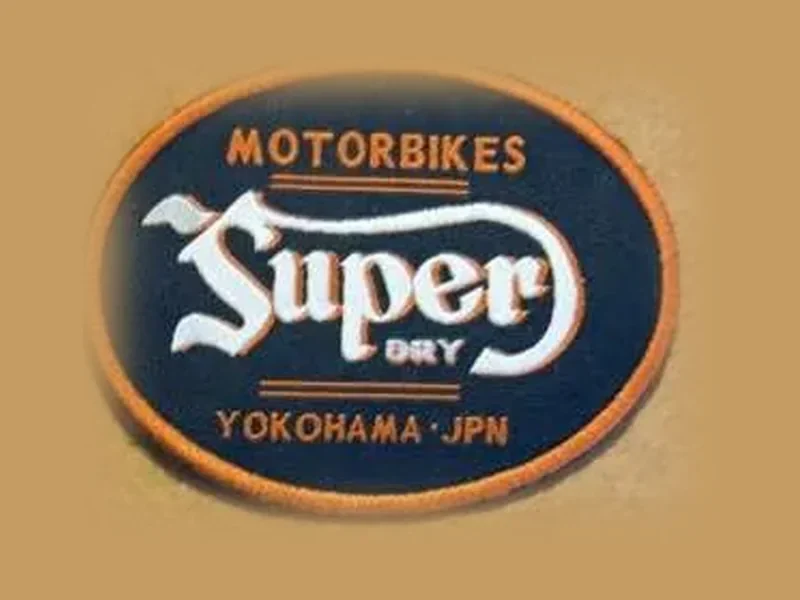
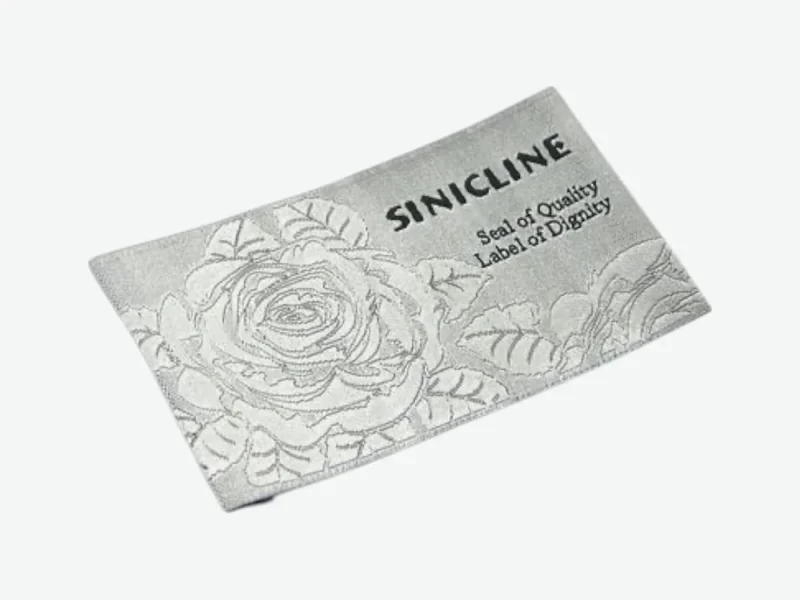
The benchmark for durability. In a woven label, the logo is formed by threads, so there is no ink to wash out. Polyester tolerates high wash temperatures and keeps its colour, and ultrasonically or heat-cut edges do not fray.
Satin and nylon taffeta
Polyester satin is the comfortable choice next to the skin and handles domestic washing well; its weak point is abrasion of the printed face over many cycles, so ink system and print quality matter. Nylon taffeta is thin and very strong for its weight, keeping printed care text legible through frequent washing. It usually sits in the side seam rather than at the neck. Both are covered on our care labels page.
Synthetic paper
Spunbonded polyethylene sheet is tear-resistant, water-resistant and light. It is useful for bags, outdoor products and tags exposed to rain, but it softens at relatively low temperatures, so keep it away from irons and hot dryers.
Silicone, PVC and rubber
Silicone labels flex with the fabric and tolerate a wide temperature range, which makes them ideal for sportswear and swimwear; heat-applied versions need no stitching. Soft PVC, moulded in 2D or 3D, is very resistant to water and abrasion and is common on bags and workwear, but it is stiffer than silicone and should not be ironed directly.
Leather and alternatives
Genuine leather labels develop a patina that suits denim and bags, but may shrink or harden in hot washes. PU alternatives are more wash-stable and keep their colour more consistently.
Metal
Metal labels are the most abrasion-resistant option. Stainless steel and aluminium resist corrosion outdoors; plated zinc alloy and brass need a protective lacquer when the product is washed often. All our metal labels are nickel-free.
Heat transfers
A heat transfer label becomes part of the fabric, so nothing can rub or be cut off. Quality transfers survive many domestic washes, provided temperature, pressure and time are right for the fabric. We recommend testing each new fabric.
Heat during production
Heat matters twice: in the customer’s dryer and iron, and in your factory, through heat-sealing, pressing, steam tunnels or curing ovens. Woven polyester, nylon taffeta, silicone and metal cope well; synthetic paper, PVC and some acetate satins do not. If the garment passes through a hot process after the label is attached, tell us the temperature so we can suggest a suitable construction and ink.
Making printed labels last
For printed labels, the ink system matters as much as the base. Resin thermal transfer produces sharp, wash-resistant text on satin and taffeta; pigment and screen printing suit larger logos; back coatings can improve abrasion resistance.
Durability is the minimum, comfort decides
The toughest material is not automatically the right one. A thick PVC badge would outlast almost anything, but it would feel wrong inside a silk blouse. Typical pairings we recommend:
- Everyday fashion: woven polyester brand label with a satin or taffeta care label
- Sportswear and swimwear: heat transfer or silicone, plus a soft printed care label
- Outdoor gear and bags: PVC, silicone or metal outside; synthetic paper or taffeta for care text
- Workwear and uniforms: woven polyester and taffeta that tolerate frequent hot washing
- Babywear: soft satin or heat transfers from OEKO-TEX certified materials
GRS certified recycled polyester labels are available for many qualities and perform like their virgin equivalents.
Test with your own process
Send us a sample garment and describe your wash and finishing process. As the manufacturer, we produce physical samples so you can run real wash tests before bulk production, which typically takes 10–20 working days after approval, with delivery across the EU.
Frequently asked questions
Which clothing label material lasts longest?
Woven polyester damask, silicone and lacquered metal are the most durable overall. The right choice still depends on the garment and where the label sits.
Which labels can survive industrial laundry?
Woven polyester and printed nylon taffeta are the usual choices for workwear washed frequently at high temperatures. Share your laundry process with us so we can specify the construction.
Can I iron over a PVC or synthetic paper label?
No. Both soften at relatively low temperatures. Mark the care instructions accordingly or choose a heat-tolerant material such as woven polyester or silicone.
How do I know a label will survive my wash process?
Ask for physical samples and wash them at your declared temperature together with the fabric. We make samples before production for exactly this purpose.