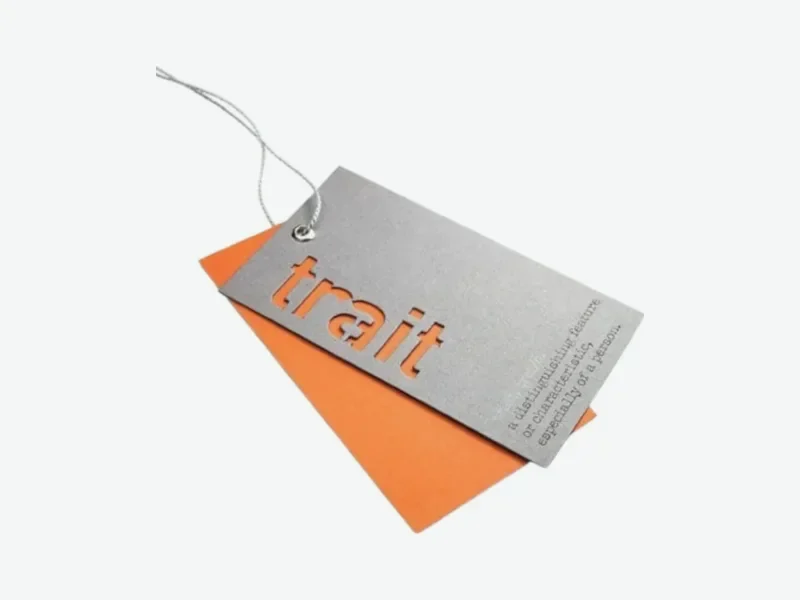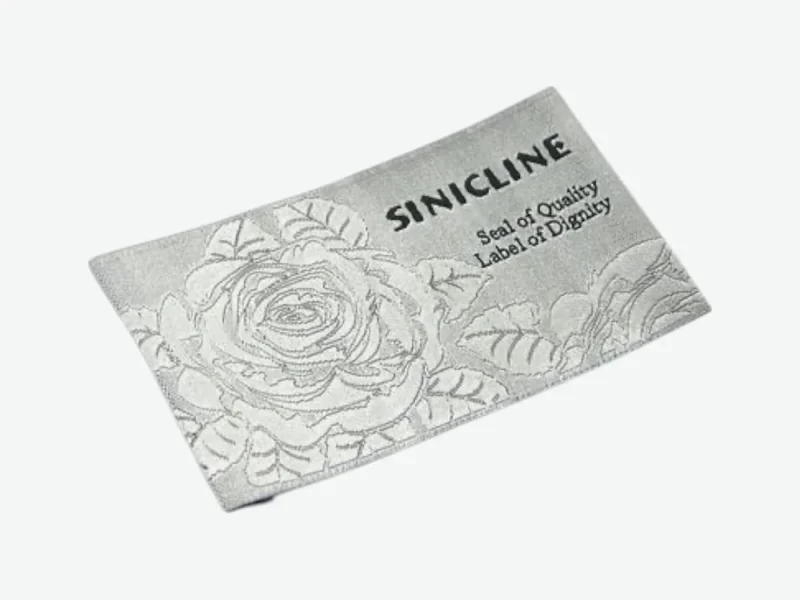
Two identical hoodies, the same fabric and the same logo. One has a soft label tucked into the neck seam; the other has a stiff tab rubbing the back of the neck. Customers will only remember the second one.
Placement is a design decision, and it belongs in the tech pack together with label size, material and fold. As a clothing label manufacturer, we often see placement settled at the sewing table, where options are limited. This guide explains the logic behind each position and gives a garment-by-garment overview you can adapt.
Three labels, three purposes
- The brand label is placed to be seen: on the hanger, in the shop, when the garment is put on.
- The care and composition label is placed to be found and read, sometimes years after purchase.
- The size label is placed to be checked in seconds on the shop floor.
They can be separate labels or combined, but each purpose points to a different position.
Brand label positions
Inside centre back neck
The classic position, sewn into the neck seam or onto the back neck tape. It helps the wearer orient the garment and is the first thing buyers look at. Centre-fold and end-fold woven labels are typical here. Keep the label narrower than the depth of the neck tape so it does not curl over the edge.
As a hanging loop
On coats, jackets and heavier knitwear, a loop-fold or mitre-fold label in the neck seam can double as the hanger loop. Because it carries the weight of the garment, choose a dense damask quality and secure both ends firmly.
Outside details
A small flag label in the side seam or hem is a subtle branding touch on T-shirts and casual trousers. Outside the garment, branding can also move to a patch, a leather label or a metal label on bags and outerwear.
Care label position: what the rule asks
The common industry convention is the wearer’s left side seam, inside the garment, sewn in as a hanging label. On tops it usually sits roughly 8–15 cm above the hem; the exact distance is set by your own or your retailer’s specification, as no single legal measurement exists.
Regulation (EU) No 1007/2011 does require composition information to be durable, easily legible, visible and accessible. In practice:
- sewn in permanently, not only on a swing tag or removable sticker;
- readable before purchase without unpicking anything;
- printed on a tape that stays legible after repeated washing.
A useful habit: sew the care label into the opposite seam from an outside flag label, so neither seam becomes bulky.
Size label options
Size can be stacked under the brand label as a small tab, woven or printed onto the brand or care label, or included in a tagless neck print. On shirts, a small size tab next to the brand label on the collar band or back yoke lets shoppers read it when the shirt is folded. On trousers, size usually sits on the inside back waistband beside the brand label.
Placement by garment
| Garment | Brand label | Care and composition | Size |
|---|---|---|---|
| T-shirts and tops | Centre back neck, or tagless print | Left side seam, about 80–150 mm above hem | Under the brand label or in the print |
| Shirts and blouses | Collar band or back yoke | Left side seam | Tab beside the brand label |
| Jeans and trousers | Inside back waistband; patch outside | Left side seam or inside waistband seam | Back waistband |
| Dresses and skirts | Centre back neck or waistband | Left side seam at waist or hip | With the brand label |
| Coats and jackets | Neck loop or inside lining | Lining side seam or inner pocket seam | With the brand label |
| Swimwear and lingerie | Tagless print or very small soft label | Side seam or back of waistband | Print or care label |
| Caps and hats | Inside sweatband; patch outside | Sweatband seam | Sweatband, if sized |
| Bags | Outside patch or plate; lining label | Lining seam or pocket | Not usually needed |
This reflects common practice, not legal rules. If a retail customer has its own placement manual, follow it exactly.
Comfort on stretch and close-fitting garments
Elastic and close-fitting garments are the least forgiving. A firm label on stretch fabric stops the seam from moving and can be felt immediately. Options that work well:
- heat transfer labels for tagless neck prints;
- small printed satin labels with ultrasonically sealed edges;
- folded labels, so cut ends stay inside the seam;
- care labels moved lower in the side seam, away from the underarm.
Put placement into the tech pack
For each style, note the label type, finished size, fold, position measured from a fixed point and stitching method. That sheet removes guesswork for the sewing team and keeps reorders consistent. Our designers can add a placement sketch to the digital proof, and physical samples are available so you can test the label in the real garment before production.
Frequently asked questions
Is there a legal position for the care label?
No single legal position exists in the EU. The rule is that composition information must be durable, legible and accessible; the left side seam is simply the most common convention.
Can I put the care label on the swing tag instead?
No. Mandatory composition information must stay with the garment, so it needs a permanent label or marking. A swing tag can repeat it, but it cannot replace it.
How do I avoid itchy neck labels?
Use soft materials such as satin or fine damask, choose a fold that hides the cut ends, and consider a tagless heat transfer for close-fitting tops.
Where should the label go on a cap?
The brand label is usually sewn inside the back sweatband, often with a patch on the front or side outside. The care label goes into the sweatband seam.