A swing tag is removed within minutes of purchase, which makes it one of the easiest places in your packaging to reduce material. As a hang tag manufacturer we see that the most convincing low-impact tags are rarely built on one special material, but on a series of sensible choices.
We approach a lower-impact tag in four layers: what it is made from, what holds it on, how it is printed and what it says. Each layer offers simple gains.
Layer 1: the board
Recycled board
Recycled board contains part or all recovered fibre and is available in white, grey-toned, kraft brown and coloured versions across the usual tag weights. Its surface is a little more open than virgin coated board, which flatters one-colour print and blind embossing. If you print a recycled content figure, keep the documentation for the exact board on file.
Certified forest sources
Board from responsibly managed forests can be certified under schemes such as FSC or PEFC. Printing the scheme’s logo on a tag is governed by the scheme itself and requires a valid chain of custody for the printed item. Ask us which certified-source boards are available for your order and what paperwork comes with them, and agree any logo use with your certification adviser.
Uncoated stock
Uncoated board has no clay or plastic surface layer. It recycles easily with paper, feels natural and takes embossing beautifully. Colours print softer and less glossy, so bold, simple artwork works best. Always judge the proof on the actual stock.
Seed paper for special editions
Handmade paper with embedded seeds can be planted after use and makes a memorable story for gifts or campaigns. Its surface is irregular, so small text is difficult; it is thicker and softer, must stay dry, and seeds crossing borders may fall under plant health rules. We suggest it as a small secondary tag beside a standard tag that carries product information.
| Board | Look | Printing behaviour | Typical collections |
|---|---|---|---|
| Recycled white or grey | Matt, light texture | One or two colours, embossing | Basics, everyday lines |
| Recycled kraft | Warm brown, rustic | Dark inks and white ink stand out | Denim, outdoor, natural fibres |
| Certified-source uncoated | Smooth, natural | Soft colours, crisp debossing | Minimalist and premium brands |
| Seed paper | Handmade, visible seeds | Simple logos only | Gifts, limited drops |
Layer 2: what holds the tag on
The string is often the only part that is not paper, so it is worth choosing carefully.
- Cotton cord: soft, natural and available in many colours.
- Jute or hemp twine: textured and rustic, ideal with kraft board.
- Recycled polyester string: strong and colourfast, available with GRS-certified recycled content.
- Paper twine: keeps the whole tag mono-material.
Plastic tag pins and seal locks are fast on a production line and remain the practical answer for some products. Where line speed allows, a string looped through a buttonhole or fixed with a safety pin removes the plastic part entirely.
Layer 3: print and finish
- Use fewer colours. Fewer plates, less ink and less make-ready waste. A single strong colour on kraft board looks deliberate.
- Choose water-based or soy-based inks where your stock and colour targets allow. We advise which systems suit the board you select.
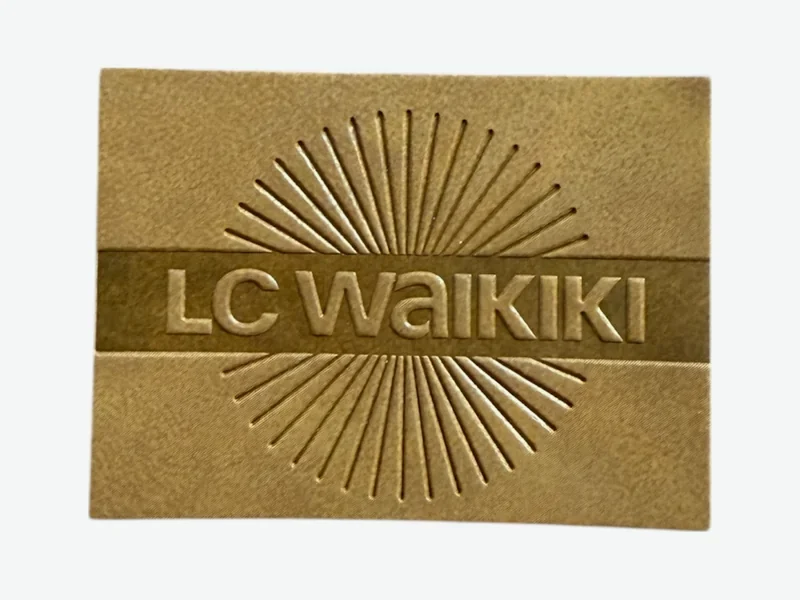
- Let texture do the work. Embossing and debossing add a premium feel with no extra material.
- Leave out plastic lamination. Film bonded to paper complicates recycling. A varnish or an uncoated finish is usually enough for a short-lived tag.
- Keep foil small. If foil is part of your identity, reserve it for the logo.
Pick one hero finish. A kraft tag with a single blind-embossed mark often looks more refined than a laminated tag carrying three finishes.
Layer 4: size and wording
Right-size the tag
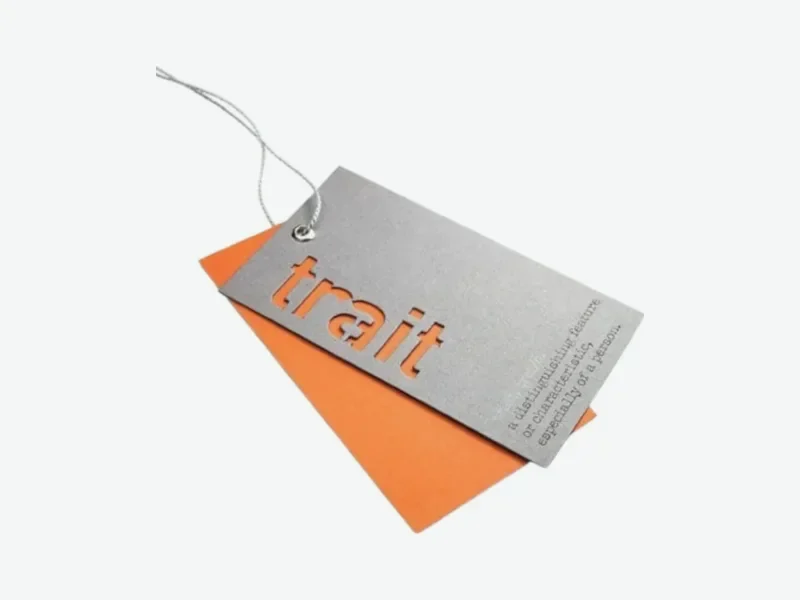
Design to the information you actually need, and choose dimensions that nest efficiently on the print sheet. Standard rectangles waste less board than complex die shapes. One tag per garment, with the price sticker placed on the same tag, avoids a second piece of board.
Write claims you can prove
Under EU consumer rules applying from September 2026, generic environmental statements such as “eco-friendly” or “green” are restricted. Replace them with specific, verifiable facts, for example the recycled content of the board or the certified recycled content of the string, and keep the evidence. Precise wording is also more persuasive to customers.
How we help
Our design team proposes board, string and finish combinations, prepares a digital proof and sends printed samples before production. We match brand colours to Pantone references and deliver across the EU. Browse formats on our hang tags page, or pair the tags with paper bags and tissue paper for a consistent packaging set.
Which board is best for a lower-impact hang tag?
Recycled or certified-source uncoated board is a strong starting point. It recycles easily with paper and takes embossing well.
Can I use a string instead of a plastic tag pin?
Yes, where line speed allows. Cotton, jute, hemp or paper twine, or recycled polyester string, can replace plastic fasteners entirely.
Does lamination make tags harder to recycle?
Yes. Plastic film bonded to paper complicates recycling. A varnish or an uncoated finish usually serves a short-lived tag just as well.
Can I print “eco-friendly” on my tags?
Generic claims like this are restricted under EU rules applying from September 2026. Use specific, documented statements such as the recycled content of the board.
Can seed paper carry my product details?
Its irregular surface suits simple logos only. We recommend it as a secondary tag alongside a standard tag with the product information.