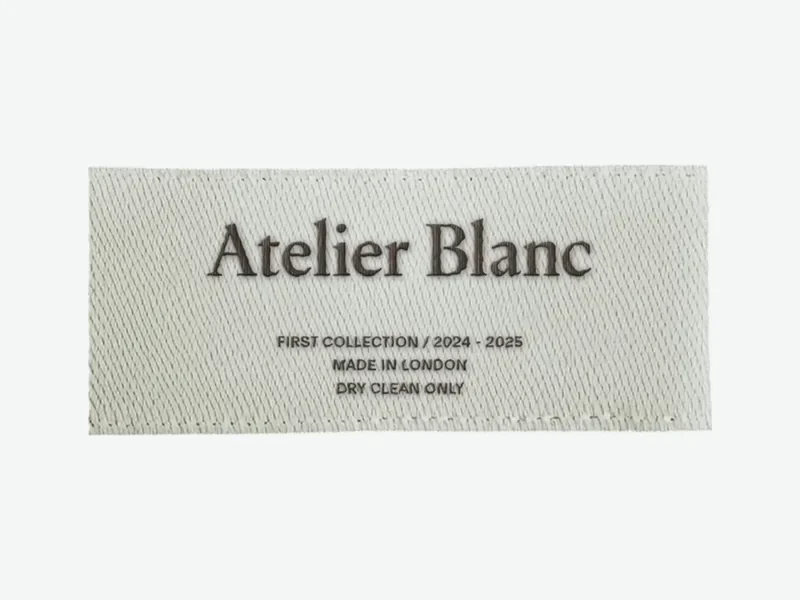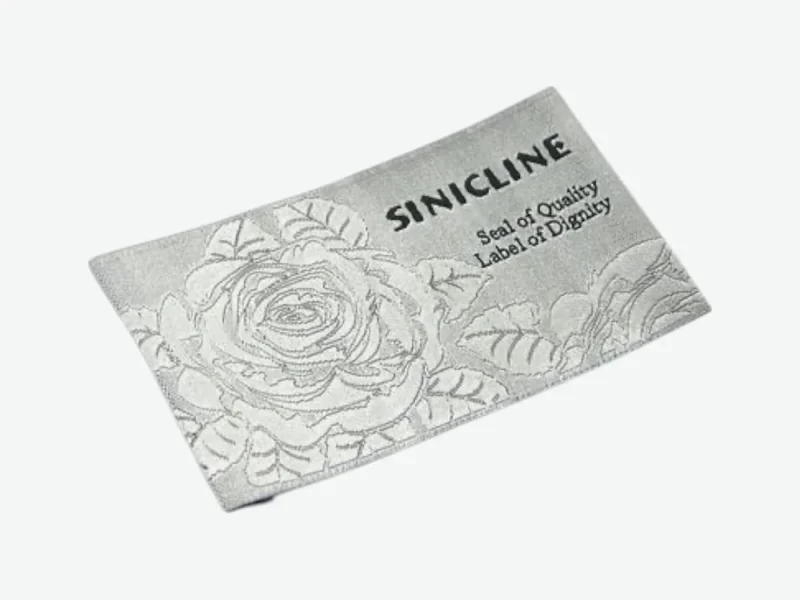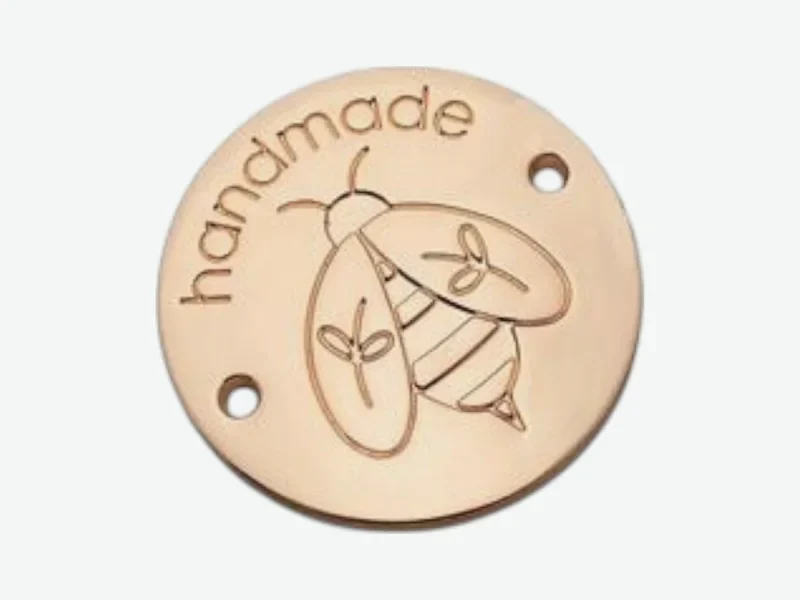
A bag is carried, dropped, squeezed into lockers and rested on café tables, yet it is rarely washed. That changes everything about how it should be labelled. Here is how we, as a label manufacturer, help brands choose custom labels for bags, backpacks, wallets and belts, and how to fix them so they still look right years later.
Start with the fixing, not the logo
With clothing, the label is usually chosen first and sewn in at the end. With bags it works the other way round. Screw holes, rivet positions, reinforcement patches and backing plates are cut into the panels long before the lining is closed, so the attachment method has to be agreed with your bag maker at the pattern stage. Once you know whether the label will be screwed, riveted, pronged, sewn or caught in a seam, choosing its material and size becomes straightforward.
| Fixing | Works with | Where it shines | Plan ahead for |
|---|---|---|---|
| Screw posts | Metal plates | Leather bags, luggage, rigid panels | Access from inside before the lining is sewn |
| Rivets | Metal plates, leather patches | Totes, backpacks, belts, denim bags | Setting tools at the bag factory |
| Prongs | Metal emblems | Canvas, leather, heavy textiles | A small backing plate on soft fabric |
| Stitching | Woven, leather and silicone labels; plates with sew holes | Almost any bag | Stitch line that suits the design |
| Seam insertion | Woven and printed labels | Side seams, lining seams, zip ends | Fold and seam allowance |
| Heat application | Silicone labels, transfers | Smooth synthetic fabrics | A test on the real fabric; leather is unsuitable |
Matching the label to the product
Canvas and cotton totes
Picture a natural canvas shopper for a bookshop. A debossed leather patch of around 60 × 40 mm, riveted at the corners just below the top edge, ages with the fabric and looks deliberate. A woven flag in the side seam is a lighter alternative.
Backpacks and sports bags
Outdoor and school backpacks meet rain, mud and hands that grab them by the front pocket. Silicone labels with a raised 3D logo are flexible, water-resistant and easy to wipe. For a more refined city backpack, a metal plate centred on the flap gives a premium accent; keep it in proportion to the panel and fix it through at least two points so it does not tilt.
Wallets, card holders and belts
Small leather goods leave very little room. A slim metal bar of roughly 25 × 6 mm in a lower corner, or a debossed logo inside the fold, is usually enough. On belts, the logo often goes on a leather or metal tab next to the buckle, or embossed on the inside of the tip, where it is seen each time the belt is fastened.
Luggage and travel bags
Suitcases and weekenders take the hardest knocks. A screwed metal plate beside the handle, combined with a leather tab, is the classic pairing. Rounded, slightly bevelled corners wear more gracefully than sharp ones.
The inside label matters too
Open a well-made bag and you will usually find a second label: a woven label in the lining seam, a small tab on the inner pocket or a leather loop next to the zip. This is the right place for the product name, care advice or a QR code linking to product information. A loop of woven tape on a zip end also doubles as a pull.
Building one label family for the whole range
Strong accessory brands treat their labels as a set. A typical family might be:
- a metal plate or leather patch on the outside;
- a woven label sewn into the lining;
- a leather or woven tab on the main zip pull;
- a printed care label on fabric styles;
- a hang tag and a poly bag or paper bag for retail.
Because we produce metal, leather, woven, silicone and printed labels in our own production, the logo version and colours stay identical across every piece, with Pantone matching for each material.
Durability checklist for bag labels
- Back it up. Behind a plate or patch on a soft panel, add interlining or a small backing piece so prongs and rivets cannot tear through.
- Choose dense weaves. Damask and satin woven labels resist scuffing and keep fine detail sharp.
- Think about weather. Silicone and stainless steel cope best outdoors; genuine leather benefits from a sealed finish.
- Test washable totes. If a fabric tote is meant for the machine, wash-test the labels and fixings together with the bag.
- Metal finishes. All our metal labels are nickel-free; gold, silver, gunmetal or nickel-look describe the colour only.
Composition labelling for fabric bags
Under Regulation (EU) No 1007/2011, a product made of at least 80% textile fibres by weight counts as a textile product, so many canvas totes and fabric backpacks need a fibre composition label in the language of each country where they are sold. Leather goods fall outside that regulation, though a small care label inside is still appreciated by customers.
How we work on bag projects
Send us the bag type, panel material, preferred fixing and target size together with your logo. Our design team returns a digital proof, typically within 24–48 hours, and physical samples are available before production so your bag maker can trial the fixing on real panels. Production typically takes 10–20 working days after approval, with delivery across the EU. Minimums per design are low – ask us. Write to [email protected] or message us on WhatsApp/Viber at +359 876 766 050, or use our contact page.
Frequently asked questions
When should I decide how the bag label is attached?
At the pattern stage. Holes, reinforcements and backing plates are built into the panels before assembly, so agree the fixing with your bag maker before cutting.
Which label suits a canvas tote best?
A leather patch riveted or stitched near the top edge is the most popular choice. A woven flag in the side seam gives a lighter, textile look.
Can a metal plate be used on a soft backpack?
Yes, provided the panel is reinforced behind the plate and the plate is fixed through at least two points so it stays flat.
Are your metal bag labels nickel-free?
Yes. Every metal label we manufacture is nickel-free; finish names such as nickel-look refer only to the colour.
Do fabric tote bags need a composition label?
In most cases yes. If at least 80% of the weight is textile fibre, EU textile labelling rules apply and the fibre composition must be shown.