A hospital tunic or a chef’s jacket may be laundered every day of its working life – hot, alkaline, tumbled and pressed by machine. Its labels must survive all of that while still telling the laundry and the wearer the size, the owner and the batch. This guide explains how we manufacture uniform labels for industrial laundering and how to plan them for a corporate workwear programme.
A label’s day at the commercial laundry
Professional laundering is far tougher than a home machine. Workwear is often tested against procedures similar to those in ISO 15797, the international standard for industrial washing and finishing of workwear. A label may face:
- wash temperatures commonly between 60 and 85 °C for hygiene-critical garments in healthcare and catering;
- alkaline detergents and bleaching agents;
- tunnel finishers and hot tumble dryers;
- heavy mechanical action in large drums;
- automated pressing that can smear weak prints.
If a size label becomes unreadable after twenty cycles, the laundry’s sorting breaks down. Durability is therefore a functional requirement, not a nice extra.
Matching material to the wash regime
| Material | Industrial wash resistance | Variable data | Best role |
|---|---|---|---|
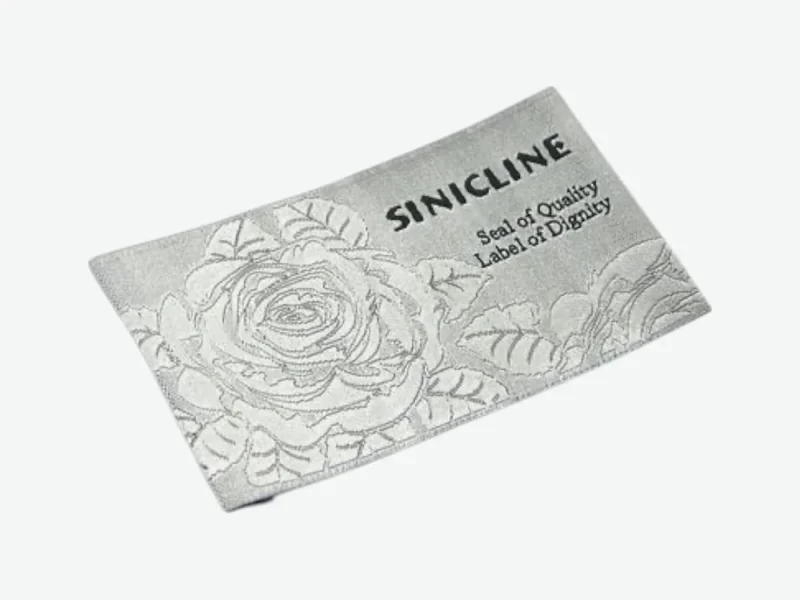
| Woven polyester, damask or taffeta | Very high | One design per size | Brand and size labels |
| Printed nylon taffeta | High, with a suitable ribbon | Easy | Care, composition, batch |
| Printed coated polyester tape | High | Easy | Care labels, internal ID |
| Heat transfer | Good to high, fabric dependent | Per size | Technical fabrics, neck prints |
| Silicone badge | High | None | Outside logos on jackets, caps, trousers |
With woven labels the colour is in the polyester yarn, so there is no ink to wash away, and sealed edges stop fraying. For data-heavy care labels, nylon taffeta or coated polyester printed with a resistant thermal transfer ribbon gives sharp, variable text – tell us the wash temperature so we pair the right ribbon and tape. Coated, water-repellent or flame-retardant fabrics often take a heat transfer better than extra stitching; test it on the actual fabric. For outside branding, silicone labels are sewn on or applied with a heat-seal backing suited to the fabric.
Labels as data carriers
In a uniform programme, the care label is also an information record. Consider printing:
- article number and size, including fit (regular, tall, short);
- production batch or order number for quality tracing;
- season or year of manufacture, which helps plan replacement cycles;
- a barcode or QR code for the laundry or the employer’s system – QR codes can also link to care information or digital product passport data.
Codes must still scan after many hot washes, so print them generously on a durable tape and test them after wash cycles. RFID laundry tags can be discussed on request. Agree formats and positions with your laundry partner first; sorting systems often have preferences.
Size, name and department labels
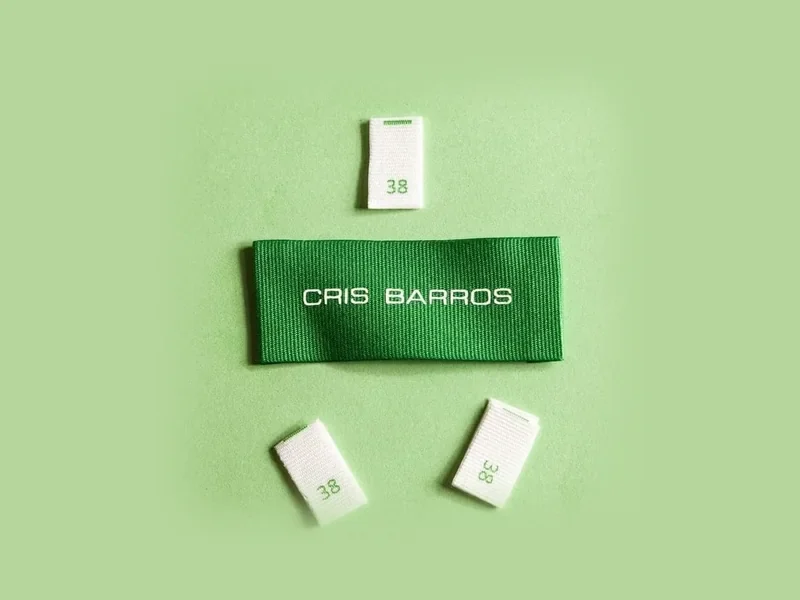
Large programmes issue thousands of garments in many sizes. A woven or printed size label with a big, clear code beside the brand label avoids mix-ups at issue points. For named garments, a printed label with a blank white field for a laundry-proof marker, or a separate printed name tape, works well. Colour-coded labels or a woven stripe let staff and laundries identify departments at a glance – for example, blue for kitchen, green for housekeeping, grey for maintenance in a hotel group.
Where labels go on workwear
| Garment | Brand and size | Care label |
|---|---|---|
| Jackets and tunics | Back neck or inside front facing | Left side seam |
| Trousers | Inside back waistband | Side seam or pocket bag |
| Aprons | Small woven label at top hem | Side seam |
| Polo shirts, T-shirts | Tagless neck transfer | Printed label in side seam |
Keep labels clear of welded, taped or sealed seams and of zones where they might affect fit or protection. Confirm final positions on a sample garment before the bulk order.
Protective and high-visibility garments
Personal protective equipment, including high-visibility clothing, has its own standards with specific marking – pictograms, performance levels, maximum cleaning cycles. The garment manufacturer defines that content based on its testing and certification. We produce the labels with the information you supply, in materials suited to the wash regime. Make sure a sewn label never covers a reflective area.
Composition and care
Workwear supplied in the EU falls under Regulation (EU) No 1007/2011, so composition is shown by weight with official fibre names, and care symbols follow ISO 3758. Where your tests support it, garments that are always professionally cleaned can carry professional care symbols and text such as “suitable for industrial laundering”. International employers often need several languages on one label.
Planning your programme with us
Tell us the garment types, fabrics, wash regime, sizes and any variable data. As the manufacturer, we recommend materials and print systems, prepare a digital proof, typically within 24–48 hours, and supply physical samples for your own wash tests. Production typically takes 10–20 working days after approval, with delivery across the EU from Bulgaria. OEKO-TEX certified materials are available. Minimums per design are low – ask us at [email protected] or WhatsApp/Viber +359 876 766 050.
Frequently asked questions
Which label material lasts longest in industrial washing?
Woven polyester is the most robust for brand and size data, as the colour is in the yarn. Printed nylon taffeta with a resistant ribbon suits variable care data.
Can each garment carry a unique code?
Yes. Barcodes or QR codes can be printed as variable data on durable tape. Test scanning after wash cycles; RFID can be discussed on request.
How can a uniform show the wearer’s name?
Use a printed label with a blank field for a laundry-proof marker, or a separate printed name tape.
Should labels be agreed with the laundry?
Yes. Laundries often have preferred positions and code formats for their sorting systems, so align before ordering.
Do your labels certify protective clothing?
No. The garment manufacturer sets the protective marking content from its own testing; we produce durable labels carrying that information.