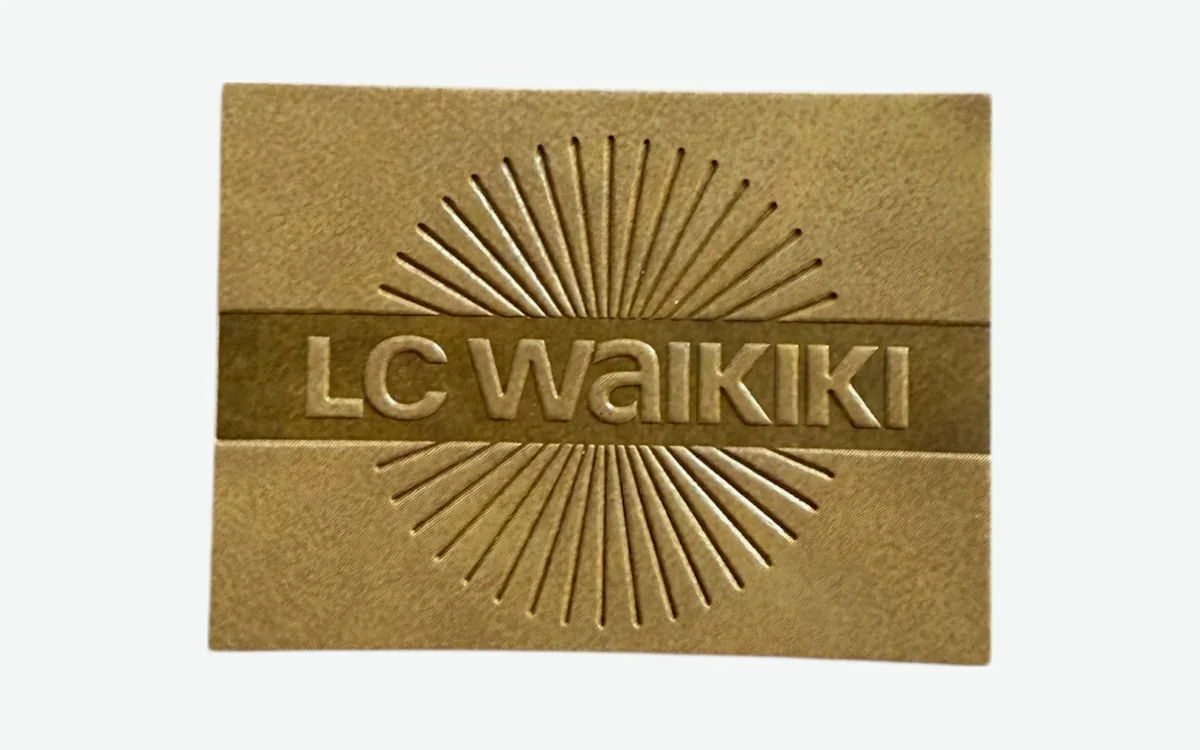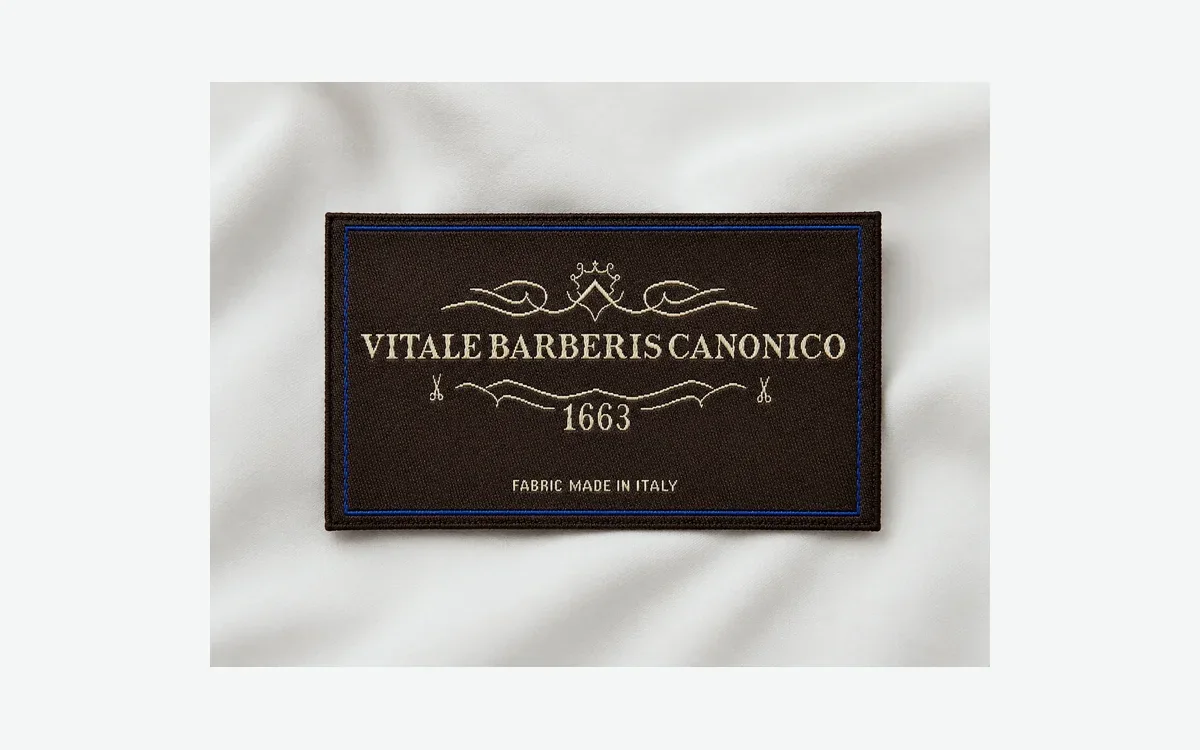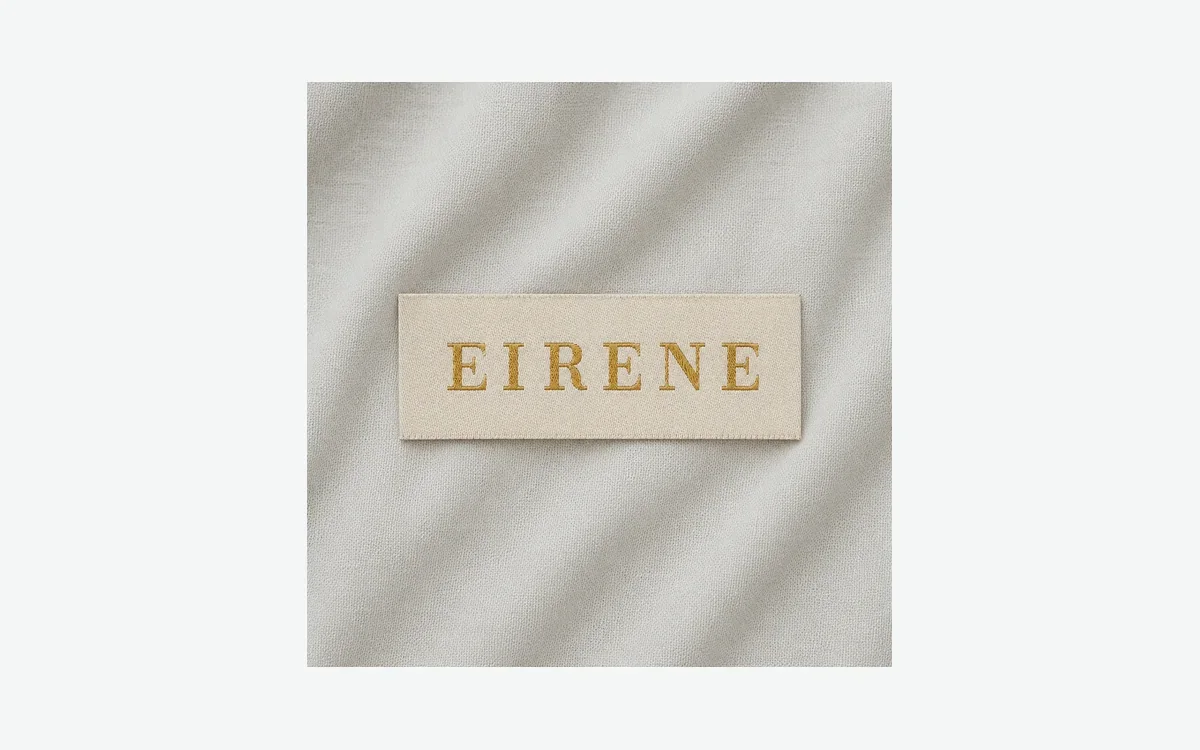
Why does one neck label disappear on the skin while another itches from the first wear? Very often the logo, size and yarn are identical – the difference is the edge. This guide explains how label edges are sealed, what each method feels like and which one we recommend for each kind of garment.
The problem every edge has to solve
Most woven and printed labels are made from polyester, and polyester frays as soon as it is cut with a cold blade. So every edge must be sealed, woven closed or hidden. How that happens decides three things: comfort (a hard melted bead is the classic cause of scratching), durability (an unsealed edge sheds threads after a few washes) and appearance (a crisp shape, a rounded corner or a stitched frame each send a different signal).
Remember that a label has two kinds of edge. The long sides follow the tape or fabric as it leaves the loom or printer. The ends are where it is cut into pieces. As a label manufacturer we can finish the two differently, and the best pairing depends on the fold and position.
Ranking the finishes by softness
Rather than going method by method, let us start with what most brands care about: how it feels against skin. From softest to firmest:
1. Woven selvedge
On narrow-fabric (needle) looms each label tape is woven to its final width. The weft turns back at each side, forming a true selvedge – no cut, no melted line. It is the gentlest edge there is and very stable in the wash. Only the ends are cut, usually ultrasonically, and with an end- or centre-fold even those vanish into the seam. The trade-off: every width needs its own set-up, so woven edges suit brands that keep one label width across many styles. The same edge is typical of woven tapes used for neck tape and hanger loops.
2. Ultrasonic cut
A blade or wheel vibrating at very high frequency creates friction heat exactly at the cutting line. The synthetic fibres fuse in a narrow strip, so the sealed zone remains thin and pliable. This is our standard recommendation for woven and satin labels worn close to the body. Wide woven fabric can also be slit ultrasonically into strips, so both sides and ends get the same soft finish. It needs thermoplastic yarn; pure cotton tape will not melt and instead relies on folded ends or a woven edge.
3. Laser cut
A laser beam cuts and seals along any outline in the file – circles, shields, rounded corners, letterforms – without a tool per shape. It is precise and clean, but slightly firmer than ultrasonic, and dark polyester may show a fine darker line. Ideal for woven badges, patches and shaped labels on outerwear, caps and bags. For shaped labels that touch skin, talk to us about softness first.
4. Hot knife (heat cut)
A heated blade melts through the tape and seals it reliably and quickly. It handles thick tapes and heavy labels well. The catch is a wider bead that can harden into a sharp ridge – fine on bags, home textiles, pocket labels or labels whose ends are folded under, but noticeable on a T-shirt neck or underwear.
5. Merrow border
Dense overlock stitching wraps the edge in a matching or contrast thread, giving a raised frame. It is the traditional finish for patches on sportswear, workwear, caps and team kit. It follows circles, ovals and rounded rectangles, but not sharp inside corners – complex shapes are laser cut instead. Because it adds stiffness, keep it on the outside of the garment.
The hidden helper: folding
Folding is not a cutting method, yet it is one of the most effective comfort tools. End-fold, centre-fold, loop fold and mitre-fold all tuck the cut ends into the seam or turn them inwards, so the wearer only touches the smooth face and the folded edge. Our comparison of label folds explains each one. The most comfortable neck label we make combines a soft weave or satin, ultrasonic or woven long sides, and a fold that hides the ends.
Edge finish by product
| Product | Inside labels | Outside labels |
|---|---|---|
| T-shirts, babywear, underwear | Ultrasonic or woven edge, centre- or end-fold, satin or fine damask | Small loop-fold flag with ultrasonic edges |
| Shirts, dresses, knitwear | Ultrasonic with end- or mitre-fold; woven edge for premium lines | – |
| Jackets, coats, bags | Heat cut with folded ends | Laser cut shapes, merrow patches |
| Caps, sportswear | Soft ultrasonic labels | Laser cut badges, merrow patches |
| Home textiles, blankets | Heat cut or ultrasonic, folded ends, sewn into a seam or topstitched | – |
Material counts too: satin and fine damask with ultrasonic edges feel smoother than stiff taffeta with heat cut ends. For the most sensitive items, a tagless heat transfer removes the edge question altogether.
The finger test
Run a fingertip along a sample edge in both directions. If it catches against the grain, your customer will feel it. Better still, ask us to make the same label with two different edges and sew both into your actual garment – as the manufacturer we can produce comparison samples before bulk.
Specifying the edge
Tell us the garment, the position and whether the label touches skin; give the finished size and fold; state the finish for sides and ends, or ask us to recommend one; and send a vector outline for shaped labels. Our design team adds edge and fold to the technical drawing and sends a digital proof, typically within 24–48 hours. Minimums typically start at 1,000 pieces per design and production typically takes 10–20 working days after approval. Explore qualities on our woven labels page or email [email protected].
Frequently asked questions
What makes a label edge scratchy?
Mostly a hard melted bead from heat cutting, or a stiff weave. Ultrasonic or woven edges and a fold that hides the ends solve most cases.
Is ultrasonic cutting suitable for cotton labels?
No, cotton does not melt. Cotton tapes are finished with folded ends or a woven edge instead.
Which edge should I choose for a round or shield-shaped label?
Laser cutting follows any outline. For simple circles or ovals on the outside of a garment, a merrow border is another option.
Can the sides and ends have different finishes?
Yes. A common pairing is woven or ultrasonic sides with ultrasonic ends hidden by a fold.
Can I compare two edge finishes before ordering?
Yes. We can produce the same label with different edges so you can test them in your garment.