A leather label is judged in two moments: when the customer first sees it, and after the tenth wash. Its size decides the first impression; the way it is attached decides the second.
We produce custom leather labels in genuine leather, PU and jacron for denim, knitwear, headwear and bags. Most problems we see come from a label slightly too big for its spot, or a stitch that fights the material.
Measure the space first
Size comes from the flat area available on the product. Measure that area, deduct room for stitching and nearby seams, and only then place the logo inside what is left.
Three practical margins help:
- Keep 2–3 mm clear at the top and bottom when the label sits on a waistband or a folded cuff, so the needle never runs into a seam or the fold line.
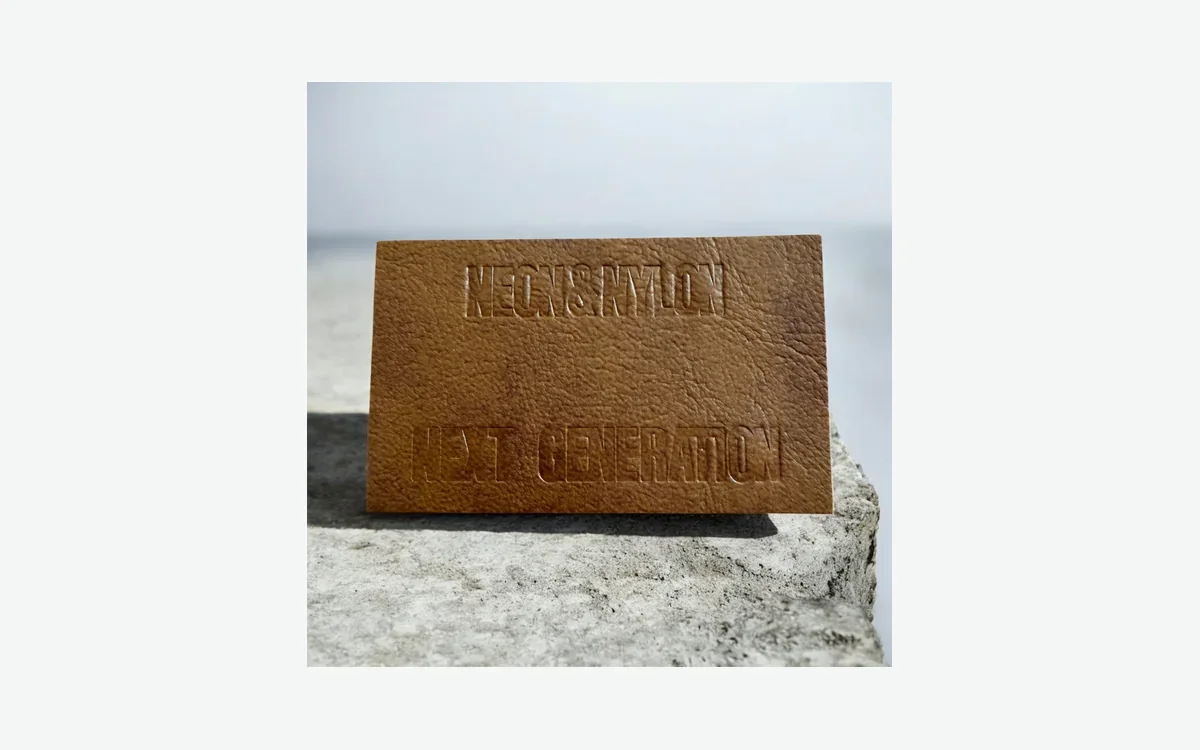
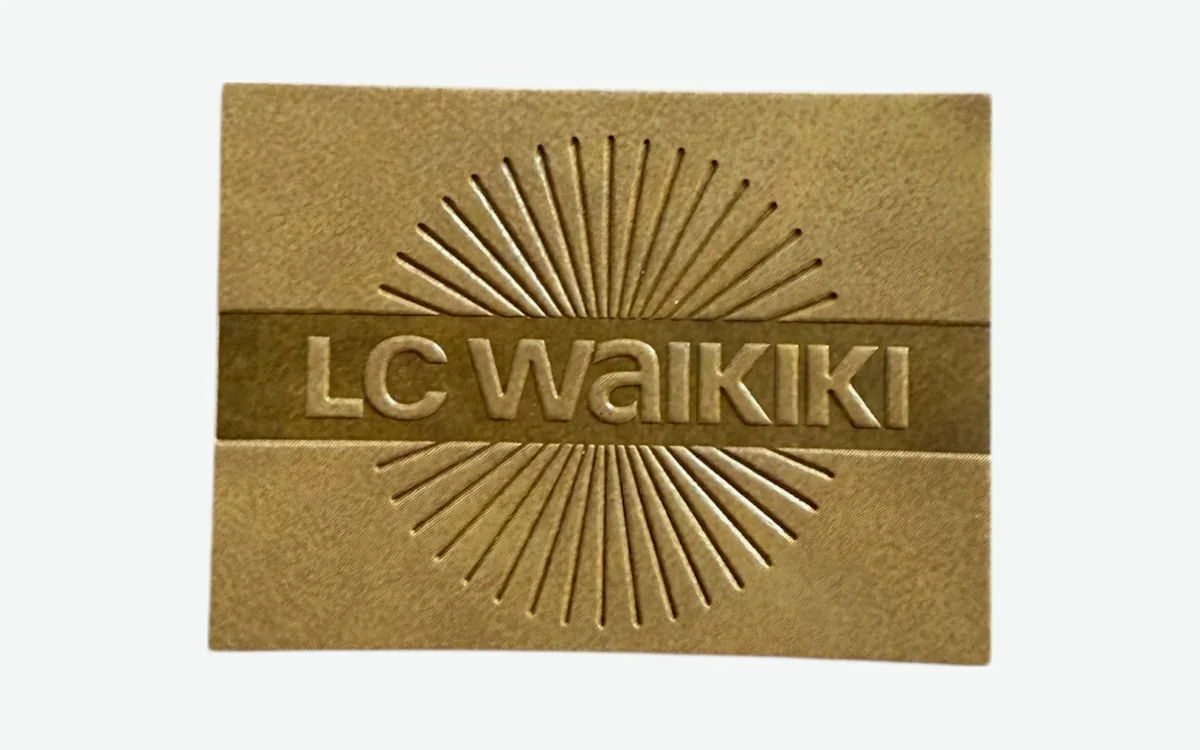
- Keep embossed or debossed artwork at least 4–5 mm inside the stitch line. Needle holes through a letter are impossible to hide.
- Match visual weight to the item. A heavy patch overwhelms a light jersey; a tiny one disappears on a canvas holdall.
Size and thickness by product
| Product and position | Size range (mm) | Thickness |
|---|---|---|
| Men’s jeans, back waistband | 70 × 50 to 90 × 60 | 1.2–2.0 mm |
| Women’s and kids’ jeans, waistband | 40 × 25 to 60 × 40 | 1.0–1.5 mm |
| Jackets and coats, neck, hem, sleeve or pocket | 40 × 25 to 60 × 40 | 1.0–1.5 mm |
| Beanie, front of the cuff | 40 × 20 to 60 × 30 | 0.8–1.2 mm |
| Cap front panel / back strap | 50 × 30 to 70 × 45 / 30 × 15 to 40 × 20 | 0.8–1.5 mm |
| Knitwear and sweatshirts, hem or cuff | 30 × 20 to 50 × 25 | 0.8–1.2 mm |
| Bags and backpacks, flap or front | 50 × 30 to 80 × 50 | 1.2–2.0 mm |
| Small accessories | 30 × 15 to 40 × 25 | 0.8–1.2 mm |
| Blankets and home textiles, corner | 40 × 25 to 60 × 40 | 1.0–1.5 mm |
Custom sizes and die-cut outlines are always possible. For a beanie, around 50 × 25 mm usually looks balanced; a chunky winter knit can carry 60 × 30 mm. More sizing logic for every label type is in our label size guide.
Why thickness changes the sewing
Leather labels typically range from 0.8 to 2.0 mm. A thick label feels substantial and holds a deeper emboss, but it needs a stronger needle and a machine that climbs the edge without skipping. A thin label follows the curve of a rib cuff easily, though very thin leather can stretch along the stitch line. When in doubt, we send samples in two thicknesses so your sewing team can try both on their own machines.
Four ways to attach a leather label
All-round stitching
One line around the whole label, 2–3 mm in from the edge. The label stays flat, the edges cannot curl after washing and the stitching frames the logo. This is the default for denim, jackets and bags.
Short-side bars
Only the two short ends are stitched. It is faster and suits labels on hems or side seams.
Corner tacks
A few stitches, a small cross or a bar at each corner, often through pre-punched holes. The fabric between the corners can still stretch, which makes this the right choice for beanies and knitwear, where a full frame would cause puckering.
Caught in a seam
A tab or flag label is inserted into a side seam or gusset and secured by the seam itself. It must be long enough to sit deep in the seam allowance.
Needle, thread and machine settings
- Genuine leather: a leather needle with a wedge (cutting) point, around NM 90–110, heavier for thick denim patches.
- PU and jacron: a sharp or regular point, because a cutting point can weaken coated or fibre-based materials along the seam.
- Thread: bonded polyester or nylon for abrasion resistance; heavier for denim and bags, finer for knitwear. Tone-on-tone keeps the focus on the logo, contrast thread turns the frame into a design element.
- Stitch length: about 3–4 mm. Short stitches perforate leather like a tear-off strip.
- Presser foot: a walking or roller foot feeds leather evenly; a non-stick foot helps on grippy PU surfaces.
Avoid pins, because their holes stay visible. Hold the label with sewing clips or a strip of basting tape, and finish by pulling threads to the back and knotting rather than backstitching through the same holes.
Beanies: a few extra details
Centre the label on the front of the turned-up cuff and decide whether to sew through one layer (clean inside) or both (cuff fixed in place). Sew with the beanie slightly stretched to its worn size, otherwise the label wrinkles on the head. A supple 0.8–1.2 mm leather or PU sits better on the curve than a stiff, heavy label.
Pre-punched holes, rivets and adhesive backing
For hand finishing and small studios, we can supply labels with pre-punched holes, for example two at each end or one in each corner, so spacing stays even without a heavy machine. On finished bags, thick canvas or some hats, rivets can replace stitching and add a workwear character; our nickel-free metal components can be finished to match your other hardware. A heat-activated backing helps with positioning, but on garments that are washed, stitches or rivets should always carry the permanent hold.
Test with your wash
If garments are washed after the label goes on, as most denim is, leave a little ease in the stitching so genuine leather can move slightly, and run a sample through your real wash recipe before bulk production. PU and jacron are often chosen precisely for washed garments.
As the manufacturer, we prepare a digital proof, typically within 24–48 hours, and physical samples before production. Explore our custom leather labels or tell us about your product.
What size leather label suits a pair of men’s jeans?
Most men’s styles take 70 × 50 to 90 × 60 mm on the back waistband, in 1.2–2.0 mm material. Measure the finished waistband height first and leave a small margin top and bottom.
How should I attach a leather label to a beanie?
Use corner tacks or short side bars on the front of the cuff and sew with the beanie slightly stretched, so the rib can still expand.
Which needle should I use for PU labels?
A sharp or regular point works better than a leather wedge point, which can weaken coated materials along the stitch line.
Can you supply leather labels with holes for hand sewing?
Yes. Tell us the hole layout you need and we punch it during production, which makes hand finishing quick and even.