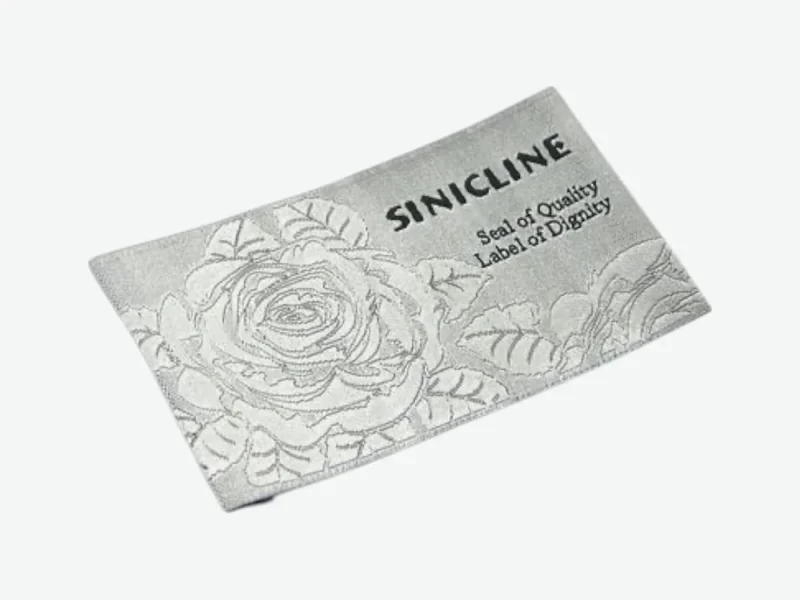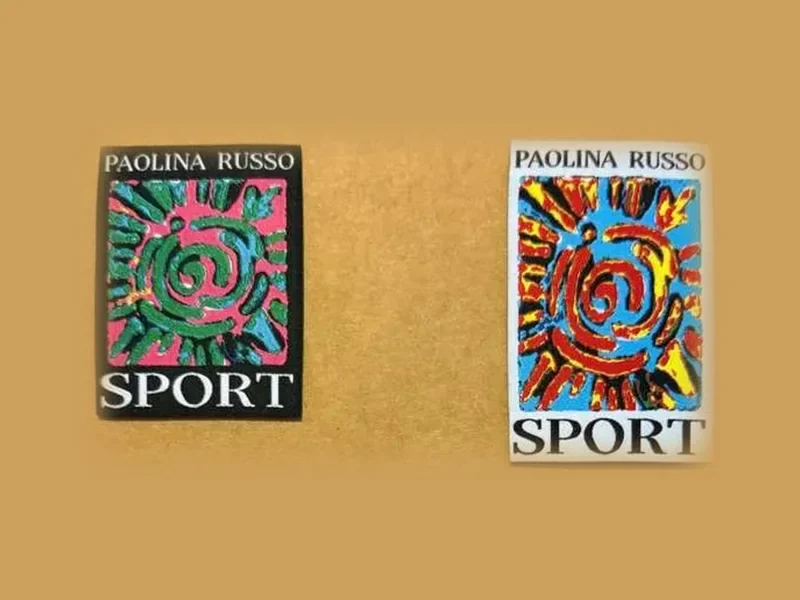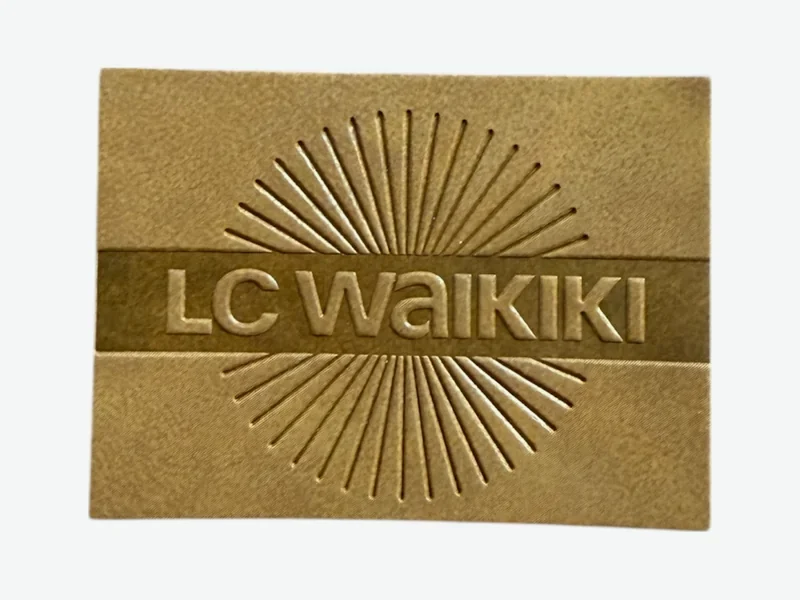
Picture three pairs of jeans on a table. One has a stiff, deep-stamped hide patch that will darken over the years. One has a smooth patch in bright terracotta. One has a tan patch with soft, crinkled creases from the garment wash. All three are called leather labels, yet they are three different materials. Here is how to choose between them.
We manufacture all three in our own production, with the same dies and artwork, so many brands use more than one material across their range. The comparison below is based on what we see in sampling and wash tests every season.
Start with the product, not the material
Before comparing materials, answer three questions:
- Will the garment be washed after the label is attached, and how hard?
- Should the label age visibly, or look the same on the last day as on the first?
- Does the collection carry an animal-free or vegan claim?
The answers usually point straight to one option.
Real leather: character that grows
Real leather labels are cut from tanned hide, mostly cowhide, typically 1–2 mm thick. Vegetable-tanned leather is firm, takes a crisp deep impression and builds a rich patina. Chrome-tanned leather is softer, more supple and holds its colour more evenly.
Each piece carries a slightly different grain and its own scent, and it softens and darkens with use. That makes it ideal for heritage denim, outerwear, bags and accessories, especially products that are worn more than washed or that are garment-washed before labelling. If the label will go through your wash process, a sample test shows how it shrinks, darkens or stiffens.
Remember the labelling rule: under Regulation (EU) No 1007/2011, a textile product with non-textile parts of animal origin must state “Contains non-textile parts of animal origin” in the relevant language. Add it to your care label text.
PU faux leather: consistent and colourful
PU labels are a polyurethane coating on a textile base, often knitted or microfibre. The surface can be embossed with almost any grain – smooth matt, pebbled, croc-style, nubuck-like – and dyed to precise shades, including brights that natural leather struggles to reach.
Batch-to-batch consistency is excellent, so reorders match easily. PU is light, flexible and washes well at moderate temperatures, and it contains no animal material. Very hot washes, prolonged heat and humidity or aggressive stone washing stress the coating, so test heavily processed garments.
Jacron: the denim classic
Jacron is a dense sheet of cellulose fibres held with a binder. It has sat on jeans waistbands for decades because it looks like leather, does not fray, takes embossing and print beautifully and can go through the garment wash. After washing it develops soft creases and a lived-in, vintage surface that suits washed denim, workwear and chinos. It is plant-based, animal-free, and available in tan, brown, black and dyed colours.
Side by side
| Property | Real leather | PU faux leather | Jacron |
|---|---|---|---|
| Made from | Tanned hide | Polyurethane on textile backing | Cellulose fibre and binder |
| Surface | Natural, every piece unique | Uniform, any grain or colour | Leather-like, creases when washed |
| With time | Patina, softens | Stays as new | Worn, vintage texture |
| Washing | Best washed rarely or pre-washed | Moderate washes | Made for garment washing at moderate temperatures |
| Colour | Natural and dyed leather tones | Widest range | Natural tones and dyes |
| Animal-free | No | Yes | Yes |
| Typical thickness | 1.0–2.0 mm | 0.8–1.5 mm | 0.8–1.5 mm |
How to put the logo on
| Method | Real leather | PU | Jacron |
|---|---|---|---|
| Deboss or emboss | Excellent, deepest | Very good | Very good |
| Laser engraving | Very good, dark burn | Very good, two-tone possible | Good |
| Printing | Good on smooth hides | Excellent | Excellent |
| Hot foil | Very good | Very good | Good |
Debossing presses the logo in with a heated die for a tone-on-tone look; keep lines above roughly 0.5 mm so they stay open. Laser engraving needs no die and suits fine detail or variable text such as fit names. Printing adds colour and small text, and works best on the even surfaces of PU and jacron. Hot foil in gold, silver, copper or colours is striking on dark materials; test it through heavy washing.
Matching material to brand message
- Craft and heritage lines: real leather.
- Vegan collections: PU or jacron, with the rest of the trims supporting the same claim.
- Washed and vintage denim: jacron.
- Seasonal colour stories: PU.
Sizes and fixing
All three are produced from small 30×20 mm knitwear labels up to large back patches for jeans and bags, and can be sewn, riveted or pre-punched. Our label size guide lists typical formats, and metal labels can coordinate with rivets and hardware.
Tell us the product, the wash and the look you want. We will recommend a material, send a digital proof typically within 24–48 hours and can post samples of all three for comparison. Browse leather labels or contact [email protected], WhatsApp/Viber +359 876 766 050.
Which leather-look label survives the garment wash best?
Jacron is designed for garment washing at moderate temperatures and gains an attractive worn look. PU also washes well at moderate temperatures; real leather is best on products washed rarely or before labelling.
Is a PU label suitable for a vegan collection?
Yes, PU contains no animal material. Jacron is also plant-based and animal-free.
Do I need extra wording on the care label for real leather?
Yes. Add “Contains non-textile parts of animal origin” in each required language.
Can I use the same logo die on different materials?
Yes. One die can deboss real leather, PU and jacron, which keeps the logo consistent across product lines.