Ask any shop assistant what happens to a strappy dress on a plain hanger: by lunchtime it is on the floor. Hanging tapes are a modest detail, yet they decide whether a garment hangs straight in a store, in a warehouse and in a customer’s wardrobe.
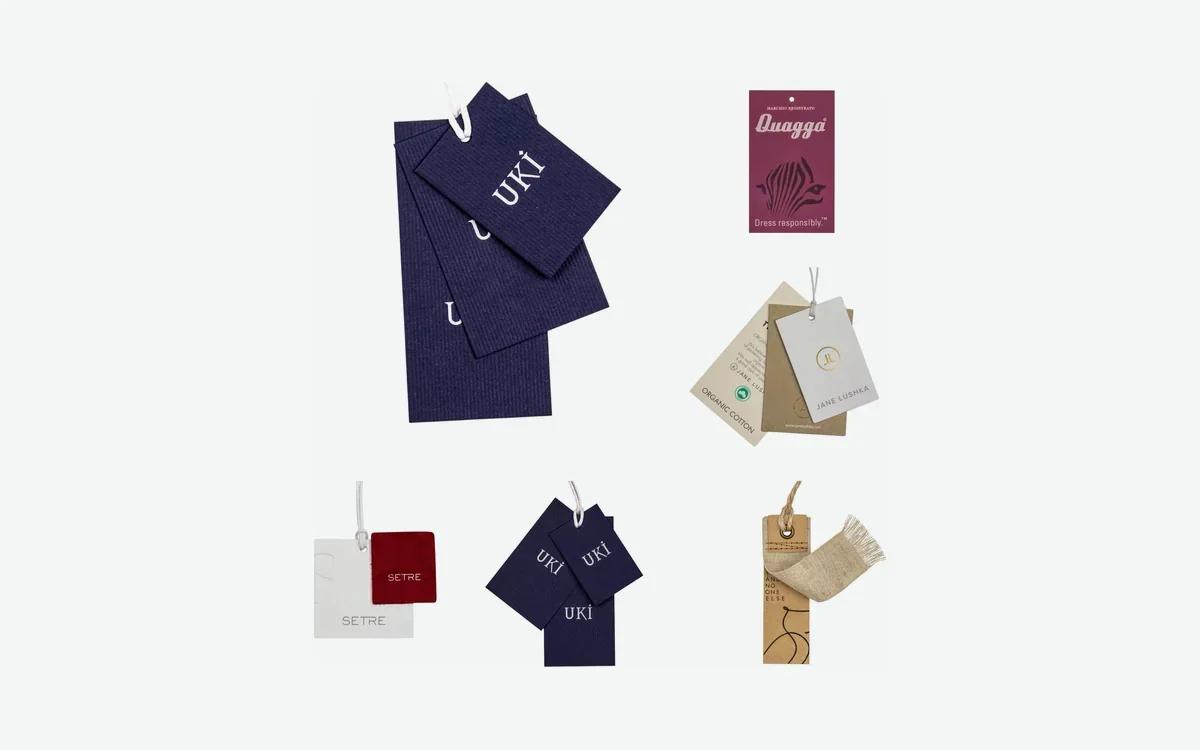
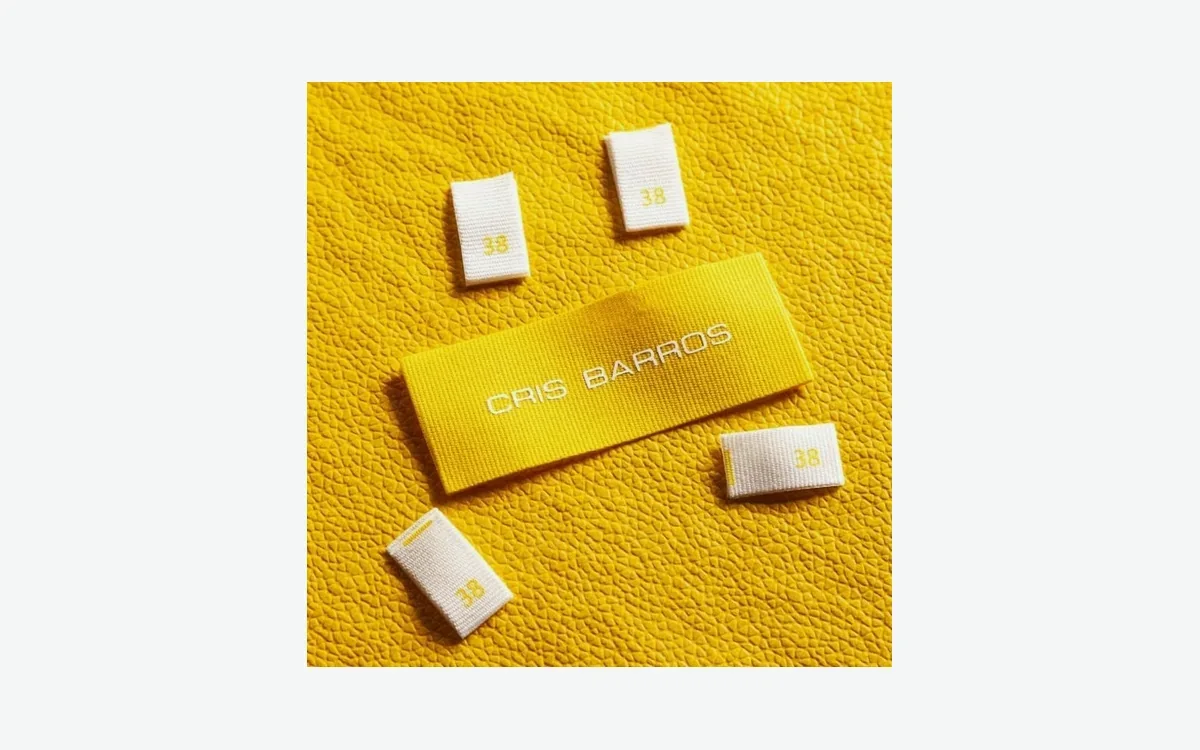
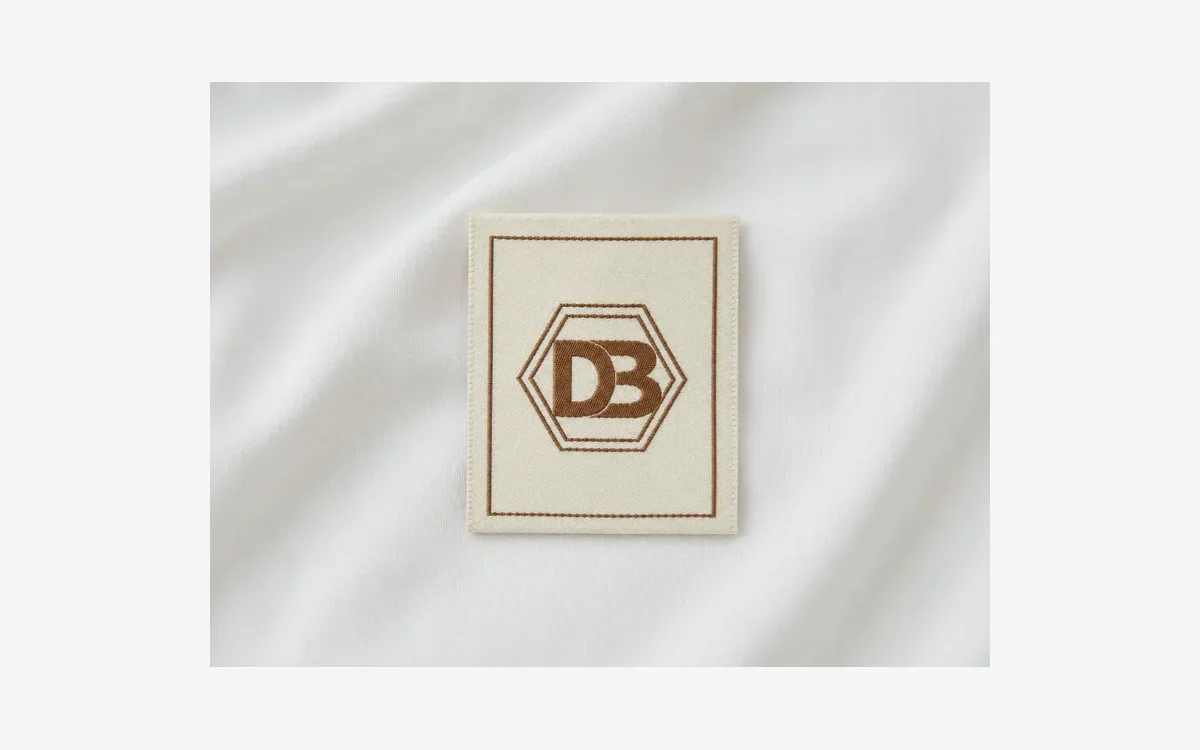
We weave and cut hanging tapes alongside labels and logo ribbons in our own production, so we can match them to your fabric and branding. This guide covers how to specify them by garment.
Three jobs of a hanging tape
Also called hanger loops, coat loops or hanger tapes, these strips of ribbon or woven tape let the garment hang without its full weight resting on the shoulders. They:
- Hold the shape of heavy or stretchy garments around the neckline and shoulders.
- Keep garments on the hanger when necklines are wide, straps are thin or fabrics are slippery.
- Carry your brand when woven with a logo or brand colours.
What each garment needs
Coats and jackets: one strong loop
A short loop at the centre of the inside back neck lets a coat hang from a hook. Because it carries the full weight, it needs a dense, firm tape such as jacquard, grosgrain or herringbone, and secure stitching. It is often sewn into the neck seam together with the main woven label.
Dresses and tops: long, soft loops
Off-shoulder and wide necklines, thin straps and fluid fabrics call for long loops sewn into the waist side seams or the armholes. They reach up to the hanger hooks and take the weight so the dress hangs straight. A soft satin ribbon matched to the fabric is usual, because it tucks away invisibly when worn.
Knitwear: protect the shoulders
Jumpers and cardigans develop shoulder points when they hang on their own weight. Loops in the side seams under the arms or at the armholes carry the load instead. Soft woven tape or satin ribbon works well; a clear flexible strap is an option where the loop should be almost invisible.
Skirts and trousers: short waistband loops
Short loops inside the waistband, usually at the side seams, let these garments hang from hooks or clip-free hangers – a small convenience customers notice.
Towels and home textiles
A firmer loop at a corner or hem lets towels and kitchen textiles hang from a hook, usually in woven or cotton tape.
Specification table
| Garment | Where | Typical width | Typical cut length | Usual materials |
|---|---|---|---|---|
| Coats and jackets | Centre back neck seam | 8–15 mm | 60–100 mm | Jacquard, grosgrain, herringbone |
| Dresses and tops | Waist side seams or armholes | 6–10 mm | 200–350 mm per loop | Satin ribbon, soft woven tape |
| Knitwear | Side seams under the arms | 6–10 mm | 150–250 mm per loop | Satin, woven tape, clear strap |
| Skirts and trousers | Inside waistband, side seams | 6–8 mm | 100–150 mm per loop | Satin, woven tape |
| Towels and home textiles | Corner or hem | 10–15 mm | 80–120 mm | Woven or cotton tape |
Final dimensions depend on garment weight, neckline and the hangers used in store.
Materials in brief
- Satin ribbon: soft, smooth, slightly glossy, in a wide colour range.
- Grosgrain: ribbed and grippy, so it stays on hooks – good for heavier pieces.
- Herringbone and twill tape: hard-wearing with a textile look, popular in workwear and outerwear.
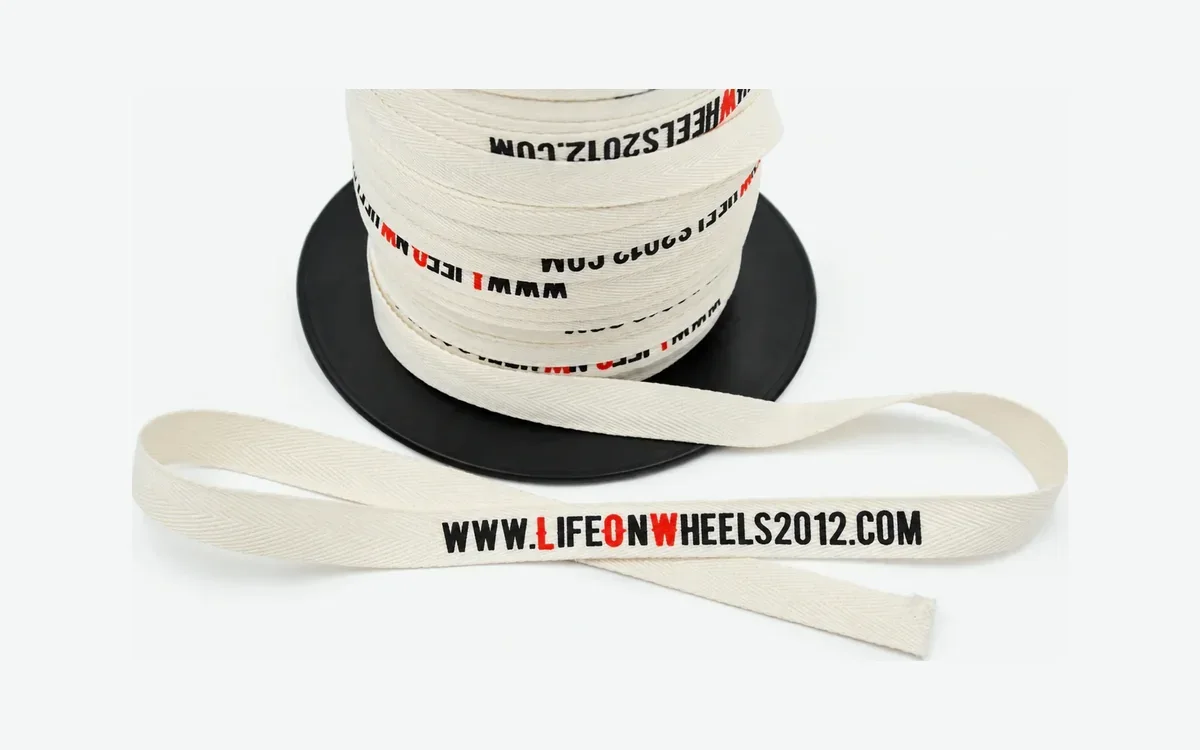
- Jacquard woven tape: woven with your logo, name or pattern.
- Cotton tape: natural look for natural-fibre collections.
- Clear strap: nearly invisible, for light tops and knits.
Polyester ribbons and tapes are the most common choice for strength, colourfastness and wash stability. Recycled polyester versions are available, and tapes can be supplied with OEKO-TEX certification.
Turning a loop into a brand detail
A jacquard loop can repeat your wordmark, a small symbol or a stripe in your brand colours. Because loops are narrow, keep the motif short; wider tapes of 10–15 mm hold more detail. Colours are matched to Pantone references. On coats, a branded neck loop beside the main label looks deliberate and coordinated.
Ordering loops, labels and neck tapes in one colour family means you approve a single colour standard and the inside of the garment reads as one set.
How loops are sewn in
- Caught in the seam: both ends are inserted into a side, armhole, waistband or neck seam and stitched with it. Cleanest and most secure.
- Bar-tacked: ends are stitched onto lining or facing after the main seams are closed.
- With the label: on coats, loop and main label go into the neck seam in one operation.
Allow 10–15 mm of seam allowance at each end so the loop cannot pull out, and add a bar tack on heavy garments.
Rolls or cut pieces
Tapes can arrive on rolls for factories that cut on their own equipment, or pre-cut to length with ultrasonically sealed ends that will not fray. Pre-cut loops save sewing time and keep lengths consistent. Tell us how your factory works and we will suggest the right format.
Send us your garment list, preferred width and a fabric swatch or Pantone reference. Our designers prepare a proof for branded loops typically within 24–48 hours, and production typically takes 10–20 working days after approval. Explore woven tapes and ribbons or write to [email protected], WhatsApp/Viber +359 876 766 050.
How wide should a coat hanging loop be?
Typically 8–15 mm in a dense tape such as jacquard, grosgrain or herringbone, because it carries the full weight of the coat.
Why does a dress need two long loops?
Wide necklines, thin straps and fluid fabrics slip off hangers. Two loops sewn at the waist or armholes reach the hanger hooks and carry the weight.
Can hanging loops carry our logo?
Yes. Jacquard woven tapes can repeat a logo, brand name or pattern, matched to your Pantone colours.
Should I order loops on rolls or cut to length?
Rolls suit factories with automatic cutting; pre-cut loops with sealed ends save sewing time and keep lengths uniform.