Your first collection has fabrics, patterns and a launch date. Somewhere on the list, usually near the bottom, sits “labels”. Moving that line higher up saves weeks, because labels must be at the sewing room before the first garment is assembled.
We work with many brands on their very first order, and the questions are remarkably consistent. This checklist sorts labels into what you need on day one, what builds identity later and what you must prepare so production runs smoothly.
Day-one labels: the core set
The brand label
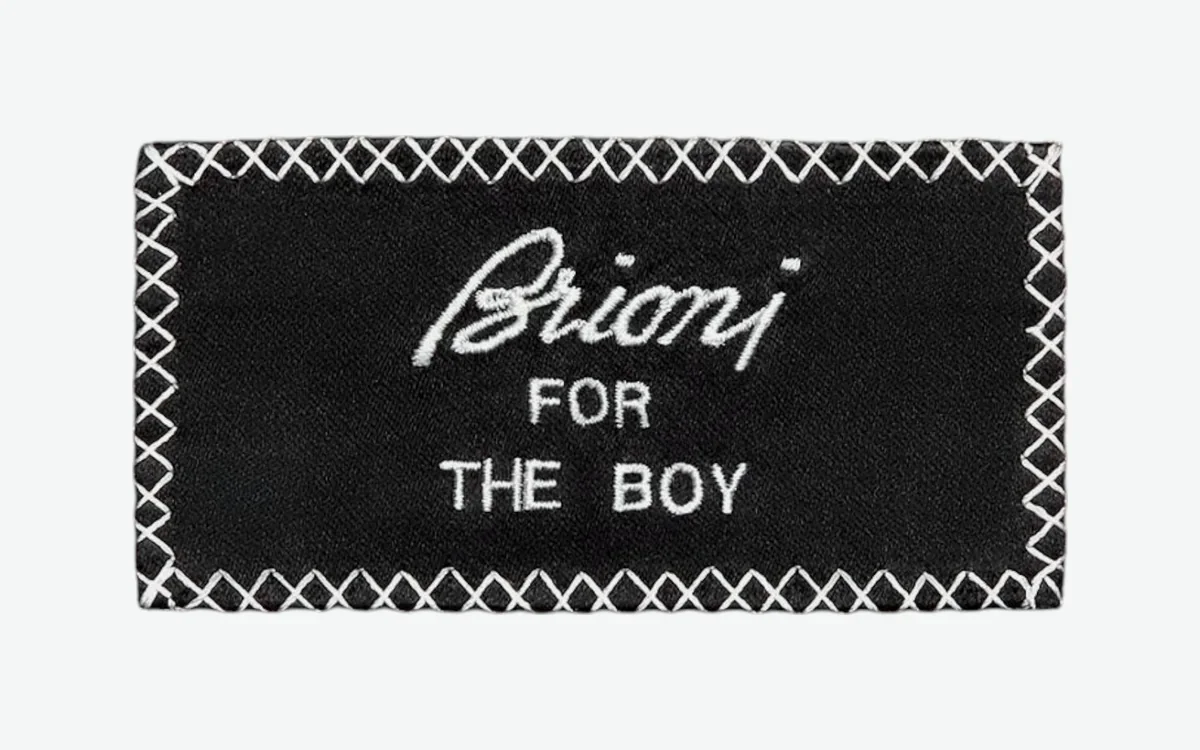
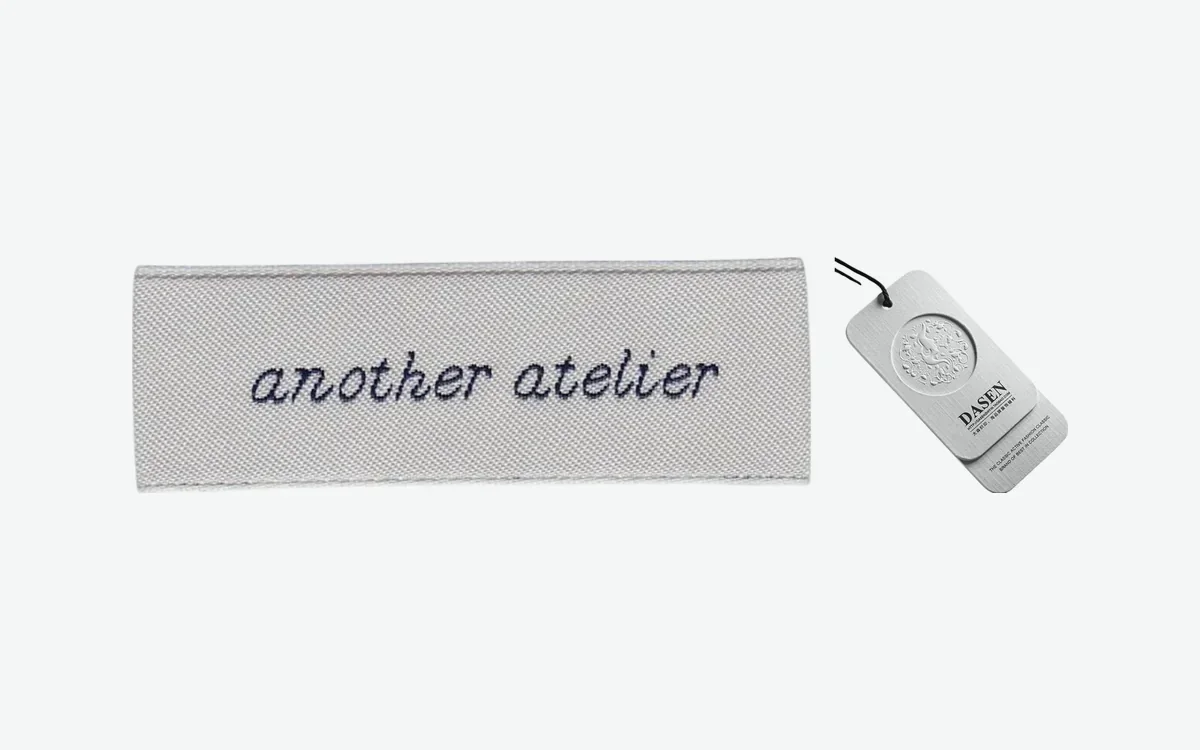
This is where your logo lives once the garment is worn. Most new brands choose a woven label for its durability and quality feel. Damask weave gives crisp detail on small logos; a satin weave feels softer and has a gentle sheen. For T-shirts and activewear, a printed satin label or a tagless heat transfer at the neck is a comfortable alternative. Decide the fold early, because centre-fold, end-fold and loop-fold labels are sewn in differently. Our woven labels page shows the folds side by side.
The composition and care label
This is the label the law asks for. In the EU, fibre composition must appear on textile products under Regulation (EU) No 1007/2011, in the language of each country of sale. Care symbols are expected by customers and retailers alike. Care labels are typically printed on satin or nylon taffeta and sewn into the side seam. See care labels for materials and layouts.
Size identification
You can use small woven or printed size tabs next to the brand label, print the size on the care label, or weave a brand label per size. Each route has a different effect on the number of designs, which we come back to below. The size labels page lists common dimensions.
The swing tag
A simple card tag with a string introduces the brand at the point of sale and carries a barcode or style number. For a first season, one well-made design used across every style is usually enough. Browse hang tags for formats.
Identity builders: add when ready
- A small woven flag label on a hem or pocket
- A leather or faux leather patch for denim and caps
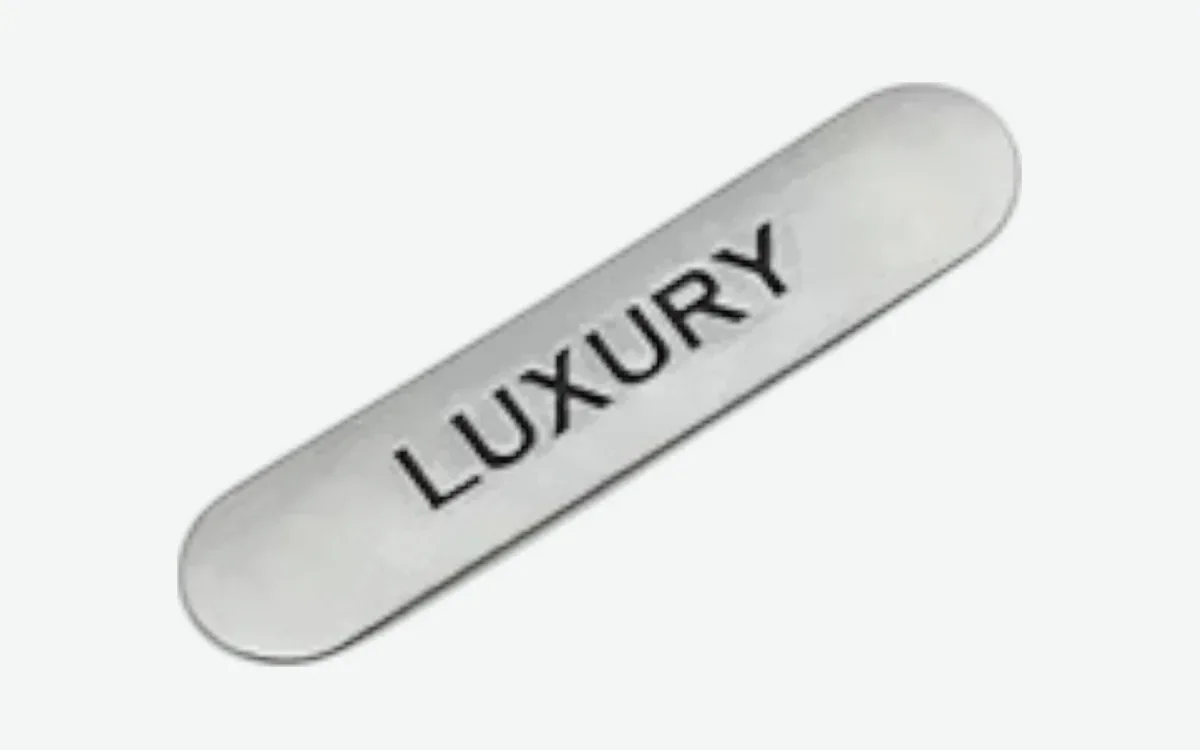
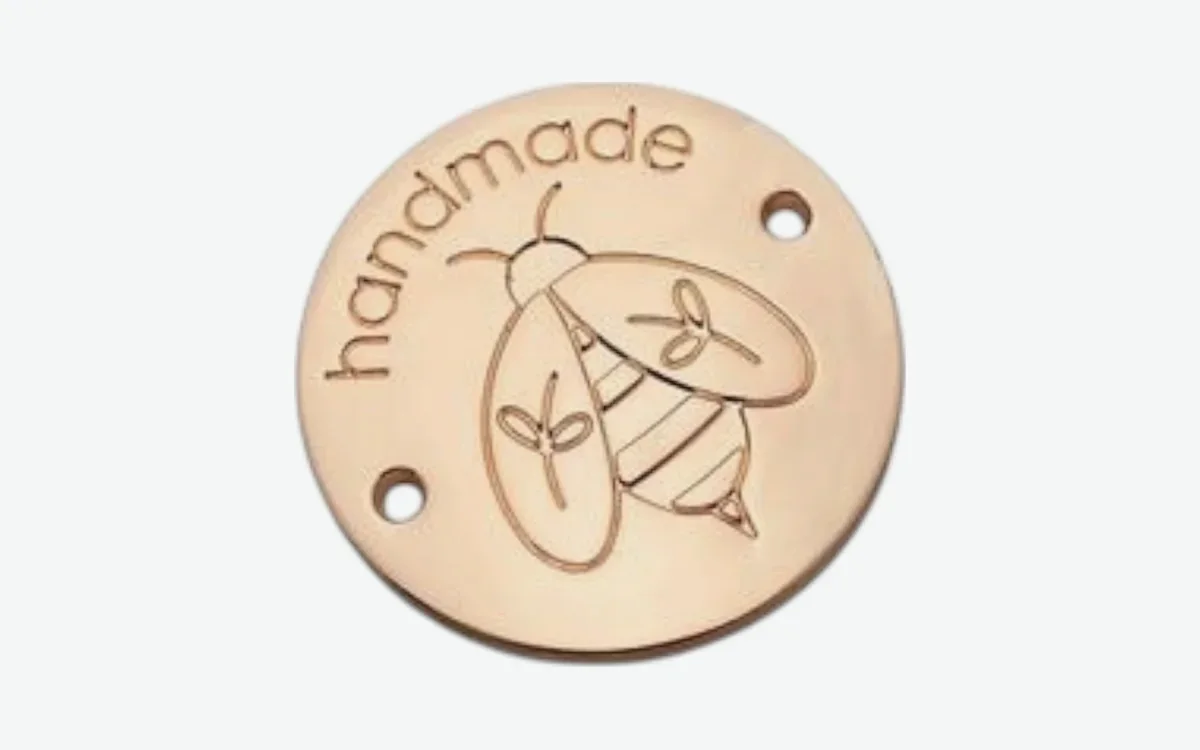
- A nickel-free metal plate on outerwear or bags
- A silicone badge on sportswear
- Embroidered or woven patches for hoodies and jackets
- Logo stickers to close tissue paper and mailers
- A QR label linking to care information or your brand story
The checklist in one table
| Item | Role | Typical choice | Typical size (mm) | Priority |
|---|---|---|---|---|
| Brand label | Logo inside the garment | Woven damask, end-fold or centre-fold | 15 × 50 to 25 × 70 | Essential |
| Care and composition label | Legal fibre content, care symbols | Printed satin or nylon taffeta | 30 × 60 to 35 × 100 | Essential |
| Size label | Size identification | Woven or printed tab | 10 × 15 to 15 × 20 | Essential, unless combined |
| Swing tag | Retail information and branding | Card tag with string | 50 × 90 or 55 × 85 | Strongly recommended |
| Accent label or patch | Outside branding | Woven, leather, metal or silicone | Depends on placement | Optional |
| Packaging stickers | Branded packing | Round or rectangular | 40 or 50 round | Useful for online sales |
Custom sizes are always possible; the figures above are starting points.
Keeping the design count low
Every separate design is a separate production item, so fewer designs mean a simpler first order. Three habits help:
- One brand label for every style. It is easier to reorder and keeps the brand consistent.
- Size on the care label, or a split size run. Five sizes as separate woven labels are five designs; ask us how a quantity can be divided across sizes according to your size curve.
- Group care labels by fabric. Styles that share a fabric and care routine can share one care label version.
Minimums are set per design, and we keep them low for new brands; ask us for the figures that apply to your choice of label.
Files and information to prepare
- Logo as a vector file (AI, EPS, PDF or SVG with outlined fonts). A PNG or sketch is fine to begin with; our designers can redraw it.
- Pantone references or a fabric swatch for colour matching.
- Composition percentages for each fabric and the care settings from your fabric testing.
- Size range and expected quantity per size.
- Placement notes or a tech pack page showing where each label is sewn.
Timing your order
Order labels while your garments are being sampled, not when the fabric arrives. Our designers return a digital proof typically within 24–48 hours, and physical samples can be made before production so you can feel the brand label against your fabric. After approval, production typically takes 10–20 working days, with delivery across Europe. Add a buffer of a few per cent above your garment quantity to cover sewing losses and early reorders.
As the manufacturer, we can produce the complete set, from woven labels to tags and packaging, with matching colours. Send your logo and collection outline through our contact page and we will suggest a starter set.
Frequently asked questions
What is the one label I cannot skip?
The composition label. Fibre content is mandatory for textile products sold in the EU and must be in the language of each country where you sell.
Should a first collection use woven or printed brand labels?
Woven damask is the most popular choice for its durability and premium look. Printed satin or a tagless neck print suits T-shirts and sportswear where softness comes first.
Can you redraw my logo if I only have a PNG?
Yes. Our design team can prepare production artwork from a PNG or sketch and sends a digital proof for your approval.
How long before production should I order labels?
Plan at least four to five weeks before sewing starts: a day or two for the proof, time for sample approval and typically 10–20 working days for production and delivery.
Can one supplier make labels, tags and packaging together?
Yes. We manufacture labels, hang tags and packaging, so colours and finishes can be matched across the whole set.