Turn a pair of five-pocket jeans around and the waistband patch tells you which brand made them, often before the stitching or the wash does. Choosing that patch is a small decision with a long life.
As a manufacturer of leather labels and denim trims, we produce back patches for heritage, contemporary and kidswear denim lines. The questions we hear most are always the same: which material, what size, which logo technique and what happens in the wash. Here are our answers, in the order we would work through them with you.
Step 1: think about the wash before the material
Most jeans are washed as finished garments, so the patch travels through the laundry with the denim. Stone wash scuffs surfaces and edges, enzyme treatments are gentler but long, and bleach or ozone can shift colours. Knowing your finish first narrows the material choice immediately.
Step 2: choose the material
| Property | Genuine leather | PU | Jacron |
|---|---|---|---|
| Character | Natural grain, every hide slightly different, develops patina | Even surface, wide choice of colours and grains | Leather-like look that crinkles softly after washing |
| Embossing | Deep and crisp, especially vegetable-tanned | Clean and uniform | Very good |
| Laser marking | Dark, toasted contrast | Can reveal the backing colour | Clear darker mark |
| Garment wash | Test first; may shrink, darken or stiffen | Mild washes; test heavy stone wash | Made for washed garments |
| Animal-free | No | Yes | Yes |
Genuine leather, typically 1–2 mm cowhide, gives the most authentic result. Vegetable-tanned leather takes the sharpest impression; chrome-tanned is softer and more colour-stable. If a perfectly clean leather patch matters, it can be attached after the wash.
PU is a coated material on a textile backing, consistent from batch to batch and suitable for animal-free collections. Under aggressive stone wash the coating can scuff at the edges, so we recommend a test.
Jacron is made from cellulose fibres and a binder. It is light, does not fray, and after washing it takes on a vintage, lived-in texture. For garments washed after sewing, it is often the most practical choice.
Step 3: size the patch to the fit
The patch traditionally sits on the right back waistband as worn, beside the belt loop, either fully within the band or reaching slightly onto the yoke. Measure the finished waistband height and leave 2–3 mm free above and below so stitching stays clear of the seams.
| Garment | Patch size to start from (mm) |
|---|---|
| Men’s regular or wide waistband | 80 × 60 to 90 × 60 |
| Men’s slim fit | around 70 × 50 |
| Women’s jeans | 50 × 30 to 60 × 40 |
| Kidswear denim | 40 × 25 to 50 × 30 |
| Denim jackets, inside neck or pocket flap | 40 × 25 to 60 × 40 |
| Shorts, skirts, denim bags | 40 × 25 to 60 × 40 |
Keep the patch clearly smaller than the back pocket, and check that your sewing line can stitch around all four sides with its waistband machinery. Proportions for other positions are in our label size guide.
Step 4: decide how the logo is applied
Debossed or embossed
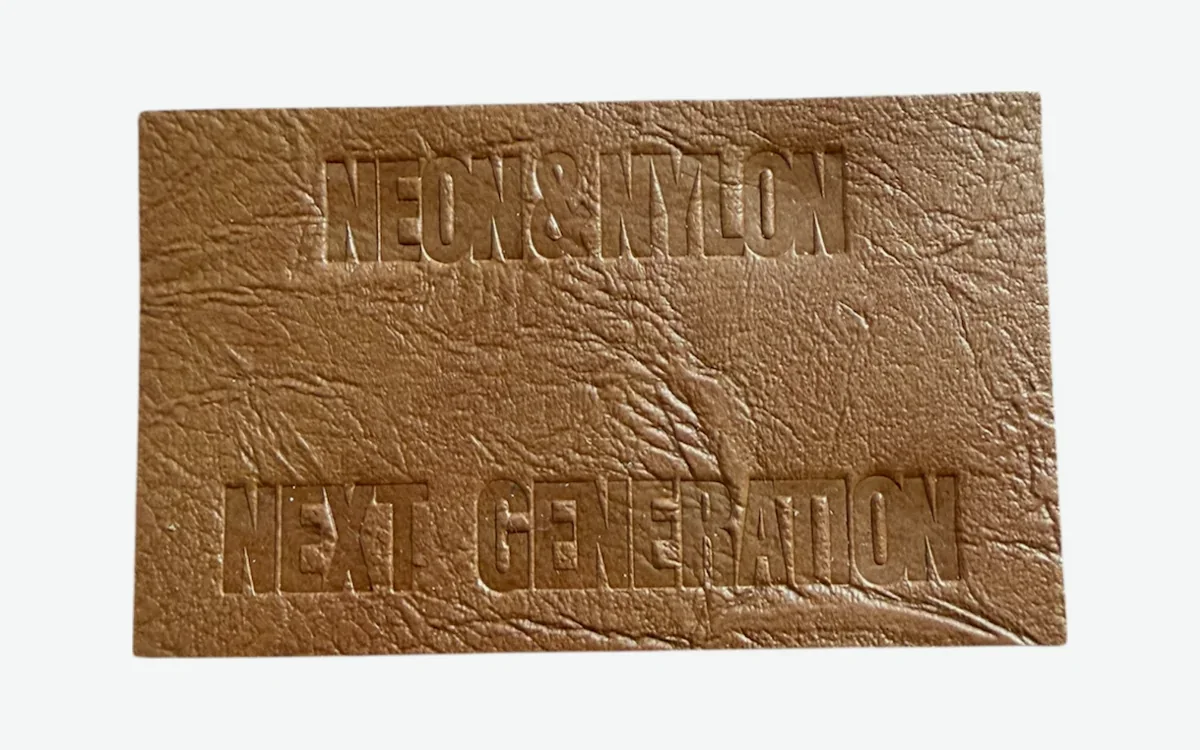
A heated die presses the design into the material (deboss) or raises it from behind (emboss). Without ink, the logo appears tone-on-tone, the classic jeans look. Lines finer than about 0.5 mm tend to close up, so our designers adjust line weights before the die is made.
Laser engraved
No die is needed and fine detail or gradients are possible. Laser is also the easy way to vary fit names or sizes within one order.
Hot foil
Gold, silver, copper, black or bright colours combined with a debossed impression. Foil adds contrast on dark leathers but heavy stone wash can wear it, so it suits gently washed lines or patches attached after washing.
Printed
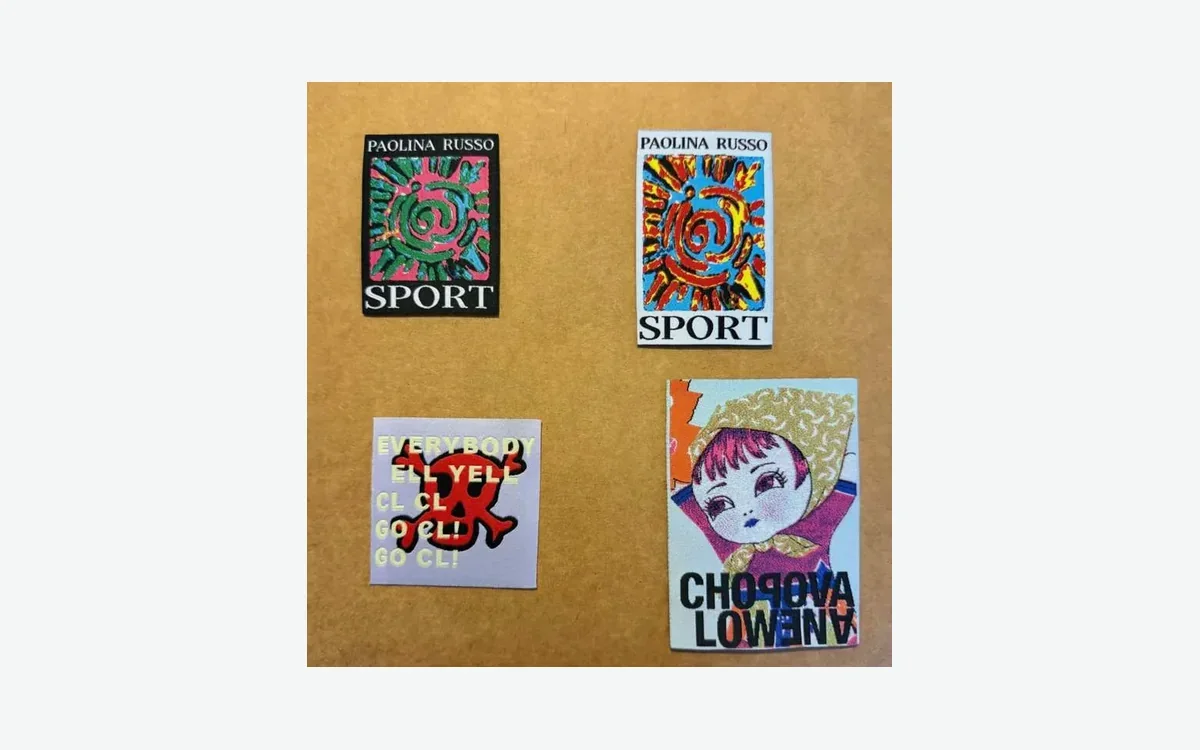
Screen or digital print reproduces full-colour artwork and small text, best on PU and jacron, and can be combined with debossing for a two-level effect.
Step 5: finish the edges
A raw cut edge looks rugged and honest on genuine leather. Painted or dyed edges give a sealed, refined appearance. A stitched border added before attachment brings a crafted frame. Outlines can be die-cut or laser-cut, from rounded rectangles to shapes that follow the logo.
Build a complete denim trim set
A patch rarely works alone. A small nickel-free plate on the coin pocket, a woven label on the inner waistband and a matching hang tag make the pair feel considered from every angle. Because we produce metal labels, woven labels and hang tags alongside our leather labels, finishes and colours can be matched across the whole set.
How a patch order runs with us
Send a vector logo, the fit and waistband height, your preferred material and a description of the wash. Our design team prepares a digital proof, typically within 24–48 hours, and we supply physical samples you can run through your laundry before approving bulk. Production then typically takes 10–20 working days, with delivery across the EU. Start your patch project.
Which patch material handles stone wash best?
Jacron is designed for garment washing and usually looks better afterwards. Genuine leather and PU can work too, but we always recommend testing a sample with your exact recipe.
Can genuine leather patches bleed onto light denim?
Dyed leathers can, which is why colour-fastness is part of the wash trial. Attaching the patch after washing removes the risk.
Can each patch show a different fit name or size?
Yes. Laser engraving allows variable content within one order without separate dies.
Do you make animal-free jeans patches?
Yes. PU and jacron are both animal-free and available in many colours and surface textures.