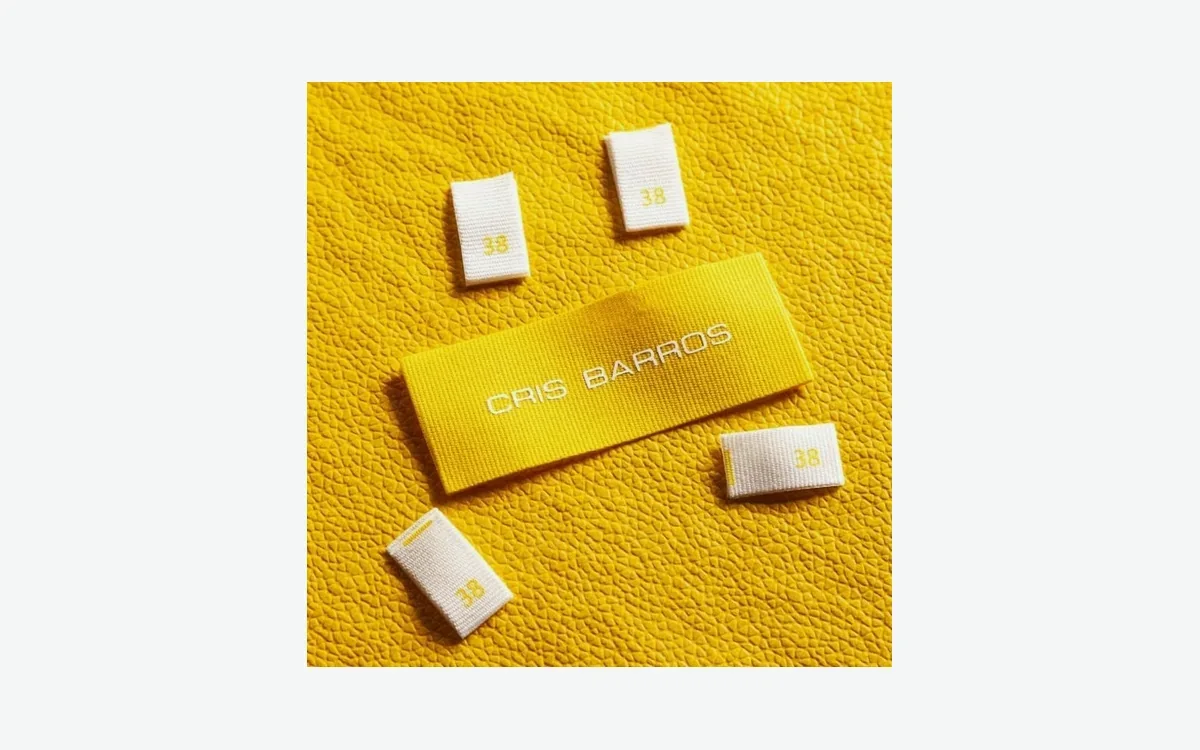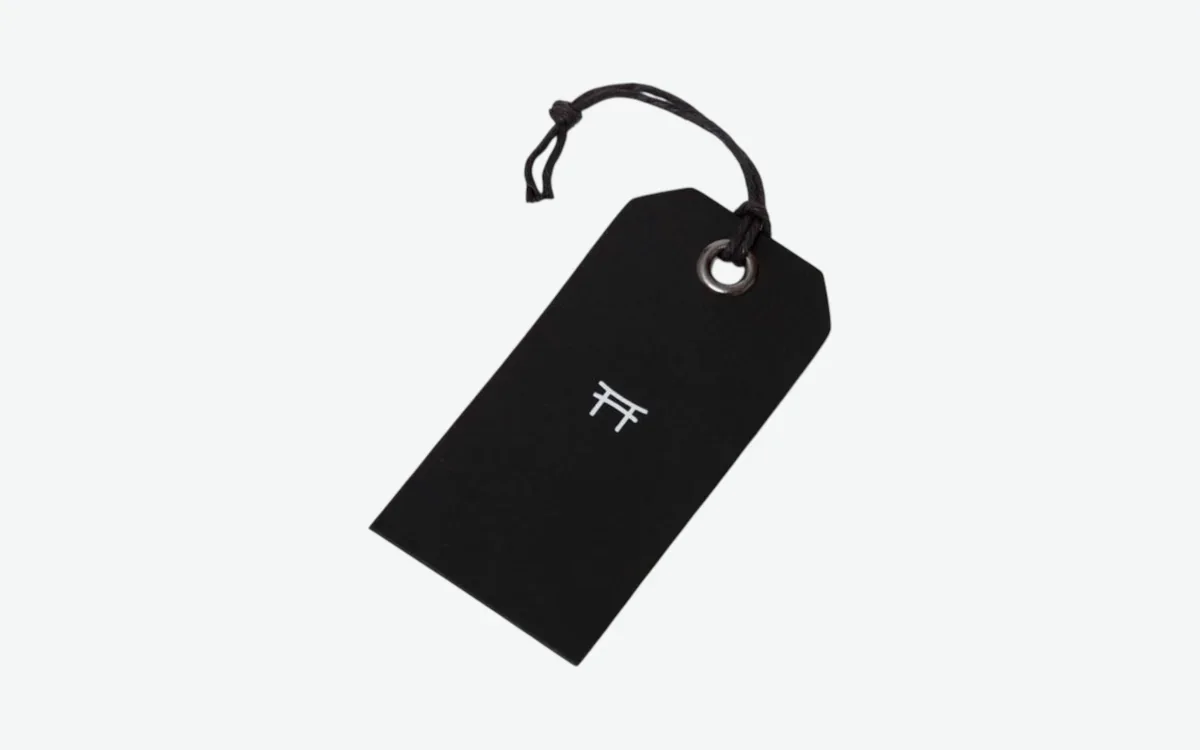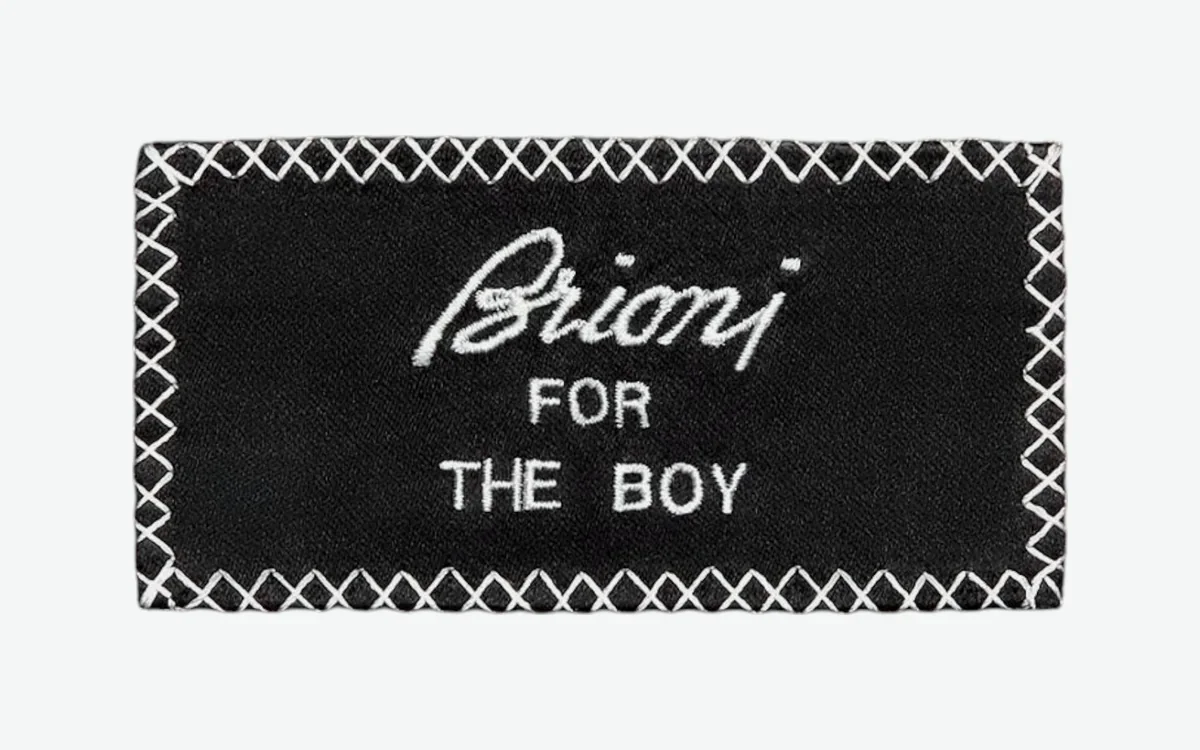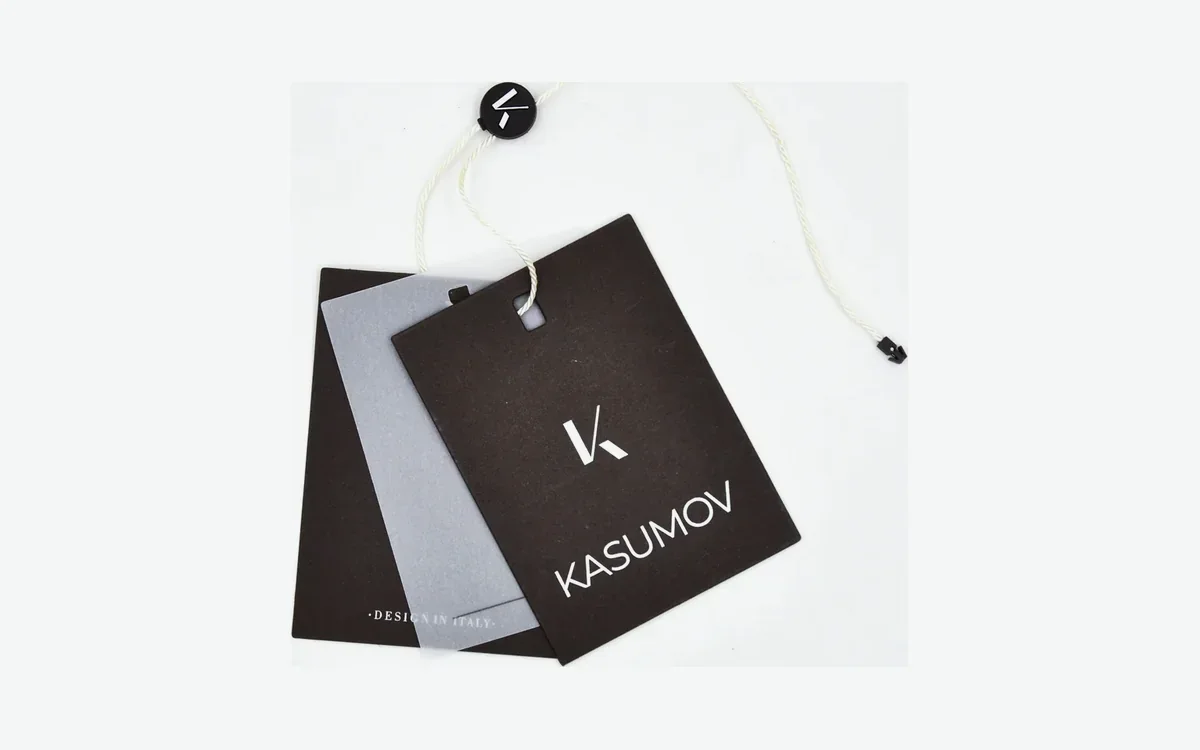
A single garment can carry six or seven branded items: a main label, a care label, a size label, a hang tag, perhaps a badge, a sticker and its packaging. Customers see them as one brand. Producing them as one set, with one manufacturer, makes that impression far easier to achieve.
We have been producing branding trims for apparel for more than 30 years, in our own facility in Bulgaria. Woven, printed, care and size labels, hang tags, stickers and packaging all come off our lines, which lets us treat a brand’s trims as a single system rather than a collection of separate purchases. Here is what that means in practice and how to organise it.
Mapping your trim set
| Trim | Job | Usual material |
|---|---|---|
| Main brand label | Identity inside the garment | Woven damask or satin; printed satin or cotton |
| Care and composition label | Fibre content, care symbols, origin | Printed satin, nylon taffeta, cotton |
| Size label | Size marking in neck or side seam | Woven or printed |
| Hang tag | Brand story, price, barcode | Board, kraft, double-layer board |
| Exterior badge | Logo visible outside | Leather, metal, silicone, patch |
| Stickers | Barcodes, sizes, sealing bags and boxes | Paper or film |
| Packaging | Presentation and shipping | Boxes, paper bags, poly bags, tissue paper |
Each item uses a different technology – yarn on a loom, ink on board, pigment in silicone – yet each must look unmistakably like your brand.
What changes when one team makes everything
Colour that holds across materials
A deep burgundy behaves differently as dyed polyester yarn, as offset ink on uncoated board and as pigment in silicone. When one production team works from the same Pantone references for every trim, it can lay the woven label, the hang tag and the badge side by side and fine-tune before anything ships. Results stay very close across all items.
One person who knows the whole picture
A dedicated contact person handles every item in your set. Whether the question concerns a care label language, a string colour or a box insert, the same person already has your logo files, your Pantone codes and your order history. Briefings are shorter and proofs for every item arrive together.
One timeline, one consignment
A sewing line needs every trim on the same morning. In a combined order, proofs and samples are approved together, production runs in parallel and everything ships in one consignment. Production typically takes 10–20 working days after approval, with delivery across the EU.
A single visual system
Designed together, the trims share logo proportions, typography and finishes. A gold foil logo on the tag can echo a metallic thread in the woven label; a kraft tag can pair with a kraft box and printed tissue paper. Our design team adapts one master artwork to every item, with digital proofs typically within 24–48 hours.
Natural pairings
- Main label + hang tag: the most visible duo on the shop floor, sharing logo and colours.
- Care label + size label: often printed on the same tape and sewn into the same seam, so widths, fonts and folds stay aligned.
- Hang tag + stickers + packaging: they share article numbers and sizes, so ordering together keeps data formats consistent.
- Exterior badge + inside label: a jeans patch, a bag plate or a jacket badge designed alongside the woven label makes the brand read the same inside and out.
The trim list as your control document
A trim list – sometimes called a trim book – tells the garment factory which label, tag and packaging each style uses and where it goes. With one manufacturer behind every item, the list maps to a single set of specifications. Reorders become a matter of sending style references and quantities; we reuse the stored specification for each trim. Briefing a new garment factory is easier too, because it receives identical trims each season.
A habit worth adopting: give every trim an internal code such as LBL-MAIN, LBL-CARE-COT, TAG-STD or BOX-S, and use those codes consistently in tech packs, trim lists and purchase orders.
Setting up a combined order
- List each style and the trims it needs.
- Identify shared items – often one main label and one hang tag cover a whole collection, while care labels vary by composition.
- Gather vector logos, Pantone references and care texts in every required language.
- Set quantities per item; minimums typically start at 1,000 pieces per design, and splits by size or variant are discussed in the quotation.
- Review all proofs and samples side by side.
- Fix one delivery date tied to the start of garment production.
One quality standard
Every item in the set passes through the same proof and sample approval. Textile labels are made with OEKO-TEX Standard 100 certified materials, GRS recycled options are available for woven and printed labels and tapes, edges are cut ultrasonically for softness, and all metal parts are nickel-free. Send your trim list or logo to [email protected] and we will propose a complete set.
Frequently asked questions
Which items can you produce in one combined order?
Woven and printed labels, care and size labels, hang tags, badges and patches, stickers and packaging such as boxes, paper bags, poly bags and tissue paper.
Will my woven label and printed tag be the same colour?
Yarn and ink behave differently, but working from shared Pantone references and comparing items side by side keeps them very close.
Do all items arrive together?
Yes. A combined order runs on one timeline and ships in one consignment across the EU.
How do minimums work for a full set?
Minimums typically start at 1,000 pieces per design for each item. Sharing one main label and one hang tag across styles helps reach efficient quantities.
Can you help create a trim list?
Yes. Send us your styles and logo, and as the manufacturer we will suggest which trims each style needs and prepare proofs for all of them.