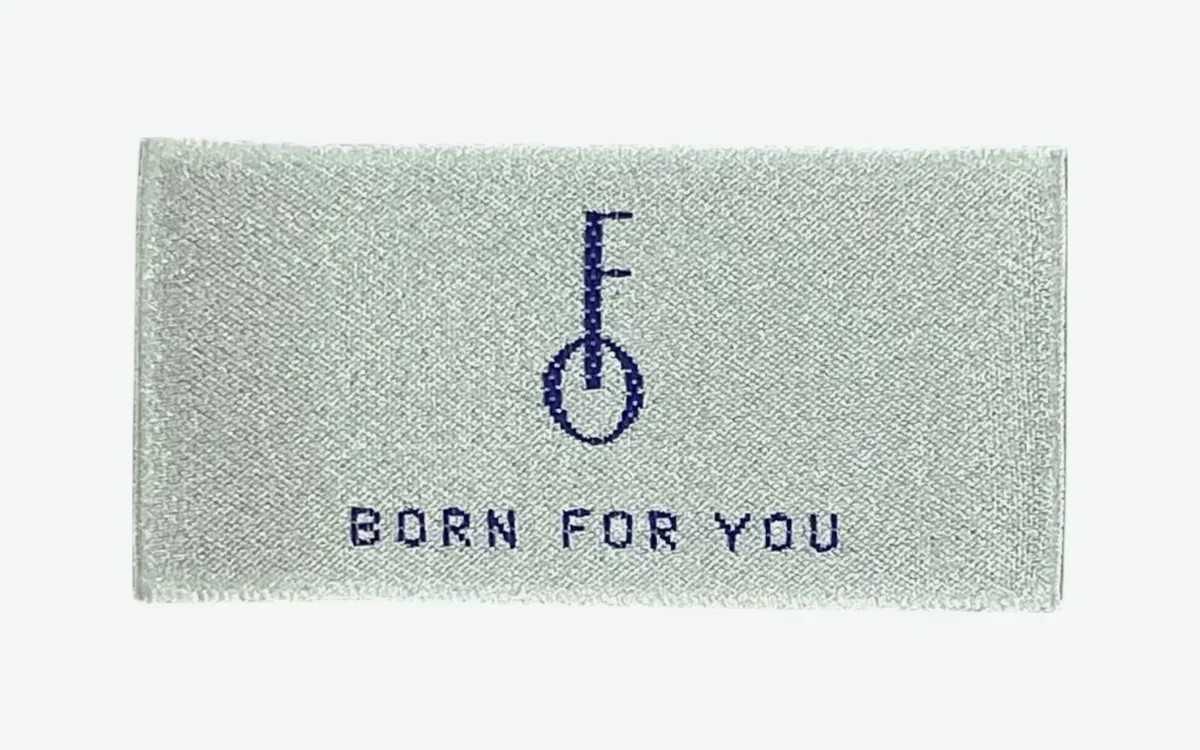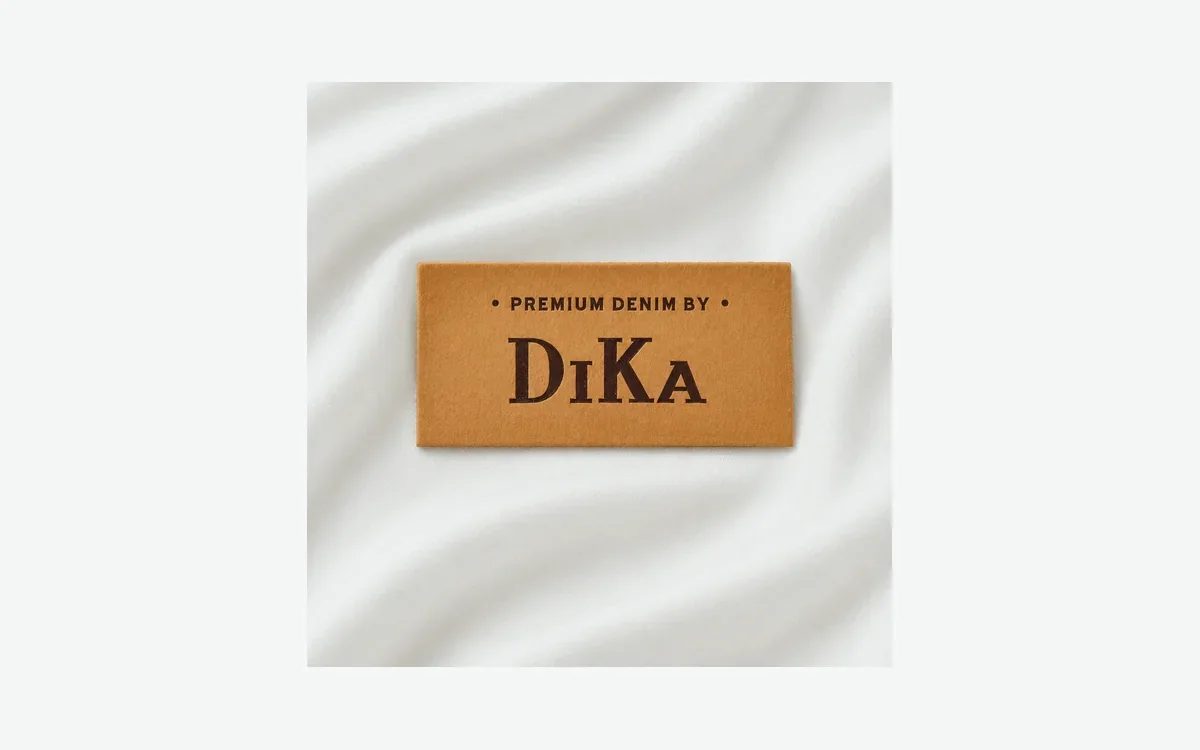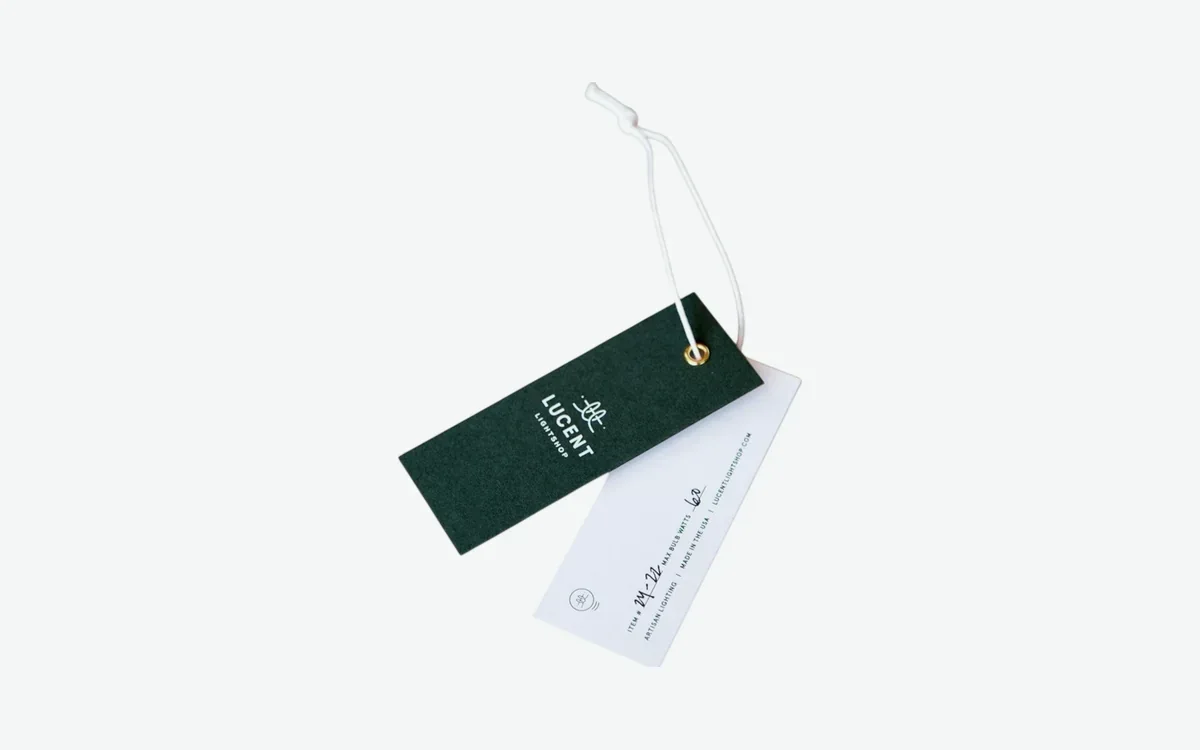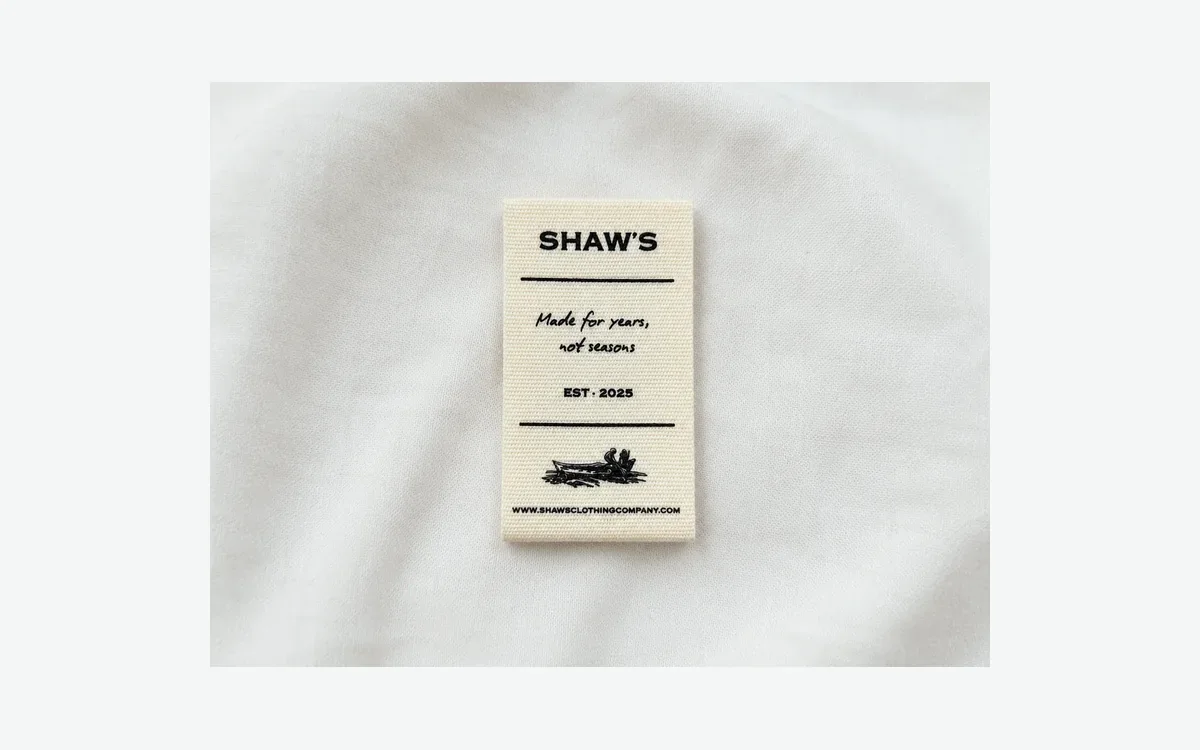
Some tags have a hard life: soaked on a rainwear test, crushed in a shipping carton, tugged on a shop floor near the entrance. For those products we produce labels and tags from nonwoven high-density polyethylene, the material many buyers know by the trade name Tyvek.
It looks like paper, handles like a light fabric and resists tearing far beyond card of the same weight. Here is what we tell brands when they consider it.
What the material is
The sheet is made from very fine continuous HDPE fibres, spun and then bonded with heat and pressure. There is no cellulose and no woven grid, which explains its unusual combination of properties. Two structures are common:
- Hard structure: smooth, stiff and paper-like. The first choice for printed hang tags and stickers.
- Soft structure: supple and fabric-like with a quieter rustle, better for sewn-in labels and soft tags.
Each comes in several weights, from a thin sewn label to a sturdy tag.
Where it shines
Outdoor and rainwear
Tags stay intact during wet testing, in damp stores and in shipping. Print remains legible because water does not soak in.
Swimwear and beachwear
Damp changing rooms and wet hands do not bother the material.
Workwear and safety clothing
Tags carrying technical data, size and codes withstand workshop handling, dust and many chemicals.
Bags, luggage and accessories
Items that travel and are handled repeatedly keep their tags readable.
Long-distance shipments
Humidity and pressure in transit leave card tags curled or creased; HDPE tags stay flat.
Thin and lightweight garments
Because the material is very light, a tag does not pull a fine fabric out of shape.
Properties at a glance
| Property | HDPE nonwoven | Board / card | Printed satin tape |
|---|---|---|---|
| Tear resistance | Very high | Low to medium | High |
| Water resistance | Very high | Low unless coated | High |
| Weight | Very light | Medium to heavy | Light |
| Heat tolerance | Low, no ironing | Medium | Good |
| Surface | Matt, paper-like | Many finishes | Smooth textile |
| Print methods | Flexo, offset, screen, thermal transfer | Offset, digital, foil, embossing | Flexo, screen, thermal transfer |
The one real limitation: heat
Polyethylene softens at a lower temperature than polyester. Labels made from it must not be ironed directly and should be kept away from hot tumble drying, hot pressing and heat-transfer application. This shapes where we recommend it.
Printed care and information labels
Printed HDPE labels can carry composition, care symbols, size, batch and barcode data. They suit products where paper would disintegrate and a textile label is not ideal: bag and luggage interiors, caps and hats, outerwear linings, down and filled items, home textiles and technical goods that are wiped or washed at moderate temperatures.
Match the label to the product’s care route. If the garment is ironed or washed hot, a printed satin or polyester label from our care labels range is the safer choice. If it is washed cool and not tumble dried hot, HDPE works well.
Hang tag options
HDPE tags can be printed in full colour on both sides, die-cut to any outline and finished with a reinforced hole, an eyelet or a string. You can write on them with a pen or marker, which helps in sampling rooms and warehouses. For most fashion items, board tags remain the natural choice; HDPE is the specialist option when conditions are tough. Compare formats on our hang tags page.
Printing and design tips
- Keep fine text above a comfortable size, as the matt fibrous surface softens hairlines slightly.
- Choose inks suited to polyethylene; we select the system for your print method.
- Use a reinforced hole or eyelet on heavy products so the tag cannot be pulled through.
- Ask for a printed sample and check rub resistance on your actual product.
Recycling
The material is a mono-material of high-density polyethylene, which is widely recyclable in principle. Real-world recycling depends on local collection, and strings or metal eyelets should be removed first. If you mention recycling on the tag, keep the wording specific and in line with local rules.
Testing before production
Wash or clean a finished sample with the label attached, exactly as the care label instructs. If the print stays crisp and the label keeps its shape, the specification is right. We provide samples before every production run, and production typically takes 10 to 20 working days after proof approval, with delivery across the EU. See more substrates on our printed labels and label materials pages.
What are HDPE nonwoven labels made of?
Very fine high-density polyethylene fibres bonded with heat and pressure into a sheet. It looks like paper but is far stronger and water-resistant.
Are these tags waterproof?
The material does not absorb water, so tags keep their shape and remain legible when wet. That makes them a good fit for rainwear, swimwear and outdoor gear.
Can HDPE care labels be ironed?
No. Polyethylene softens at relatively low temperatures, so these labels should not be ironed or tumble dried hot. For ironed garments, choose printed satin or polyester.
Can you print both sides of an HDPE tag?
Yes. Tags can be printed in full colour on both sides, cut to custom shapes and fitted with eyelets or strings.
Are HDPE tags recyclable?
As a mono-material polyethylene they are recyclable in principle. Actual recycling depends on local collection, and strings or eyelets should be removed first.