A shoe label bends thousands of times a day, meets sweat from the inside and rain from the outside, and has to survive glue and heat in the factory before it ever reaches a customer. Footwear labels are a specialist job. This guide walks through custom shoe labels position by position – tongue, heel, side, insole and box – and covers the EU material marking every pair needs.
What the shoe factory puts a label through
Before choosing a design, it helps to know the conditions. During lasting and sole bonding, labels meet adhesives, solvents and heat presses. In wear, they flex constantly, rub against the foot and absorb moisture. A good footwear label specification therefore covers:
- Heat resistance of yarns, coatings and silicone during sole pressing;
- colourfastness to sweat and water, especially on pale linings;
- sealed edges – ultrasonic or heat-cut – that do not fray as the material flexes;
- flexibility on tongues and linings, with rigid badges kept to stable areas;
- OEKO-TEX certified materials, particularly relevant for children’s shoes.
Position by position
| Position | Label options | Typical size | Attachment |
|---|---|---|---|
| Outside of tongue | Woven label, leather or silicone badge | 20 × 30 to 40 × 50 mm | Stitched before lasting |
| Inside of tongue | Printed or woven label with size and article data | 20 × 40 to 30 × 60 mm | Stitched or heat-applied |
| Heel tab / pull loop | Logo tape, folded woven label, leather tab | 10–25 mm wide | Stitched into heel seam |
| Side / quarter | Metal emblem, silicone badge, leather patch | 15–40 mm | Prongs, rivets, stitching, adhesive |
| Insole / sock lining | Print, heat transfer, embossing | 30 × 15 to 60 × 30 mm | Applied before assembly |
| Shoe box | Self-adhesive box label | 70 × 40 to 100 × 50 mm | Adhesive |
The tongue
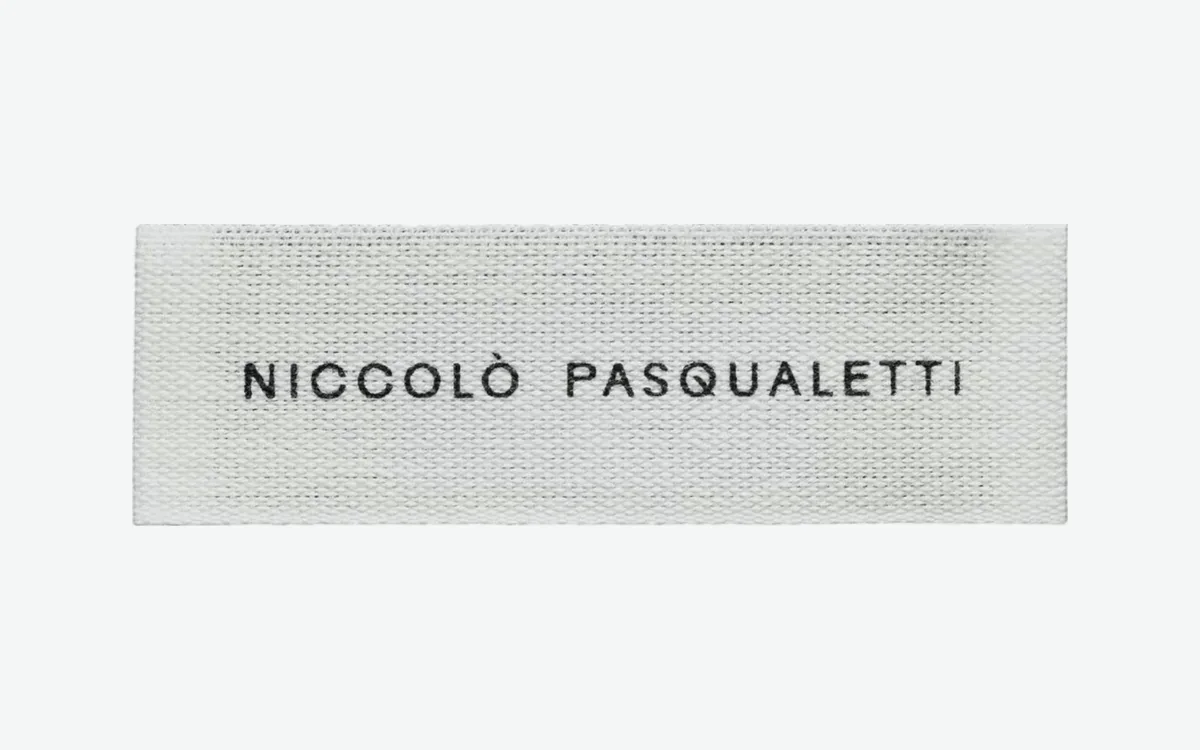
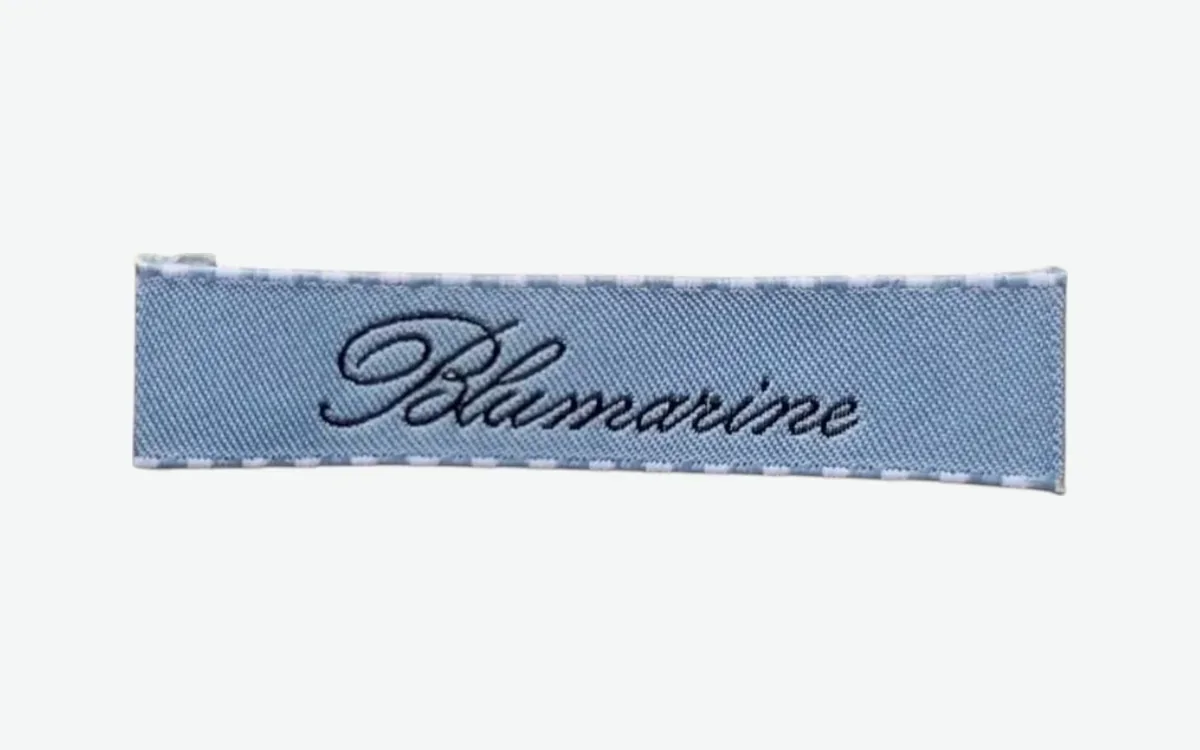
On trainers and casual shoes, the tongue is the signature spot. A damask or satin woven label gives fine detail with a soft, flexible feel; a silicone badge or debossed leather patch adds depth. Keep the label a little smaller than the flat area of the tongue so the stitching stays clear of the curves. Inside, a second label usually carries size and article data.
The heel
A heel loop is pulled every single time the shoe goes on, so strength matters as much as looks. Dense polyester tape woven with a repeating logo – see woven tapes and ribbons – or a firm leather tab are the best performers. Picture a canvas skate shoe with a 15 mm black tape loop carrying a white repeat logo: functional, visible from behind and very durable.
The side and quarter
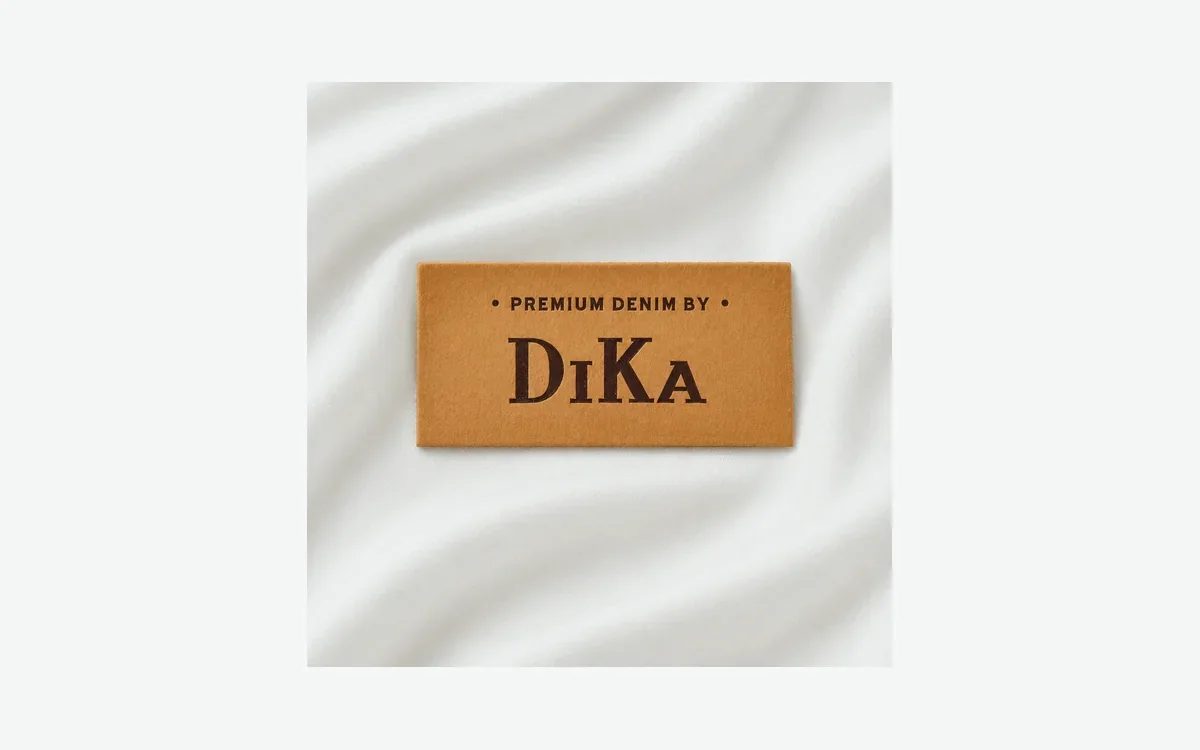
Boots and premium shoes often carry a small metal emblem on the quarter, a lace keeper or a strap. We make these in zinc alloy, brass, aluminium or stainless steel with prongs, rivets or sew holes, and all of them are nickel-free – “nickel” is only a colour finish name. Leather patches for boots and work shoes are typically smaller than on jeans, for example 30 × 20 or 40 × 25 mm.
The insole
Every customer looks into a shoe before trying it on. The sock lining can be printed in one or more colours, branded with a heat transfer for a smooth tagless finish, embossed or foil-stamped on leather, or fitted with a small woven label at the edge of a removable insole. Friction and moisture are constant here, so ask for samples to test inks and transfer adhesives on your actual lining.
EU material marking explained
Directive 94/11/EC governs material labelling of footwear in the EU. Broadly, it requires information on three parts:
- the upper;
- the lining and sock;
- the outer sole.
Each part is marked with standard pictograms or words for four material groups: leather, coated leather, textile and other materials. The marking refers to the material making up the large majority of the part; where none dominates, the main materials are listed. It must appear on at least one shoe per pair and be legible, durable and accessible – printed, embossed, stuck on or attached as a label. Shops are also required to explain the pictograms to customers.
The pictograms are language-neutral, which is a real advantage: one small material label inside the tongue or on the lining can serve all your EU markets. Keep it separate from the brand label, with size and article data alongside. Confirm the details for your product type with your compliance adviser; we produce the label exactly to your approved content.
The box: where logistics meets unboxing
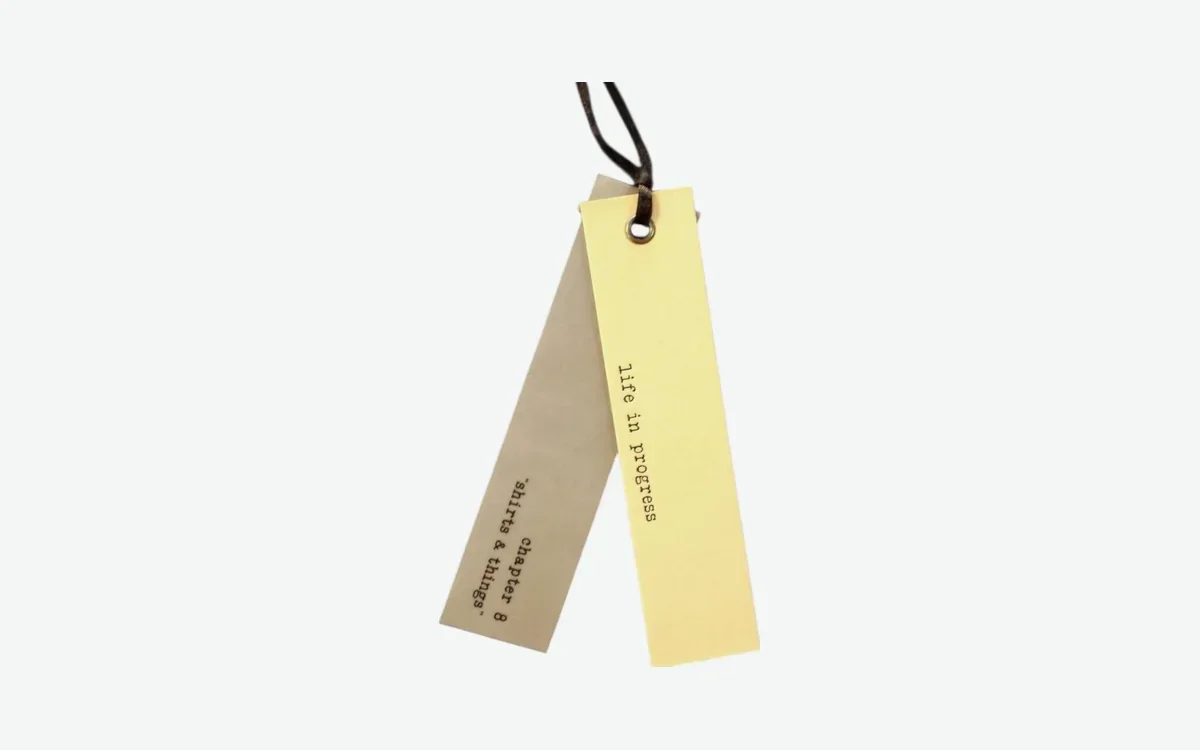
Warehouses and shops identify the pair by its box. A self-adhesive box label usually shows article number, colour, size in one or more systems, barcode and logo, and can be printed with variable data per size. Add a branded seal on tissue paper and a printed custom box, and the unboxing feels complete. See stickers and packaging labels for formats.
Starting a footwear project
Send us your logo, the positions you want to brand and the materials of your uppers and linings. As the manufacturer, we prepare a digital proof, typically within 24–48 hours, and physical samples so your shoe factory can trial them on the line. Production typically takes 10–20 working days after approval, with delivery across the EU. Minimums per design are low – ask us at [email protected] or via WhatsApp/Viber +359 876 766 050.
Frequently asked questions
When is the tongue label attached?
Usually before the upper is lasted, so the label can be stitched flat onto the tongue while it is still accessible.
Does every shoe in a pair need the material marking?
No. Under Directive 94/11/EC it must appear on at least one shoe of each pair.
Can one material label be used in all EU countries?
Yes. The standard pictograms are language-neutral, so a single label can serve every EU market.
Which heel loop material lasts longest?
Dense woven polyester tape or a firm leather tab, as both cope well with being pulled every day.
Can labels withstand sole pressing?
Yes, when yarns, coatings and silicone are specified for heat. We recommend testing samples in your own factory process.