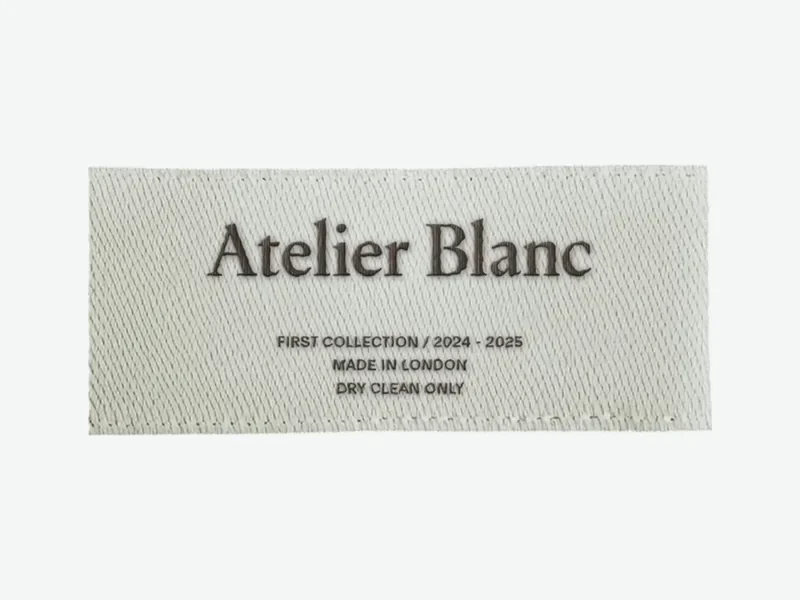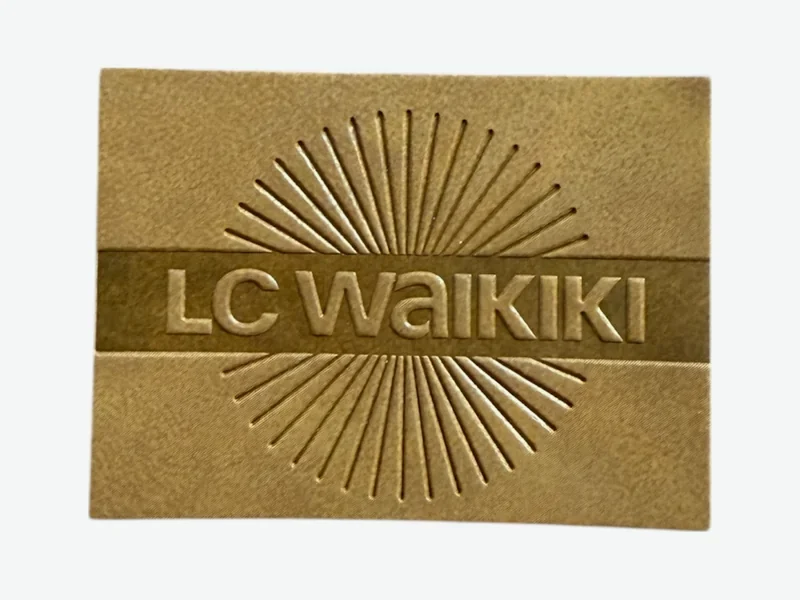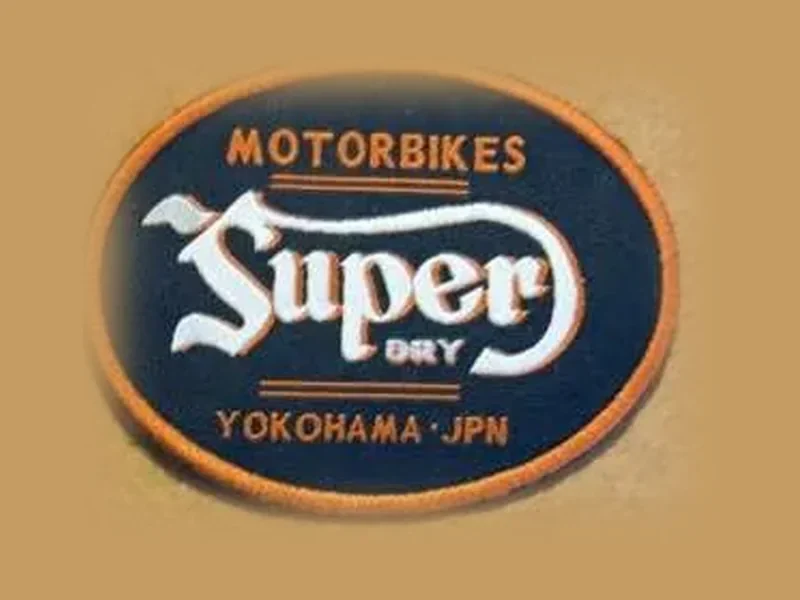
A small logo with fine lettering and a bold varsity emblem need different patch techniques. As a patch manufacturer producing both embroidered and woven patches, we usually decide by looking at three things: the artwork, the garment and the feel the brand wants.
Below, we start with those three questions and then explain the construction behind each answer.
Three questions that usually decide it
1. How fine is the artwork?
If your logo contains small text, thin outlines or an intricate crest, woven patches reproduce it more faithfully. Bold shapes, block lettering and simple icons look excellent in embroidery.
2. What should it feel like?
Embroidery is raised, tactile and visibly handcrafted. Woven patches are flat and smooth, sitting almost like part of the fabric.
3. Where does it go?
Caps, workwear and varsity jackets suit the depth of embroidery. Technical sportswear, fashion accents and small placements suit the low profile of a woven patch.
The two constructions
Embroidered
A base fabric, usually polyester or cotton twill backed by a stabiliser, is stitched on a computer-controlled embroidery machine following a digitised stitch file. Fill stitches cover large areas, satin stitches form glossy outlines and lettering, and running stitches add fine lines. Coverage can be partial, letting the twill show as a background colour, or full, with thread over the whole surface. The edge is then merrowed or heat-cut.
Woven
A woven patch comes off the same type of jacquard loom as a woven label. Thin warp and weft threads interlace to form background and motif in one piece of fabric. Because the threads are much finer than embroidery thread, many more fit into each millimetre.
Side-by-side comparison
| Aspect | Embroidered patch | Woven patch |
|---|---|---|
| Surface | Raised and textured | Flat and smooth |
| Smallest readable text | About 5 to 6 mm high | About 2 to 3 mm high |
| Thickness | Thicker, firmer | Thin, light, flexible |
| Colour effect | Rich and saturated with satin-stitch sheen | Precise colour areas, tones mixed in the weave |
| Edges | Merrowed, heat-cut, laser-cut | Merrowed, heat-cut, laser-cut or folded |
| Typical uses | Caps, uniforms, varsity and workwear jackets | Crests, small logos, bags, sportswear, fashion |
Detail in practice
Embroidery thread is relatively thick and each stitch needs a minimum length to lock into the base, so tiny letters merge and hairlines vanish. Digitisers simplify complex artwork to keep it clean. Woven patches in damask quality pack many threads into a small area, so serif fonts, short slogans and detailed crests remain readable even on patches of 30 to 50 mm. Our label size guide helps you judge whether your artwork fits the size you have in mind.
Texture and dimension
Stitch direction catches light differently across an embroidered design, giving depth even in one colour. For extra height, embroidery can be stitched over foam to create a 3D puff effect, a favourite on cap fronts. Metallic threads add sparkle. Woven patches offer a refined, even surface: satin weaves give a soft sheen, damask weaves look crisp and dense.
Edges and shapes
Both can carry a merrowed overlock border, the classic edge for circles, ovals, rectangles and shields. Heat-cut and laser-cut edges follow custom outlines, including the shape of the logo itself. Woven patches can also be end-folded and sewn into a seam as a flag. A merrowed border typically uses 3 to 5 mm on each side, so allow for it when choosing dimensions.
Colour matching
Embroidery threads are chosen from a thread colour chart and matched closely to your Pantone references; a handful of colours gives the best result. Woven patches use a set number of thread colours per design, and extra tones can be created by mixing threads. In both cases, flat colours in the artwork give more accurate matching than photographs or gradients.
Wear and care
Both techniques are durable. Embroidered patches keep their raised look over many washes; woven patches are low-profile and resist snagging. Stitching a patch on gives the longest life for either type.
When chenille fits better
Chenille uses looped yarn on a felt base for a soft, fluffy texture. It suits large letters and numbers, typically from about 75 mm, and is the traditional choice for varsity jackets. For smaller marks, embroidery or weaving is more suitable.
Seeing both before you decide
Send your logo as a vector file with Pantone references. Our designers prepare a digital proof showing thread colours and simplifications, and we can produce physical samples of both techniques so you can compare them in hand. Delivery reaches the whole EU. See the full range on our patches page.
Which patch type shows more detail?
Woven patches. Their fine threads hold text from about 2 to 3 mm high and thin lines, while embroidery works best with bold shapes and text from about 5 to 6 mm.
Which looks more premium?
It depends on the brand. Embroidery has a raised, crafted feel, while woven patches look refined and integrated. Many brands use embroidery on caps and woven patches on garments.
Can embroidered patches have a 3D effect?
Yes. Stitching over a foam layer creates a raised 3D puff effect, popular on cap fronts.
Can a woven patch be sewn into a seam?
Yes. Woven patches can be end-folded and inserted in a seam as a flag, just like a woven label.
Can I compare samples of both?
Yes. We can produce an embroidered and a woven sample of your logo before production so you can choose in hand.