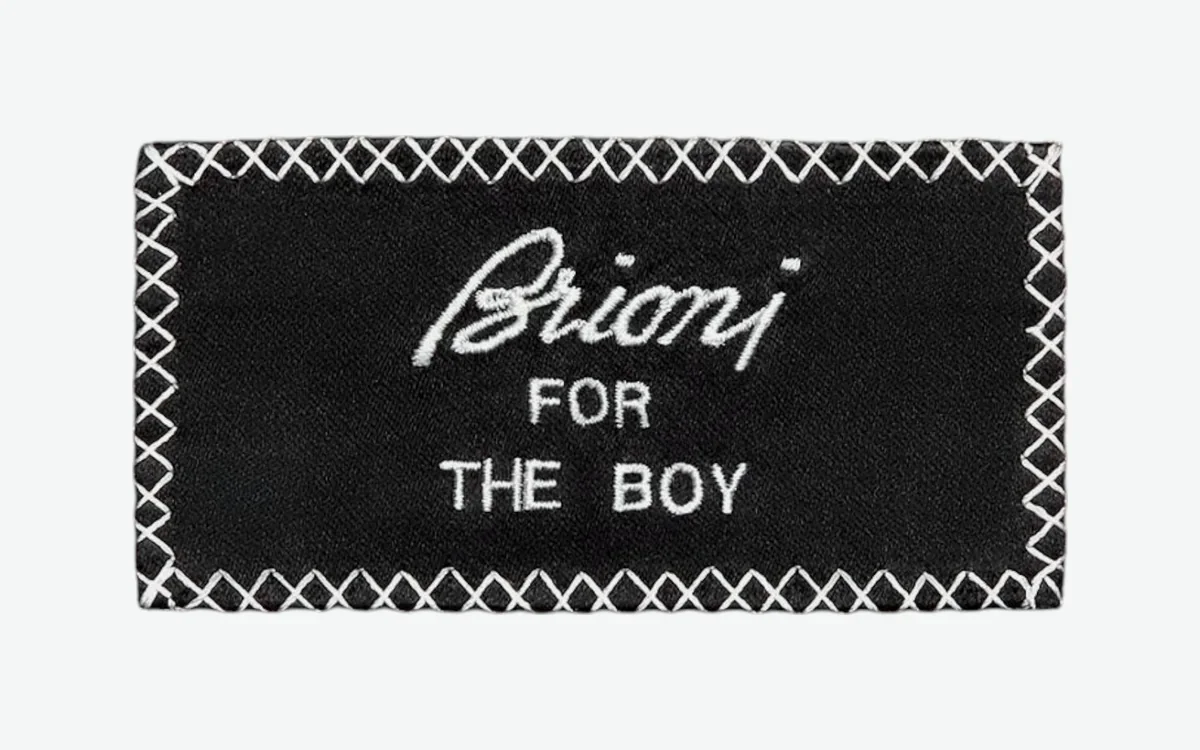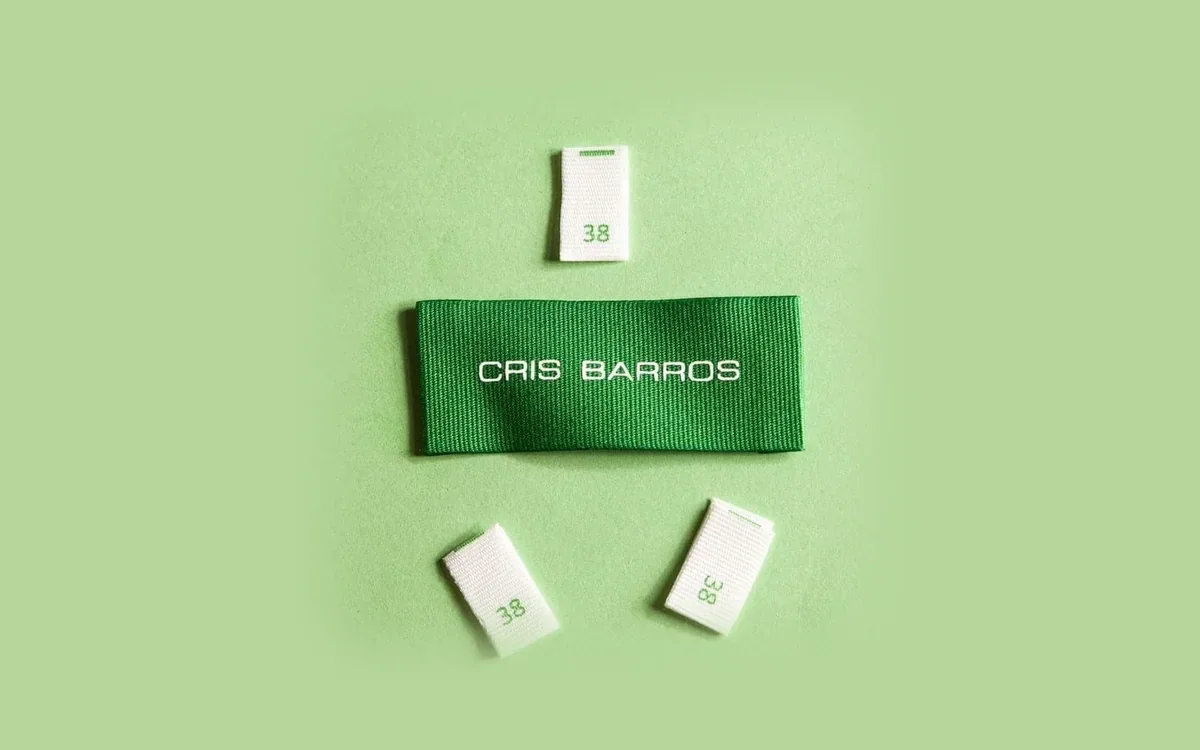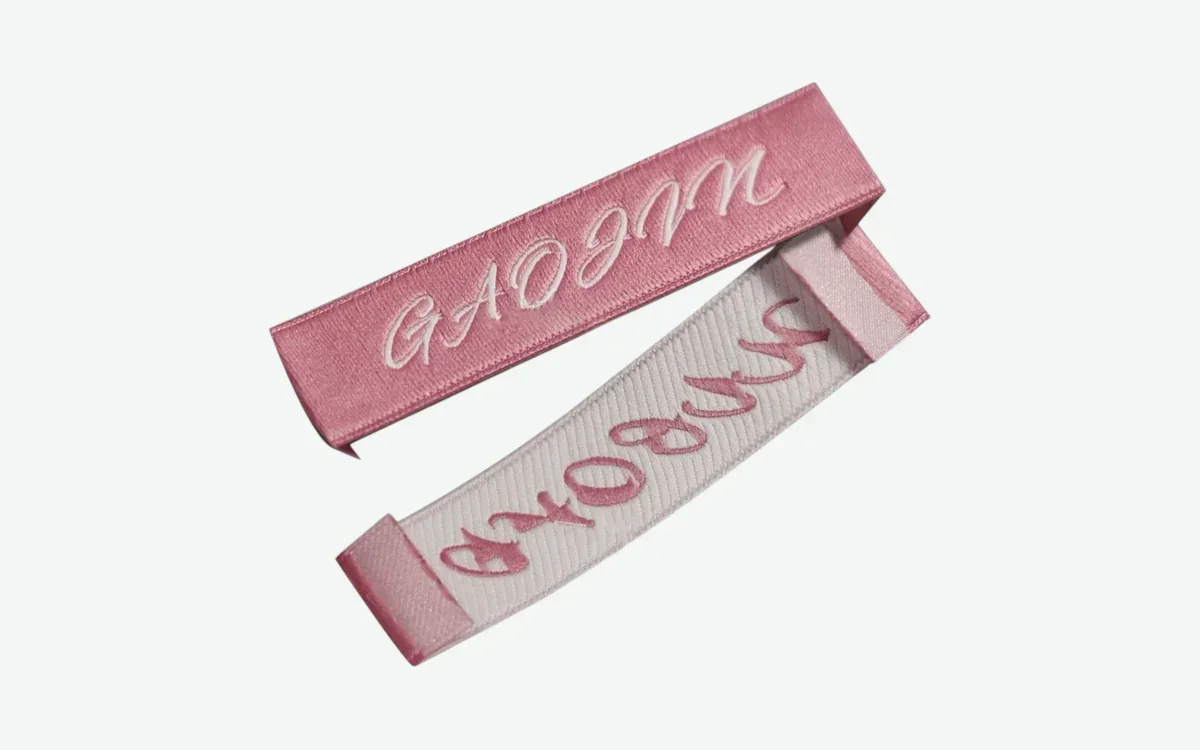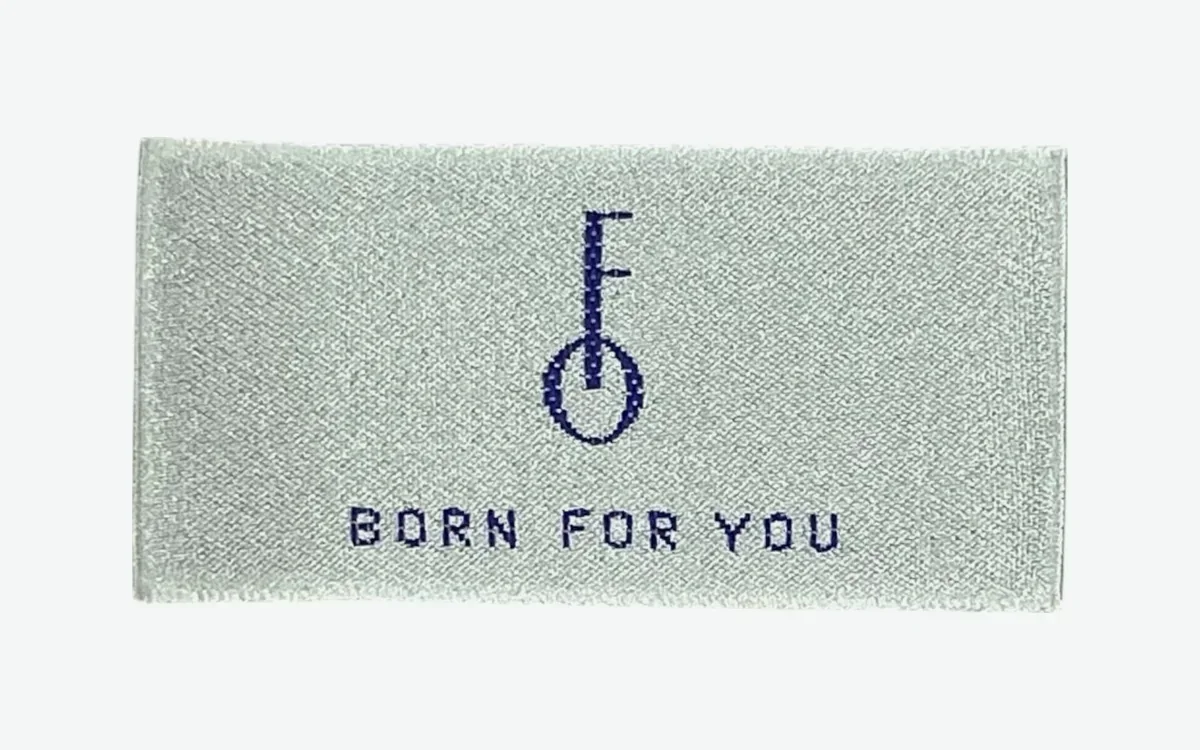
A brand colour is a promise: the same red on the website, the shop bag and the label inside the collar. On a label, that colour is made of thread or ink rather than pixels, and getting it right is a craft in its own right.
As a label manufacturer, we match Pantone references every day on woven labels, printed labels, hang tags and stickers. This guide explains what happens behind a colour match, so your brief gives us exactly what we need and your approval is based on the right object.
Start by naming the master reference
Pantone runs several systems, and they are not interchangeable. The same colour name can look clearly different on a cotton swatch and on a coated paper chip.
| You are matching | Most useful reference | Why |
|---|---|---|
| A woven label or dyed tape to your garment fabric | TCX (dyed cotton) | Closest to how yarn takes colour |
| A textile colour, checked on paper | TPX / TPG | Textile system on a paper swatch |
| Printed labels, hang tags, stickers on glossy stock | C (coated) | Matches ink on smooth surfaces |
| Uncoated hang tags, matt print | U (uncoated) | Matches ink absorbed into paper |
Textile codes have six digits and a suffix, such as 19-xxxx TCX; graphic codes are shorter numbers with C or U. If your brand guide lists both, tell us which one is the master for labels. Screen values such as RGB or HEX are a starting point at most, because displays vary and a screen colour cannot be measured against yarn.
How colour behaves in a woven label
Each colour is a dyed yarn
Nothing is mixed on the loom. For every Pantone reference, we select the closest yarn from an extensive stock range, and for most brand colours a very close stock shade exists. Where a colour falls between shades and volumes are large and recurring, a custom-dyed yarn is an option, with a lab dip and approval step added to the timeline.
The background always takes part
A woven label has warp threads running lengthwise, which usually form the background, and weft threads that build the design. The warp shows between the weft, so a red logo on black looks a little deeper than the same yarn on white. The finer the line, the stronger this effect.
Structure changes the shade
Satin’s long floats reflect light and look bright and glossy; tight damask looks deeper and more matt. Mixing two weft colours in different weave patterns creates extra apparent shades without adding yarns.
Practical limits
- Most brand labels use two to six colours; each extra one adds thickness.
- Smooth gradients and photographs cannot be woven; they are approximated with weave effects or printed instead.
- Very thin lines read darker or blend into the background.
- Metallic and fluorescent yarns exist, but they cannot reproduce a metallic or neon paper chip one-to-one.
How colour behaves in a printed label
- Spot inks in flexo and screen printing are mixed to the Pantone formula, giving the closest match for logos and solid areas.
- Thermal transfer, common for care labels and variable data, uses ribbons in a limited set of standard colours; exact brand colours are usually printed by flexo or screen.
- Digital print handles images and gradients, but some saturated Pantone shades fall outside its range.
- The tape shines through partly transparent ink: white satin keeps colours clean, cream or coloured tape shifts them, and dark tape needs an opaque white underlay.
- The surface matters too: glossy satin makes colour richer, matt cotton softens it, much like the difference between C and U.
The approval route
- Digital proof confirms layout, text, size and the Pantone references noted. It is not a colour approval.
- Yarn or ink selection to the reference.
- Lab dip for custom-dyed yarn or tape, approved before the full dye lot.
- Physical sample in the real structure, ideally checked against your reference swatch.
- Approved master, which becomes the standard for production and every reorder.
The most reliable reference is a physical one: a TCX swatch, a piece of your garment fabric or a previous label you liked. Matching to an object beats matching to a code alone.
How close is close enough?
Colour difference is measured with a spectrophotometer and expressed as Delta E; the smaller the number, the closer the match. Visual checks are done in a light booth under standard daylight, and ideally also under the lighting used in your stores, because two colours that match in daylight can drift apart under warm shop lights. Agree with us which light source counts for approval, and the master sample then sets the tolerance for future runs.
Keeping colour stable over seasons
Once a match is approved, we record the yarn references or ink formula with the master sample in the production file. Reorders use the same file, so the label made next year matches the one made today. All our materials are OEKO-TEX certified, and recycled GRS yarns follow the same matching process.
Browse our woven labels and printed labels, check label materials, or send us your Pantone references.
Which Pantone code should I send for a woven label?
A TCX textile reference is usually the best master for woven labels, especially if the label should match the garment fabric. Send a physical swatch if you can.
Can you weave a gradient in my brand colours?
Smooth gradients cannot be woven, but weave effects can suggest a transition. For a true gradient, a printed label is the better choice.
Why does my logo colour look darker on the woven sample?
The background warp shows between the weft threads, so a colour on a dark background reads deeper, especially in thin lines.
Will my reorder match the first delivery?
Yes. The approved master sample and the yarn or ink references are stored, and every reorder is produced against them.