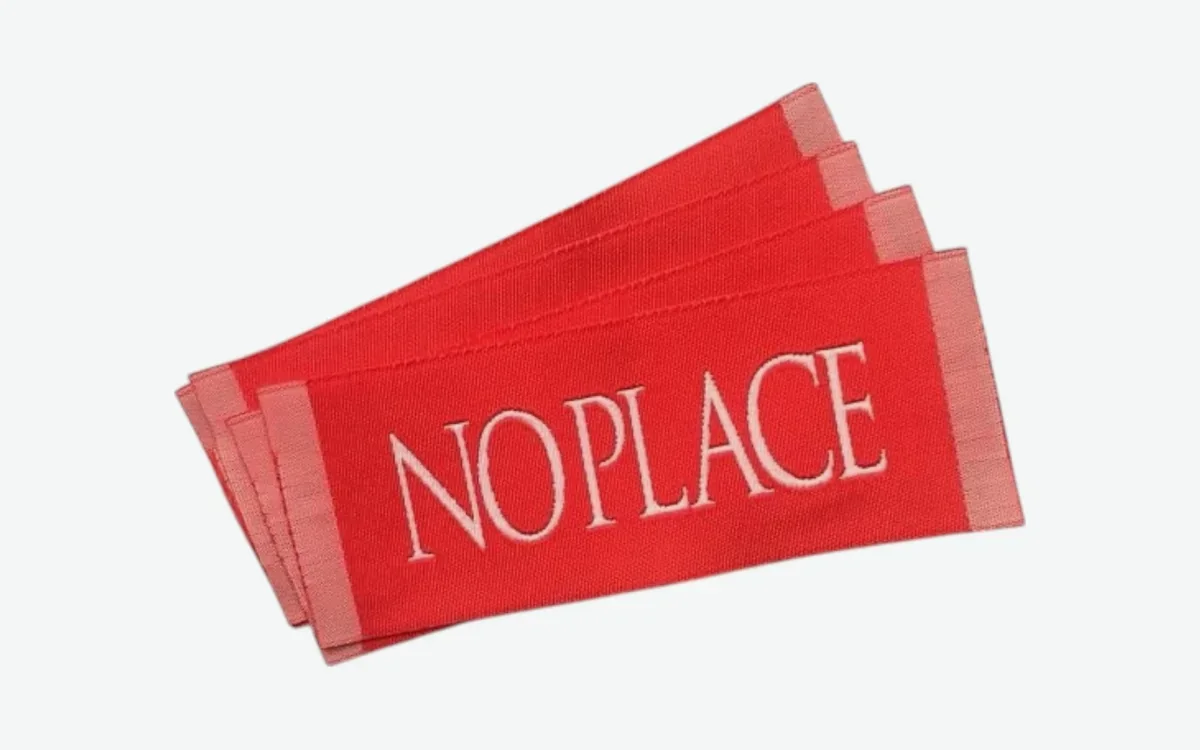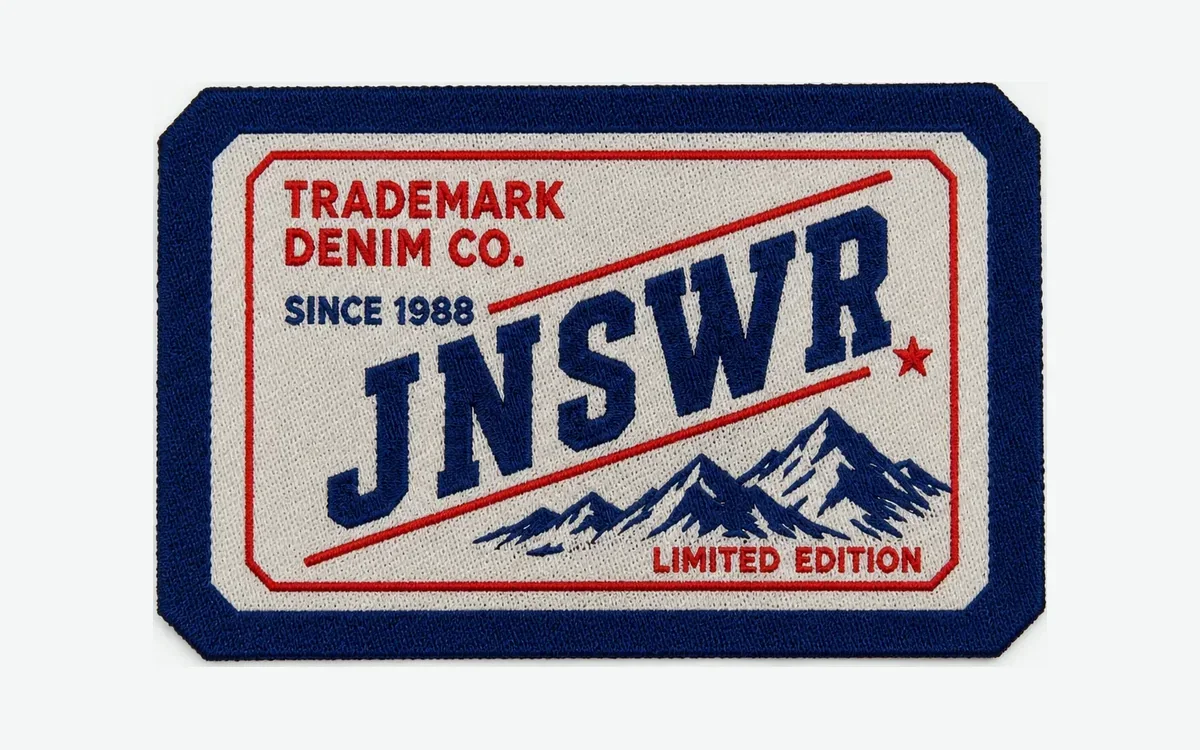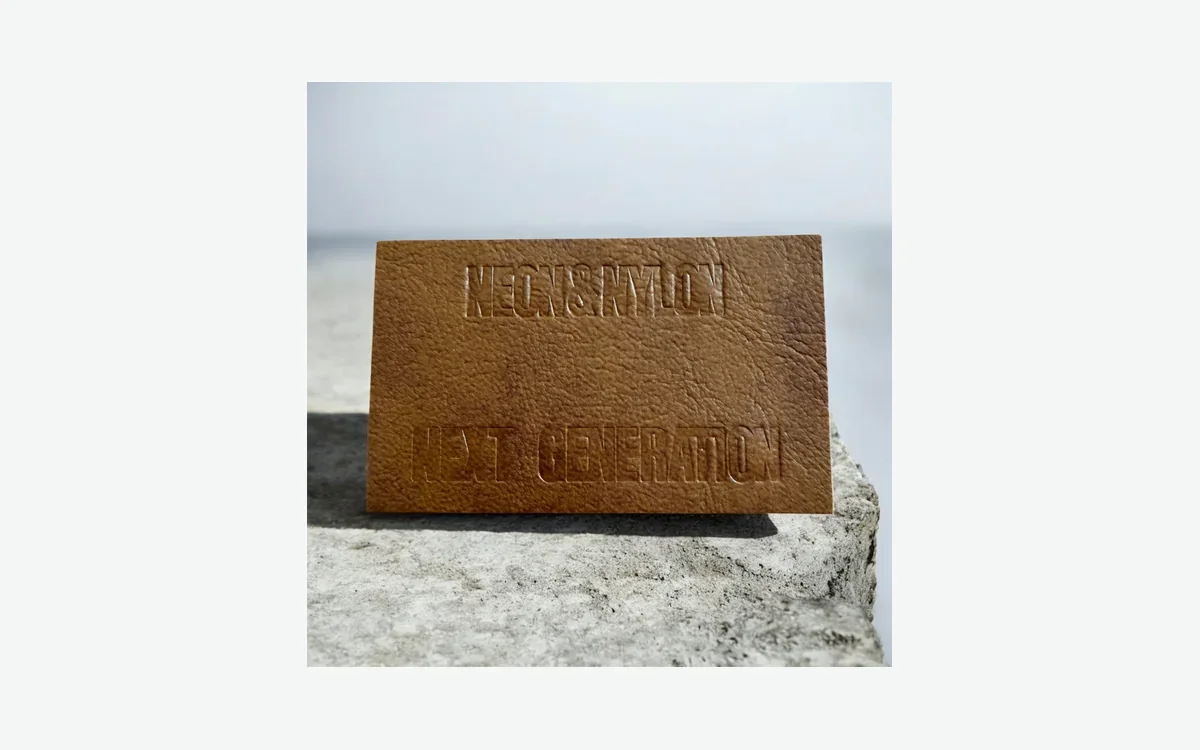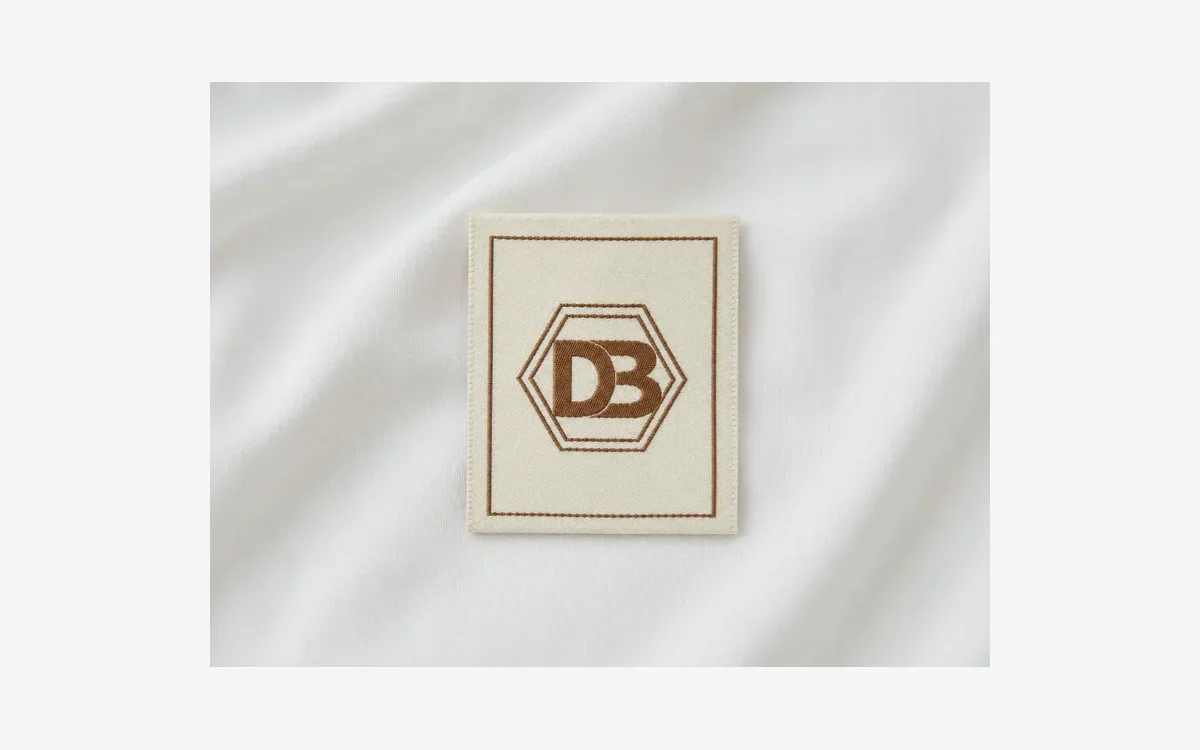
Send the same logo to the loom in three different weaves and you receive three different labels: one crisp and thin, one glossy and fluid, one firm and economical. None is better in general; each is better for something.
When brands order custom woven labels for clothing, the weave is often chosen by habit. As a woven label manufacturer, we prefer to start from the logo and the garment, then pick the weave that serves both. This guide explains what happens on the loom and how to choose with confidence.
What happens on the loom
A woven label has two thread systems. The warp runs lengthwise and usually forms the background colour. The weft is shot across the warp one pick at a time, and the jacquard mechanism decides, thread by thread, whether each warp yarn lifts above or stays below it. Those millions of small decisions draw the logo.
Two values set the quality ceiling:
- Weft yarn thickness, measured in denier. A finer yarn allows more picks per centimetre.
- Pick density, the number of weft threads per centimetre or inch. More picks mean finer curves, smaller text and smoother outlines.
A helpful way to think about it: picks are the pixels of a woven label. The weave structure then determines how those threads interlace, and therefore the surface look and hand feel.
Start from your smallest detail
Before comparing weaves, find the smallest element in your artwork: the thinnest line, the tightest gap between letters, the smallest word. That element decides which quality you need far more than the logo as a whole. A crest that looks perfect on a 50 × 20 mm high-definition damask can blur on a narrow taffeta label.
| Smallest detail in your logo | Suggested weave |
|---|---|
| Micro text, fine serif type, detailed crests | HD damask |
| Normal text and most logos | Damask |
| Bold wordmarks and simple shapes, with a soft sheen wanted | Satin |
| Simple wordmarks, codes, information labels | Taffeta |
Damask: the precise all-rounder
Damask combines a fine weft, commonly a thin polyester of around 50 denier, with a high pick density. The result is a thin, flat, flexible label with a smooth, slightly matt surface and sharp detail. It is very durable: the dense structure resists washing, abrasion and fraying. For extremely small text, HD damask uses an even finer yarn and higher density.
Damask is the default for main brand labels in shirts, dresses, jackets, knitwear and trousers, and for small logo or size labels where space is tight.
Satin: softness and sheen
In a satin weave, threads float over several crossing threads before interlacing. These long floats reflect light, giving satin its sheen and a very soft, fluid hand. The same floats make fine detail slightly less precise, so satin designs benefit from bold lines and generous text sizes. Satin labels are a little thicker than damask and feel luxurious against the skin.
Satin suits lingerie, nightwear, evening and bridal wear, babywear and scarves. One clarification: a satin woven label has the design woven in, whereas a printed satin label is a satin tape with the design printed on its surface. Both are available; see printed labels for the printed version.
Taffeta: firm and efficient
Taffeta uses a simpler interlacing with a coarser weft and lower pick density. The structure is firm and crisp, with a slightly ribbed surface, and it weaves faster on the loom, which makes it efficient for large runs. It suits bold logos and clear shapes. Because it is stiffer, it is rarely chosen for neck labels, but it works very well on workwear, uniforms, bags, home textiles and promotional items.
Side-by-side comparison
| Property | Damask | HD damask | Satin | Taffeta |
|---|---|---|---|---|
| Weft | Fine, around 50 denier | Finer | Fine to medium, long floats | Coarser |
| Pick density | High | Very high | Medium to high | Low to medium |
| Detail | Very good | Excellent | Good for bold designs | Basic shapes |
| Surface | Smooth, slightly matt | Smooth, slightly matt | Glossy | Crisp, slightly ribbed |
| Hand | Thin, soft, flexible | Thin, soft, flexible | Very soft, fluid | Firm |
| Durability | Excellent | Excellent | Good; floats can snag | Very good |
Comfort is more than the weave
Weave sets the starting point, but finishing changes the hand considerably. A softening finish relaxes the structure; ultrasonic cutting seals the edges without a hard bead; and a well-chosen fold hides the cut ends inside the seam. A damask label with the right edge and fold can feel softer than a poorly finished satin.
Colour and yarn options
All three weaves are usually produced in polyester, which holds colour and survives repeated washing. Weft colours are matched to Pantone references from our yarn range. Most designs use two to four colours, and damask can carry more. Metallic gold and silver yarns can be added to damask and satin. Recycled polyester with GRS certification is available for many qualities, and labels can be supplied from OEKO-TEX certified materials.
Test before you decide
If you are torn between two weaves, ask for your logo in both. Holding damask and satin versions side by side inside the actual garment settles the question faster than any description. As the manufacturer, we prepare a digital proof, weave samples before production and typically complete bulk orders within 10–20 working days after approval, with delivery across the EU. Explore options on our woven labels page and in the label materials guide.
Frequently asked questions
Which weave gives the sharpest logo?
HD damask gives the finest detail, followed by standard damask. Both handle small text and thin lines far better than satin or taffeta.
Is satin softer than damask?
Yes, satin has a softer, more fluid hand and a visible sheen. Damask is thinner and flatter, which also makes it comfortable in most garments.
When is taffeta the right choice?
For simple logos and information labels on workwear, bags, uniforms and high-volume basics, where firmness is not felt and efficiency matters.
Can I get samples in two different weaves?
Yes. We can weave your logo in two qualities so you can compare them in your garment before approving production.
Are recycled yarns available for woven labels?
Yes. GRS certified recycled polyester is available for many damask and satin qualities.