Pull on a fine cashmere jumper and the first thing you notice may be the label. A stiff tag at the collar can undo the luxury of an expensive yarn in seconds. Sweater labels have to be soft, light and flexible, and the care label must tell the owner exactly how to keep the knit from shrinking. Here is how we manufacture knitwear labels that respect the fabric.
Why knitted garments are different
Woven shirts are stable; knits stretch, drape and recover. A heavy or rigid label pulls a fine gauge out of shape, leaving a visible dent at the neck, and a sharp edge is felt immediately because the knit sits close to the skin. Three properties guide every decision:
- Soft hand and soft edges – ultrasonically sealed edges stay smooth and do not fray.
- Movement – thin qualities and compact formats bend with the knit instead of forming a stiff patch.
- Low weight – especially on 12- and 14-gauge merino or cashmere.
Knitwear is often worn for hours directly on the body, so OEKO-TEX certified label materials add reassurance.
Choosing the label quality
| Quality | Character | Typical job on knitwear |
|---|---|---|
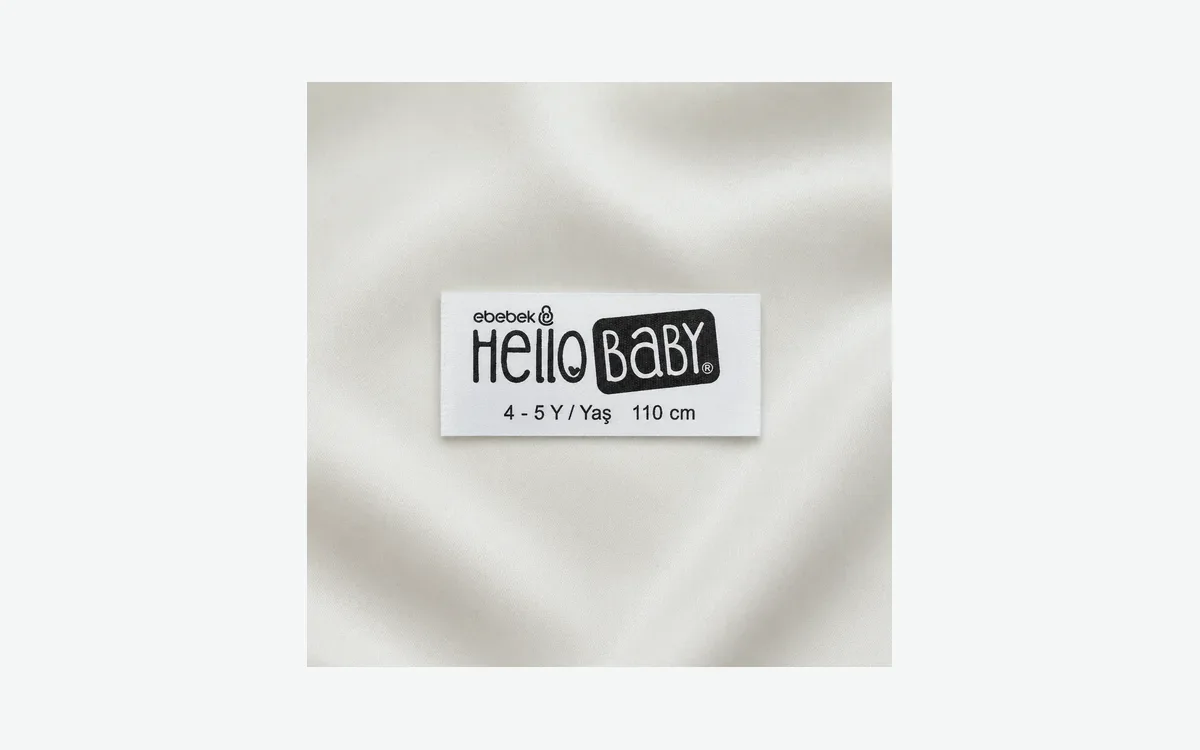
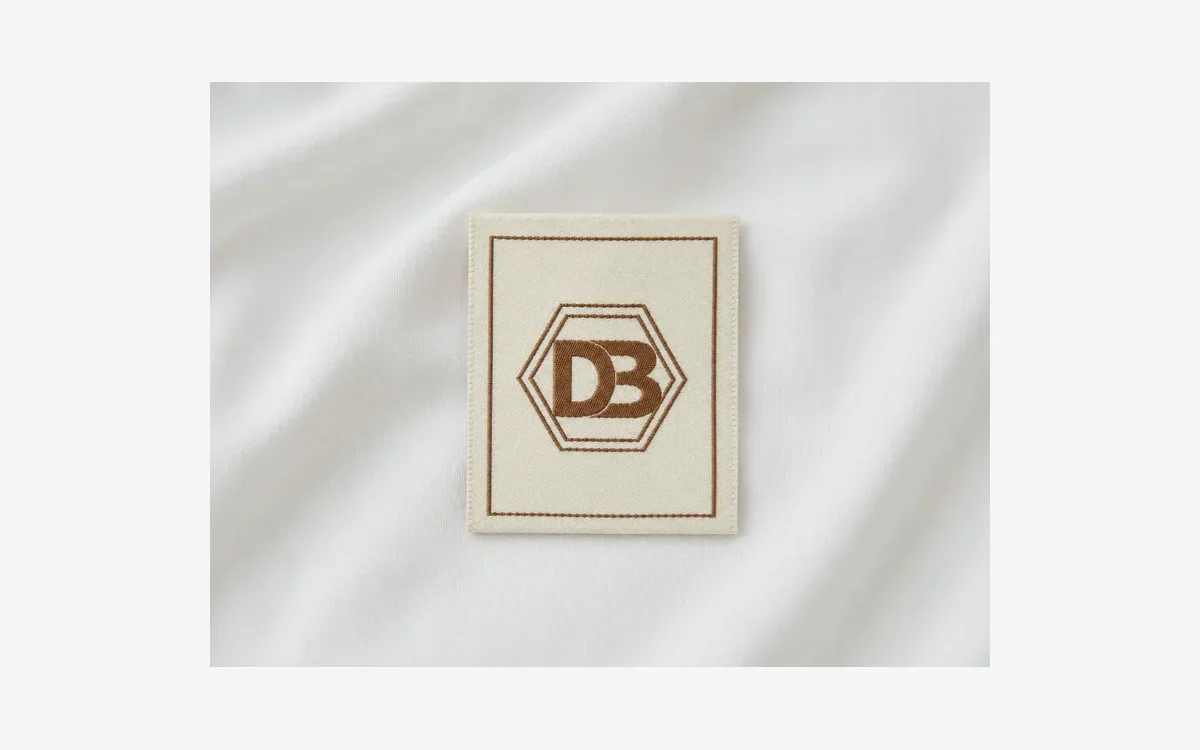
| Satin woven (damask on satin base) | Smooth, soft, slight sheen, fine detail | Main brand label on premium sweaters |
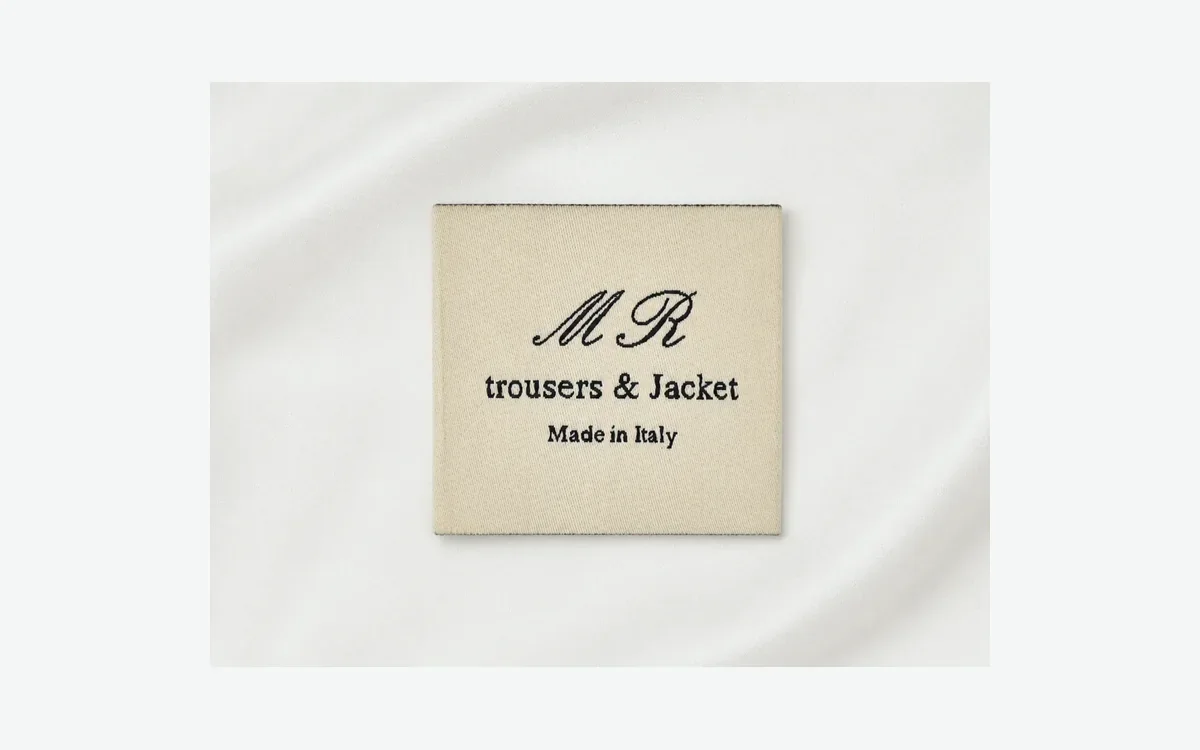
| Fine damask woven | Thin, flexible, high definition | Brand labels on fine-gauge knits |
| Printed satin | Very soft and light, takes many languages | Care and composition |
| Printed cotton tape | Matt, natural, soft | Organic and undyed wool collections |
| Leather or faux leather | Firm, tactile | Outside tabs on chunky knits and cardigans |
Satin reads as refined and slightly glossy; cotton has a quieter, matt look that sits naturally next to undyed wool or organic cotton. For most collections we suggest a woven satin brand label and a printed satin or cotton care label to keep weight down.
Folds that feel good
How a label is folded changes how it feels. A loop fold – folded in half with both ends in the seam – leaves no cut edge against the skin, which makes it the most comfortable option at a sweater neck. An end fold looks tidy on a neck tape or side seam. A centre fold gives two printed faces and suits care labels. A straight cut label sewn flat onto a neck tape works too, as long as the edges are sealed.
Placement, garment by garment
Crew and V-neck jumpers
Sew the brand label onto a neck tape or into the neck seam, never directly onto the knit, so the collar keeps its line. Keep it compact – around 15 × 50 or 20 × 50 mm finished. The care label goes in the left side seam a few centimetres above the hem, so the collar is not crowded.
Cardigans
A small label on the inside of the button band, or the usual back-neck position, works well. Metal buttons or a tiny metal plate can echo the brand; our metal labels are all nickel-free.
Chunky knits and outside details
Think of an Aran-style fisherman jumper with a small debossed faux leather tab at the hem, just beside the side seam. Tabs around 30 × 15 to 40 × 20 mm keep the knit from sagging. Attach them along the seam line rather than across the rib, so the rib can still recover, and use a slightly longer stitch to avoid perforating the knit too densely. A small woven flag in the hem rib or cuff is a lighter alternative. See leather labels for finishes.
Writing the care label for wool and cashmere
Wool, cashmere, alpaca and mohair can felt or shrink in one wrong cycle, so precise care information protects both the customer and your returns rate. Typical content, always confirmed by tests on your garment:
- hand wash or a machine wool programme at a low temperature, often 30 °C;
- do not bleach and do not tumble dry;
- dry flat, ideally with a short note such as “reshape while damp”;
- iron at low temperature, if at all;
- professional cleaning as appropriate for the fibre.
Use ISO 3758 symbols in the standard order. For composition, Regulation (EU) No 1007/2011 requires official fibre names and percentages by weight in the language of each country of sale. Wool, cashmere, alpaca and mohair are listed names; terms such as “virgin wool” are allowed only under conditions set by the regulation, so check before printing. Long compositions with many languages fit neatly on a soft centre-fold or booklet care label.
Hang tags that do not mark the knit
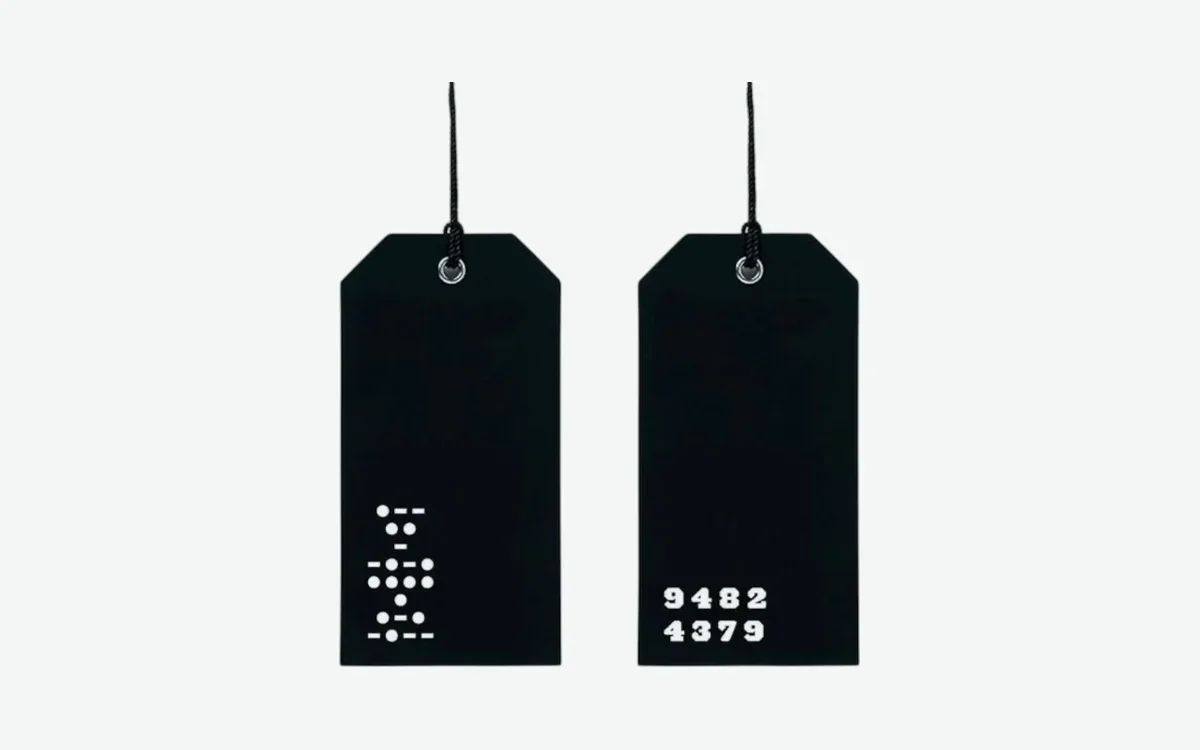
Thread the string through the care label or a seam rather than through the knitted fabric, and avoid heavy plastic pins on fine gauges. A thick uncoated or textured board with a small embossed logo suits the feel of knitwear. Ordering hang tags together with labels keeps colours consistent.
Working with us
Tell us the yarn, gauge, branding positions and care content. As the manufacturer, we prepare a digital proof, typically within 24–48 hours, and send physical samples so you can test softness and placement on the actual knit. Production typically takes 10–20 working days after approval, with delivery across the EU. Minimums per design are low – ask us at [email protected] or on WhatsApp/Viber +359 876 766 050.
Frequently asked questions
Which fold is most comfortable at a sweater neck?
A loop fold, because both cut ends sit inside the seam and nothing sharp touches the skin.
Should the brand label be sewn directly onto the knit?
Preferably not. Sewing it onto a neck tape or into the neck seam keeps the collar from distorting.
Satin or cotton for knitwear labels?
Satin for a refined, smooth look; cotton for natural, matt collections such as undyed wool or organic cotton knits.
How big should a leather tab on a jumper be?
Compact, usually around 30 × 15 to 40 × 20 mm, so it does not weigh the knit down.
Can “virgin wool” be printed on the label?
Only when the conditions of Regulation (EU) No 1007/2011 are met, so confirm the fibre content before approving the proof.