Approving the label design is only half the decision. How that label meets the fabric affects comfort, wash life and even the speed of your production line.
As a manufacturer of woven labels, printed labels and heat transfers, we supply all three attachment options and help brands choose between them. Rather than a list of pros and cons, this guide starts from the garment and works back to the method.
The three options in one sentence each
- Sewn-in: a woven or printed label stitched into a seam or onto the fabric.
- Iron-on: the same label with a heat-activated hot-melt coating on the back, bonded with an iron or heat press.
- Heat transfer: no label at all; ink and adhesive move from a carrier sheet into the fabric surface.
Start from the garment
T-shirts and sweatshirts
Jersey accepts all three. A soft woven or printed label sewn into the neck seam is the classic; a tagless heat transfer gives the most comfort. Iron-on works too, though the bonded area becomes slightly stiffer.
Leggings, swimwear, compression wear
Heat transfers with stretch inks move with the fabric and are the natural fit. On coated, membrane or water-repellent fabrics, a sewn label in an inner seam is often the safest route, since adhesives need specific testing there.
Denim, canvas and twill
Robust woven fabrics take sewn labels easily and bond well with iron-on labels. Heavier labels, such as leather patches, are stitched or riveted.
Wool, silk and delicate fabrics
Sewing is the best choice. Iron-on is not recommended on wool, pile fabrics, thin silks or anything that cannot take the heat.
Babywear and underwear
Comfort comes first. Tagless transfers or very soft printed labels sewn into a side seam keep edges away from sensitive skin.
Bags and finished garments
Where no seam is convenient, for example on a tote or a ready-made garment branded afterwards, iron-on labels make sense, often with a few corner stitches for long life.
Sewn-in labels in detail
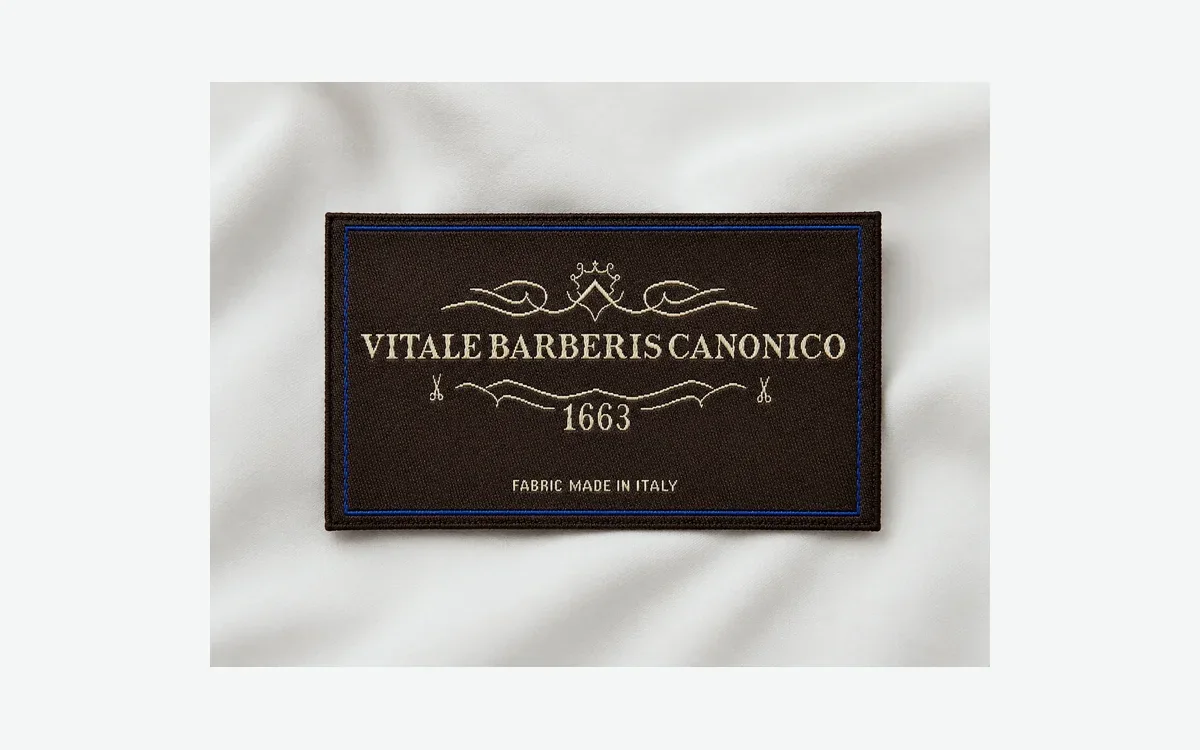
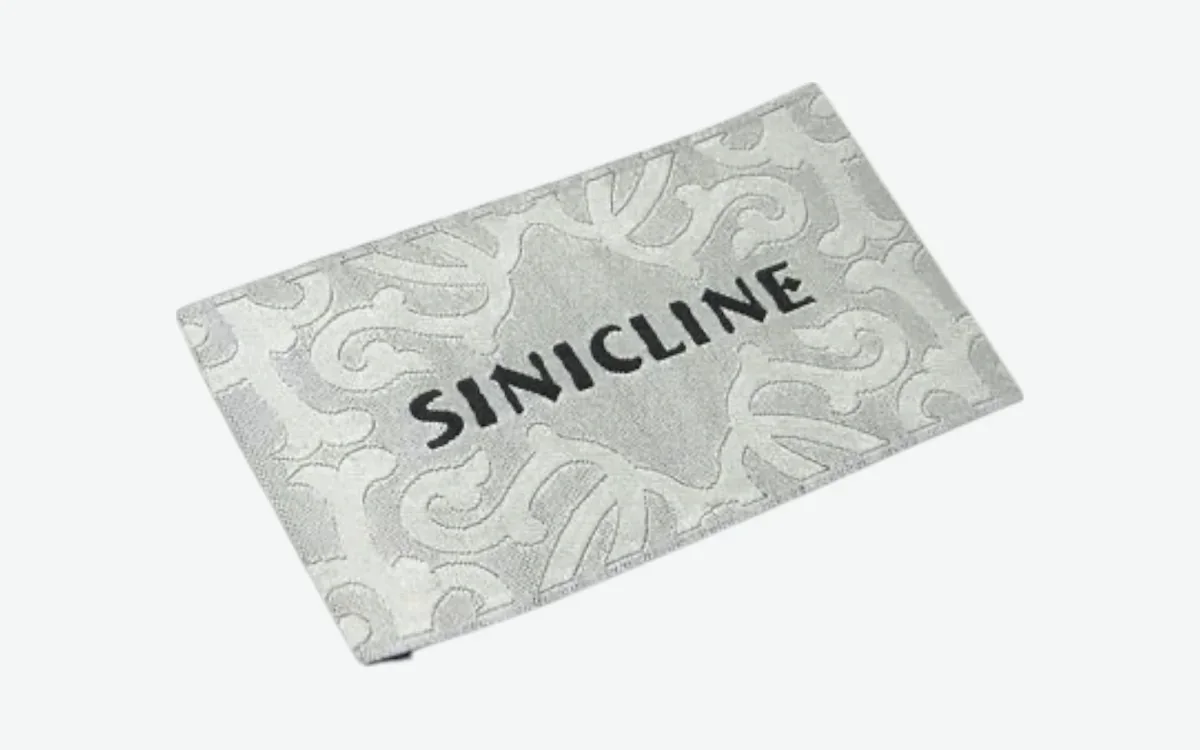
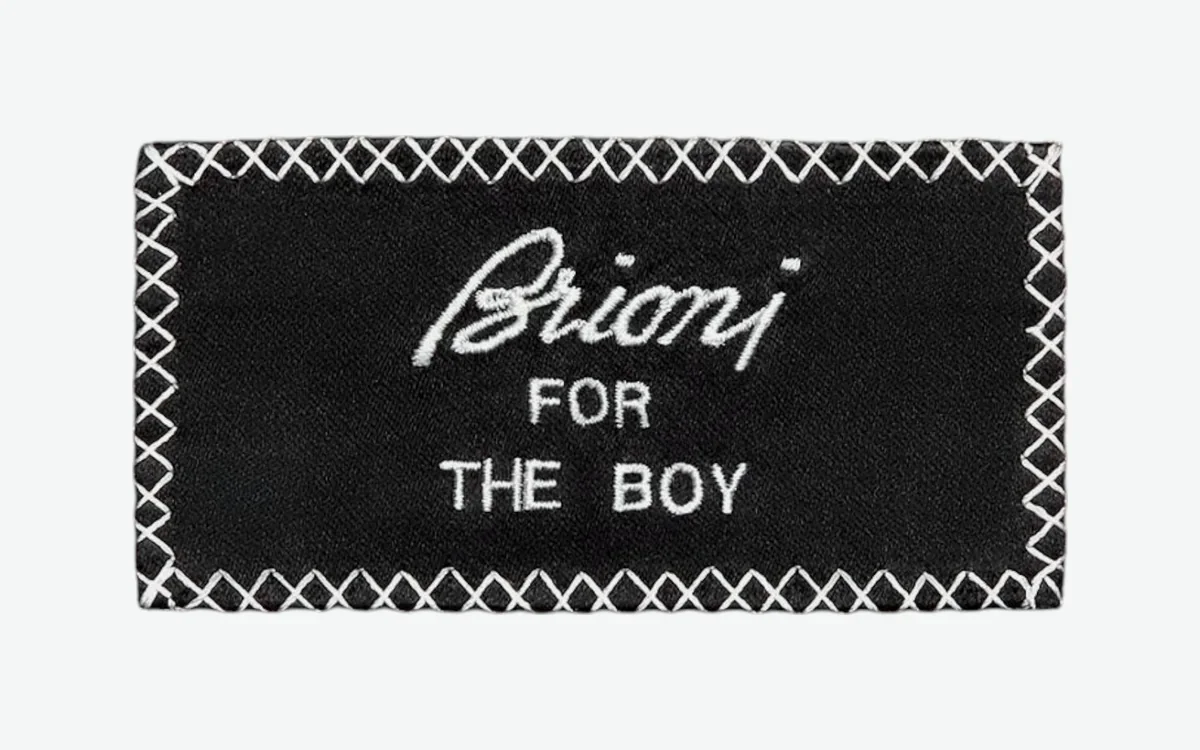
The fold decides how a sewn label is attached: centre-fold or loop-fold labels are inserted into a seam, while end-fold or straight-cut labels are stitched flat. Sewing is the most permanent method, works on almost any fabric and fits existing production because labels go in as seams are closed. It suits every label type, from brand labels to multi-language care labels. The point to watch is comfort: edges can be felt at the neck, so material and edge finish matter.
Iron-on labels in detail
The label keeps its body and edges; only the attachment changes. Heat softens the adhesive, pressure pushes it into the fabric and the bond forms as it cools. Always follow the parameter sheet supplied with your labels and test on the actual fabric. As orientation for woven iron-on labels:
| Setting | Typical guidance |
|---|---|
| Temperature | about 150–170 °C; lower-temperature adhesives exist for sensitive fabrics |
| Time | about 12–20 seconds; thicker labels need the upper end |
| Pressure | medium to firm and even; a heat press is more consistent than a hand iron |
| Steam | none |
| Protection | baking paper or thin cotton cloth over the label |
| Handling | let it cool before moving the garment |
Correctly applied on a suitable fabric, iron-on labels handle normal domestic washing. Bond strength drops when the adhesive was under-heated, the fabric is coated or very smooth, or the garment is often washed hot or tumble dried. Iron-on is also a handy positioning aid: bond the label in place, then secure it with a single seam.
Heat transfers in detail
A transfer is printed in reverse with ink and adhesive layers on a carrier, then pressed so the design sits directly on the fabric. No tape, no edges and full stretch with knitted fabrics make it the comfort choice. Each transfer has its own press settings, and a test press on your fabric is always worthwhile. The look is flat rather than woven, very fine detail is limited at small sizes, and dark or sublimated polyester may need a blocker layer against dye migration.
Side by side
| Criterion | Sewn-in | Iron-on | Heat transfer |
|---|---|---|---|
| Permanence | Very high | Good on suitable fabrics | High when pressed correctly |
| Comfort | Depends on material and edge | Flat, edges remain | Best, no edges |
| Stretch fabrics | Good in seams | Limited | Very good with stretch inks |
| Delicate fabrics | Best choice | Not recommended | Only low-temperature systems, after testing |
| Equipment | Sewing machine | Iron or heat press | Heat press |
| Typical use | Series production | Branding finished items, small runs | Tagless necks, sportswear, babywear |
Let us help you decide
Send us the fabric composition, the garment type and how you produce: in-house sewing, a partner factory or branding finished garments. We recommend the method, prepare a digital proof, typically within 24–48 hours, and supply samples you can test on your own fabric. Materials are OEKO-TEX certified. See our woven labels and printed labels, or contact our team.
Will iron-on labels survive washing?
Applied correctly on a suitable fabric, they handle normal domestic washing. For garments washed often over many years, add a few stitches at the corners.
Which method is most comfortable for babywear?
Tagless heat transfers, or very soft printed labels sewn into a side seam, keep edges away from the skin.
Can I iron a label onto a wool jumper?
We do not recommend it. Wool and other heat-sensitive fabrics are best served by a sewn label.
Can woven labels be supplied with an iron-on backing?
Yes. We apply the hot-melt coating during finishing and supply a parameter sheet with the labels.