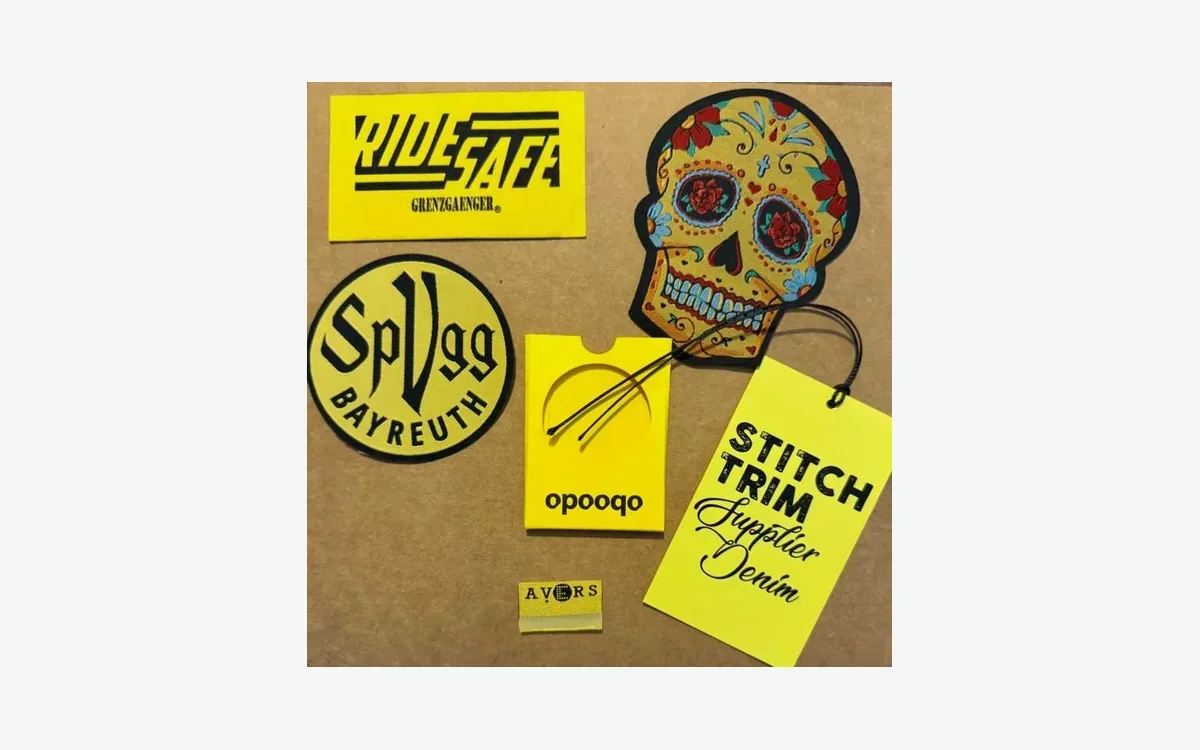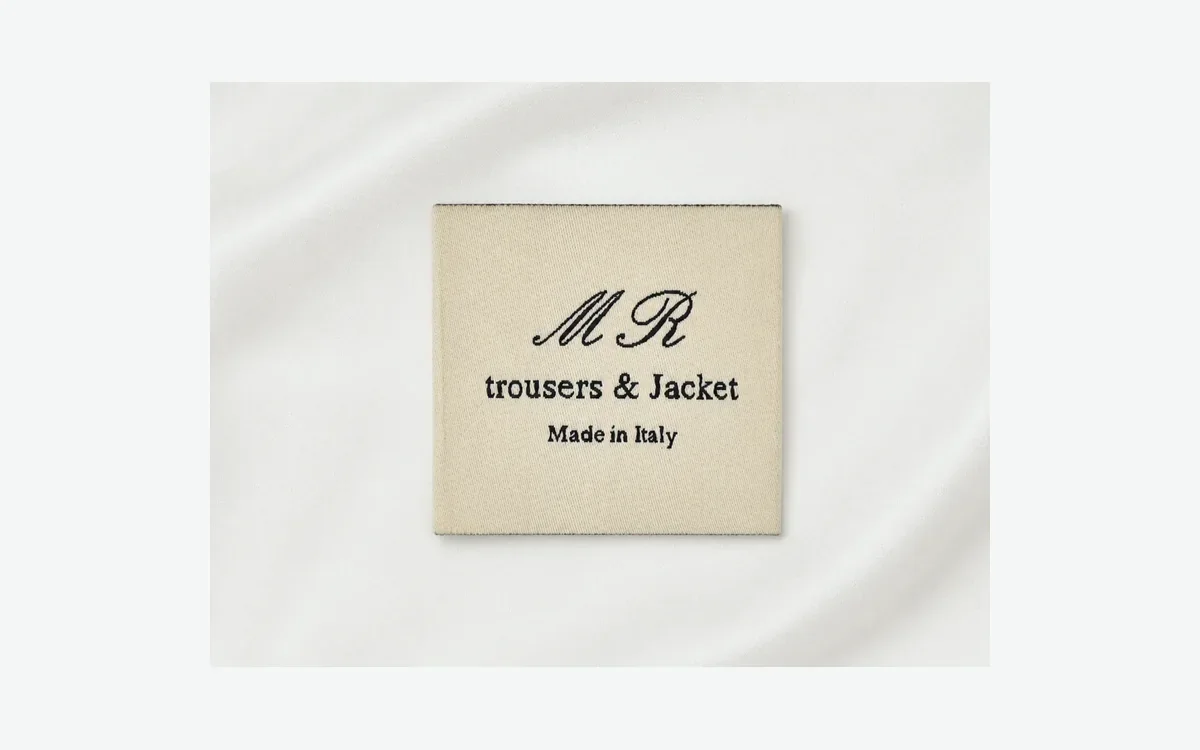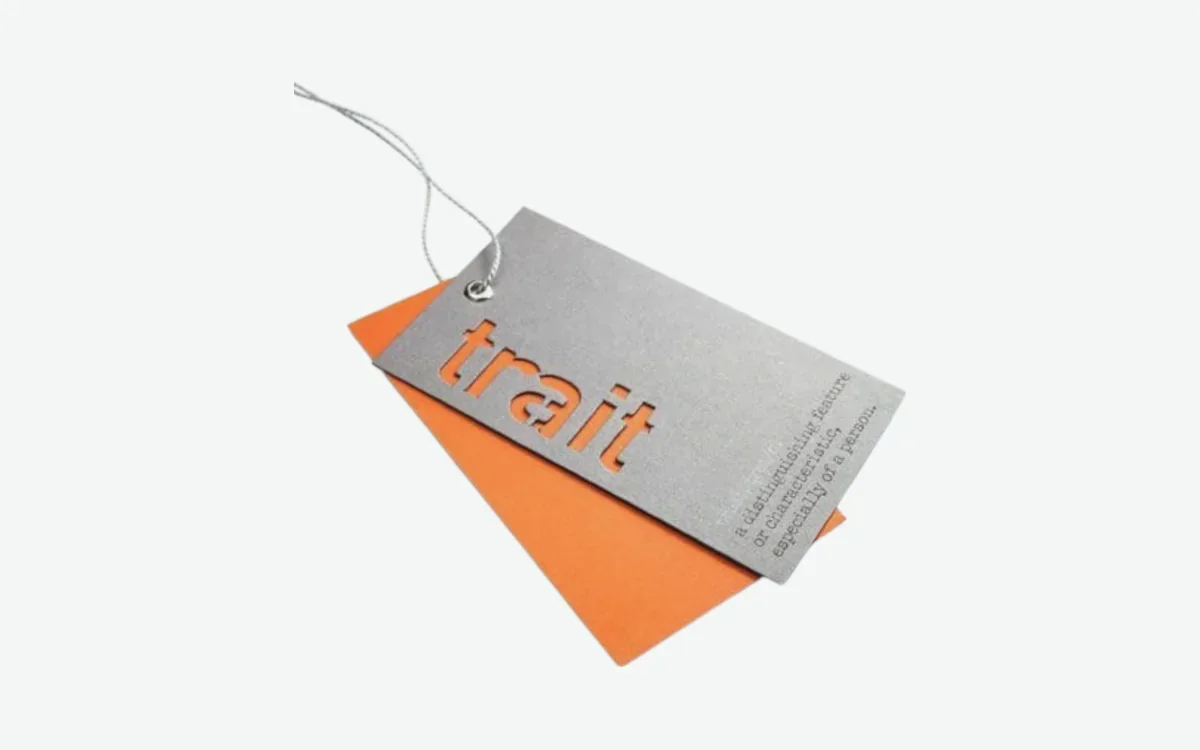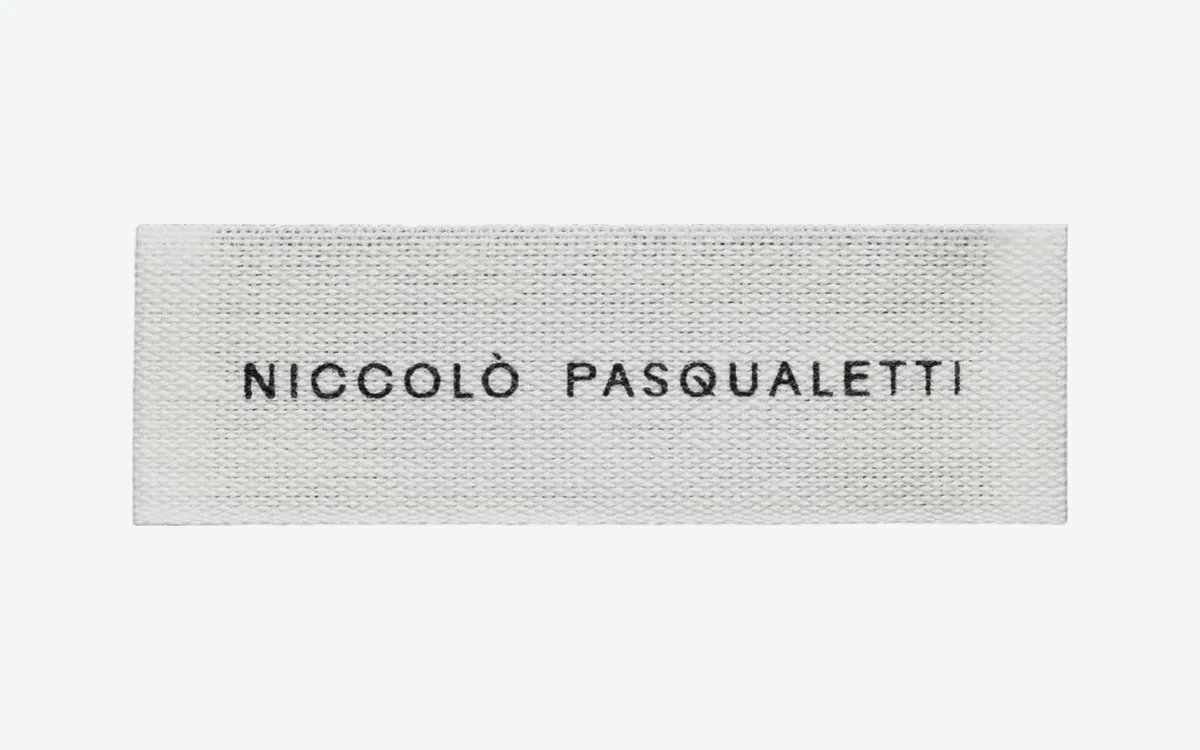
Label material is often the last decision in a brief – frequently copied from the previous order. Yet it decides whether a customer cuts the label out, whether the care text survives a year of washing and how your brand feels in the hand. This guide starts from the garment and works towards the material.
As a manufacturer producing woven, printed, silicone, leather and paper labels under one roof, we have no reason to favour one material over another. What we look for is the best fit between label and product. That fit comes from answering three questions in order.
The three filter questions
- Does it touch skin? Neck and waistband positions are sensitive; a bag gusset or a jacket hem is not.
- How is it cleaned? Hot machine washes, tumble drying, industrial laundering and dry cleaning each exclude certain materials.
- What should it say about the brand? Refined craftsmanship, technical performance, natural origin, recycled content – or simply clear information.
Answer these honestly and the list of suitable materials usually shrinks to two or three. For in-depth descriptions of each base, see our label materials overview.
Matching material to product
| Product category | Brand label | Care label | Finishing touch |
|---|---|---|---|
| Babywear and kidswear | Woven or printed satin | Soft polyester satin | Tagless neck print; OEKO-TEX class 1 |
| Sportswear and activewear | Heat transfer or thin satin | Satin or taffeta | Silicone or TPU badge |
| Denim | Damask or canvas | Taffeta | Jacron or leather back patch |
| Outerwear and bags | Wide damask or canvas | Taffeta or non-fray synthetic paper | Leather or silicone patch |
| Tailoring, luxury, lingerie | Fine damask or woven satin | Satin | Coated-board hang tag with foil |
| Workwear and uniforms | Damask | Taffeta with resin print | Twill name and size tapes |
| Eco and recycled ranges | rPET damask or cotton tape | Recycled satin or taffeta | Kraft or recycled board tag |
Notes behind the table
Little ones first
For baby and children’s clothing, softness and safety lead. Woven satin or printed polyester satin with ultrasonically sealed edges is gentle; cotton tape suits natural-fibre lines. Moving information to the side seam or to a tagless heat transfer keeps the neck clear. Ask for OEKO-TEX certified materials – class 1 covers articles for babies.
Movement and sweat
Activewear labels face stretch, perspiration and frequent washing. A heat transfer is the comfort choice at the neck; where sewing is required, thin satin or damask with a low-profile fold works. On the outside, flexible, waterproof silicone or TPU labels stand out on technical fabrics.
Washes that test everything
Denim goes through stone and enzyme washes; workwear through industrial laundries at high temperature. Inside jeans, damask or canvas holds up. The back patch is traditionally jacron or leather – PU leather is the safer choice if garments are washed after labelling. For uniforms, damask brand labels and nylon or polyester taffeta care labels with resin thermal-transfer print withstand repeated hot cycles. Always run a patch through your real garment wash before bulk.
Detail and drape
Luxury and lingerie labels need fine definition and a refined hand. High-density damask with thin yarns renders small text and delicate logos; woven satin adds softness and sheen. Acetate satin offers a silky lustre but requires gentle care, so align it with the garment’s own care symbols.
Claims that carry through
If a collection is recycled or organic, the trims should be too: rPET woven labels, recycled satin or taffeta care tape, cotton or organic cotton tape, canvas and kraft board tags. We are GRS certified, so recycled labels can be supplied with the documentation your supply chain requires.
Comfort and durability at a glance
| Material | On skin | Wash resistance |
|---|---|---|
| Polyester damask | Good | Excellent |
| Woven satin | Very good | Very good |
| Woven taffeta | Fair | Very good |
| Printed polyester satin | Very good | Very good |
| Acetate satin | Very good | Moderate |
| Nylon or polyester taffeta | Fair | Excellent (print) |
| Cotton tape | Very good | Good |
| Recycled polyester | As virgin equivalent | As virgin equivalent |
| Silicone / TPU, PU leather, jacron | Outer use | Excellent / good / fair to good |
Ratings assume correct finishing – sealed edges and a suitable fold.
Five habits of brands that get it right
- They match the label’s care tolerance to the garment’s care symbols – no stiff taffeta on fine merino, no delicate acetate on a hot-washed polo.
- They specify the edge as carefully as the base material.
- They keep two or three standard bases across the range for consistent colours and simple reorders.
- They check pale labels on thin fabrics for show-through, and ask for colour-fast yarns on dark labels.
- They extend sustainability claims to every trim.
The surest test is a physical sample sewn into your garment and put through real wash and wear. Our design team sends a digital proof typically within 24–48 hours. Tell us the garment, fabric and care conditions at [email protected] and we will recommend a material.
Frequently asked questions
Which sewn-in label feels softest?
Woven satin and printed polyester satin with ultrasonic edges. For the neck, a tagless heat transfer is the most comfortable of all.
What survives industrial laundering?
Polyester damask for brand labels and nylon or polyester taffeta with resin print for care labels.
Jacron or leather for a jeans patch?
Jacron gives a classic vintage look; PU leather tolerates washing better and is vegan; genuine leather feels most premium but reacts to repeated washing. Test it in your wash.
Do recycled labels perform as well as virgin polyester?
Yes, comfort and durability are equivalent, and as a GRS certified manufacturer we can supply the documentation.
Which material is right for babywear?
Soft satin or cotton tape with sealed edges, on OEKO-TEX class 1 certified materials, ideally kept away from the neck.