Parents test baby clothes with their fingertips. They rub the neckline, check the seams and turn the garment inside out. If the label feels firmer than the fabric, the bodysuit goes back on the shelf.
For babywear brands, the label brief is simple: it must disappear against the skin. Cotton is often the most natural way to achieve that. As a label manufacturer, we produce woven and printed cotton labels for baby and kidswear collections, and this article explains how they are made, where they work best and which details make the real difference to comfort.
Why cotton fits the babywear brief
Cotton is soft from the first wash and tends to become softer over time. It breathes, absorbs moisture and does not build up static. A cotton label lies flat and behaves like the garment fabric, which is exactly what a muslin swaddle or a jersey sleepsuit needs. It also looks right: an ecru or natural white tape with a simple print signals a natural collection before anyone reads the text.
Two ways to make a cotton label
Printed cotton tape
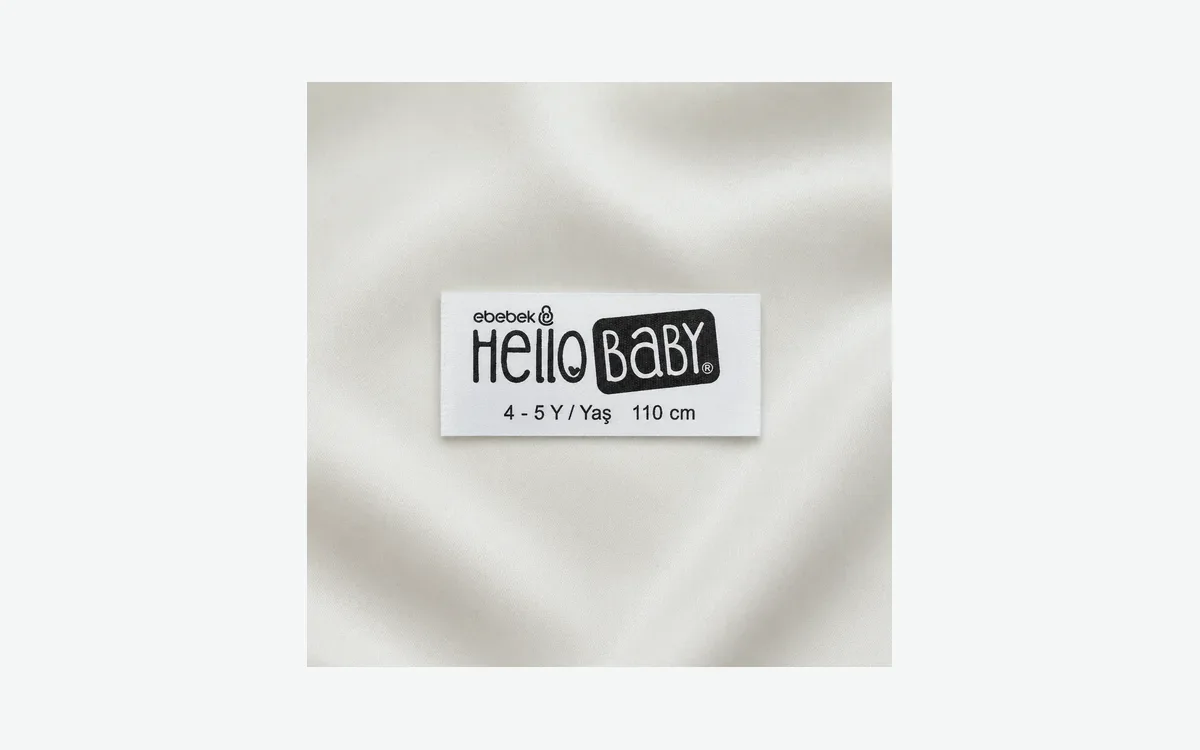
The softest option and the most common choice for bodysuits and sleepsuits. Cotton tape in natural, off-white or a dyed shade is cut to length and printed in one or two colours with textile inks that are cured for washing. Because the tape is plain-woven, it takes small care text clearly, so brand, size and care labels can share one material across the range. See printed labels for tape widths and colours.
Woven cotton labels
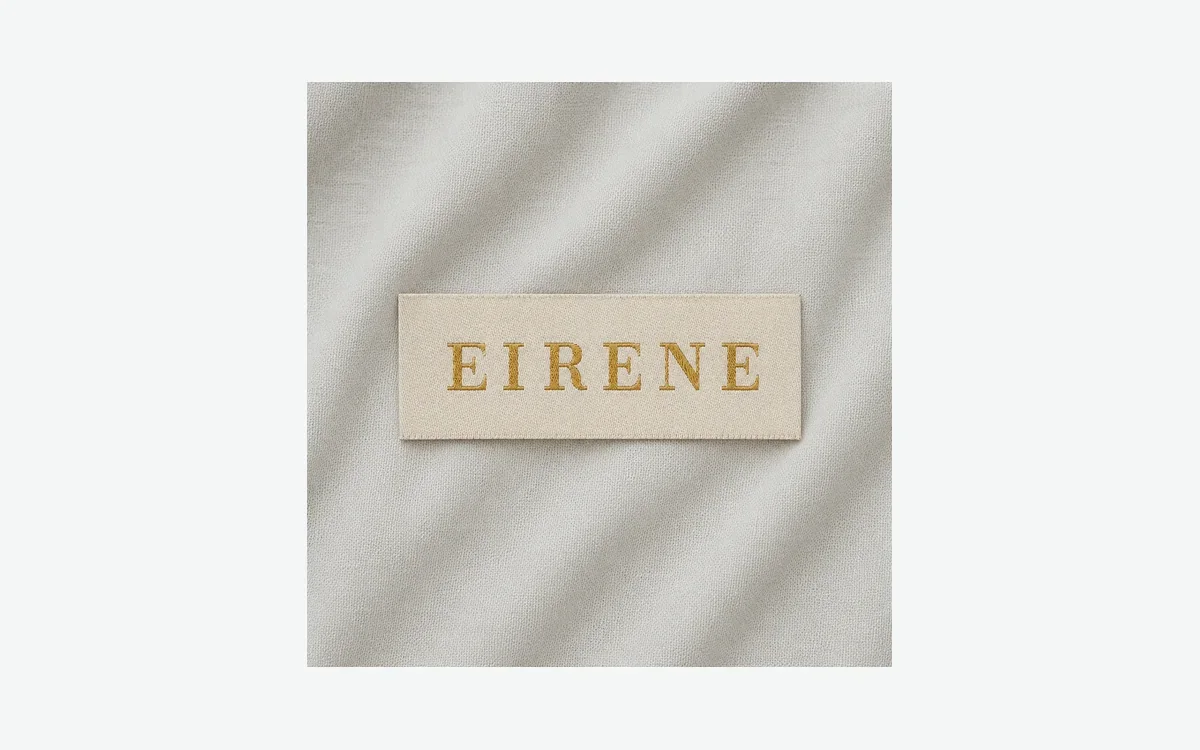
Made on a jacquard loom with cotton yarn, or with a matt yarn that gives a cotton look on a soft weave. A woven cotton label has a more textile appearance and lower detail resolution than polyester damask, so it suits bold logos and short words. Common sizes for babywear are 15 × 40, 20 × 50 and 25 × 50 mm. Lines thinner than about 0.5 mm and very small serif type should be avoided or checked on a sample first. For a very detailed logo, printed cotton or a soft polyester woven label may reproduce it better.
Edges decide comfort
Scratchy edges are the most frequent complaint about baby labels. Cotton does not melt like polyester, so the sealed-edge techniques used on synthetic tapes work differently. Three reliable routes:
- Woven selvedge edges – the tape is woven to its final width, so the long sides are natural edges that cannot fray.
- Folded ends – end-fold or centre-fold labels hide the cut ends inside the seam.
- Sewn on all sides – a flat label stitched around its perimeter keeps the cut edges covered.
A label set for a baby range
| Label | Material | Typical size (mm) | Where it goes |
|---|---|---|---|
| Brand label | Woven cotton or printed cotton tape | 15 × 40 to 25 × 50 | Centre back neck or side seam |
| Size label | Printed cotton tape, folded | 10 × 15 to 15 × 20 | Beside the brand label |
| Care label | Printed cotton tape | 25–40 wide, 50–100 long | Lower left side seam |
| Flag label | Woven cotton, loop fold | 15 × 20 visible | Outside side seam |
| Swing tag | Natural or recycled board | 50 × 90 or 55 × 85 | Soft cotton string |
Sizes by age and height
Baby sizes usually run by age, such as 0–3 or 3–6 months, by height in centimetres (50, 56, 62, 68, 74, 80, 86, 92), or both. A small folded cotton size label in the neck seam is the standard solution. Some brands print the size on the brand label; others keep one brand label for the whole range and add a separate size tab. Our size labels page shows both approaches.
Care labels on cotton
A cotton care label carries the same content as any other: fibre composition under Regulation (EU) No 1007/2011 in the language of each country of sale, care symbols following ISO 3758, and brand details. Keep the minimum type size generous so it stays readable after many hot washes. For multilingual text, a single printed label on a wider 30–40 mm tape often sits more comfortably than a thick booklet, because fewer layers mean less bulk in a tiny side seam. More options are on our care labels page.
Certified materials
OEKO-TEX Standard 100 product class I covers articles for babies and toddlers up to three years, with the strictest limit values. Brands that certify their babywear usually ask for labels made from OEKO-TEX certified materials. Our label materials are OEKO-TEX certified; mention at the quote stage that the labels are for babywear and we will specify accordingly. If your garments carry an organic claim, the label wording should match your own garment certification and describe only what you can prove.
Placement on small garments
- Bodysuits and sleepsuits: brand and size label at the back neck, or move both to the side seam to keep the neck completely free.
- Envelope necks: avoid the overlapping area, where layers add thickness.
- Swaddles and blankets: a flat label sewn on four sides in one corner, or a loop label in the hem.
- Bibs and hats: a small loop label in an edge seam, away from the face.
As the manufacturer, we send a digital proof for approval and can make physical samples so you can feel the label inside your own garment before production. Production typically takes 10–20 working days, with delivery across the EU.
Frequently asked questions
Are cotton labels softer than satin labels?
Both are soft. Cotton is matt and feels more like the garment fabric, while satin is smoother with a light sheen. For natural babywear lines, cotton is usually the preferred look and feel.
Can a cotton label show a detailed logo?
Printed cotton tape reproduces moderate detail well. Woven cotton works best with bold logos and short words; fine lines may need simplifying.
Are your baby labels OEKO-TEX certified?
Our label materials are OEKO-TEX certified. Tell us the labels are for babywear and we will specify suitable materials for your collection.
Where should labels go on a newborn bodysuit?
Many brands keep the neck free and place brand, size and care labels in the side seam. If you prefer a neck label, use a soft folded label caught in the seam.